


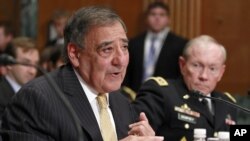
THE PENTAGON - U.S. Defense Secretary Leon Panetta says he is very concerned about the possibility of a major cyber attack that he says could paralyze U.S. government and financial systems. The warning came as Panetta cautioned U.S. lawmakers against major cuts to the defense budget.
The Pentagon has already agreed to cut $450 billion from its budget over a period of ten years. It faces an additional $500 billion in cuts under an automatic mechanism known as sequestration after members of Congress failed to reach an agreement to reduce the nation’s deficit.
Secretary Panetta and the top U.S. military officer, General Martin Dempsey, went before members of the Senate to make a case against the cuts, which they said would result in job losses and funding for operations including those in Afghanistan.
Panetta warned the cuts would spell disaster for U.S. defense. “It would guarantee that we hollow out our force and inflict severe damage on our national defense. I think you all recognize that sequester would be entirely unacceptable and I really urge both sides to work together to try to find the kind of comprehensive solution that would de-trigger sequester and try to do this way ahead of this potential disaster that we confront," he said.
The Defense Secretary warned of another possible disaster: a cyberattack on the nation’s vital information systems, one with a magnitude similar to Japan’s 1941 attack on Pearl Harbor that triggered the U.S. entry into World War II.
Panetta said America’s enemies are developing cyber capabilities and are attempting hundreds of attacks each day on the country’s key systems. He said the U.S. military is working to stay prepared.
“I’m very concerned that the potential in cyber to be able to cripple our power grid, to be able to cripple our government systems, to be able to cripple our financial systems would virtually paralyze this country and as far as I’m concerned that represents the potential for another Pearl Harbor as far as the kind of attack that we could be the target of using cyber," he said.
Defense officials also raised concerns about their ability to pay for unbudgeted items including the cost of rerouting supplies to NATO troops in Afghanistan as Pakistan’s closure of supply routes continues.
Panetta said the cost of sending supplies into Afghanistan through alternate routes is about $100 million a month.