Philippines Police: 10,000 Feared Dead in Wake of Vietnam-Bound Typhoon
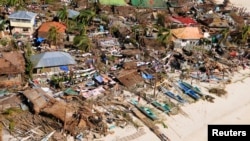
Aerial view of damaged coastal houses in wake of Typhoon Haiyan, Iloilo Province, central Philippines, Nov. 9, 2013.
Local police officials in the Philippines say the death toll in a central province that took the brunt of Typhoon Haiyan could reach as high as 10,000.
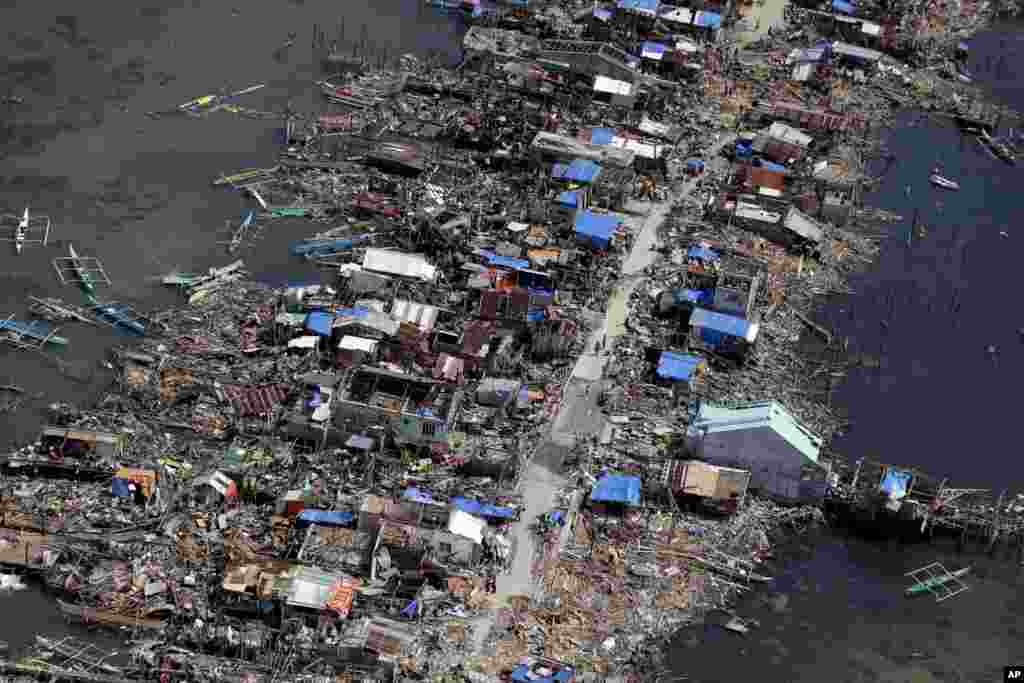
Provincial officials provided the estimate on Sunday after assessing damage in Leyte province, where they say the destruction was overwhelming. The regional police chief said most of the deaths resulted from drowning and collapsed buildings.
Philippine Interior Secretary Mar Roxas says it is difficult to describe the extent of damage in Leyte's capital, Tacloban.
"The devastation is — I do not have the words for it. It is really horrific. It is a great human tragedy. There is no power. There is no light."
Typhoon Haiyan
1/11An aerial image taken from a Philippine Air Force helicopter shows the devastation of the first landfall by typhoon Haiyan in Guiuan, Eastern Samar province, central Philippines, Nov. 11, 2013.
Show moreShow less
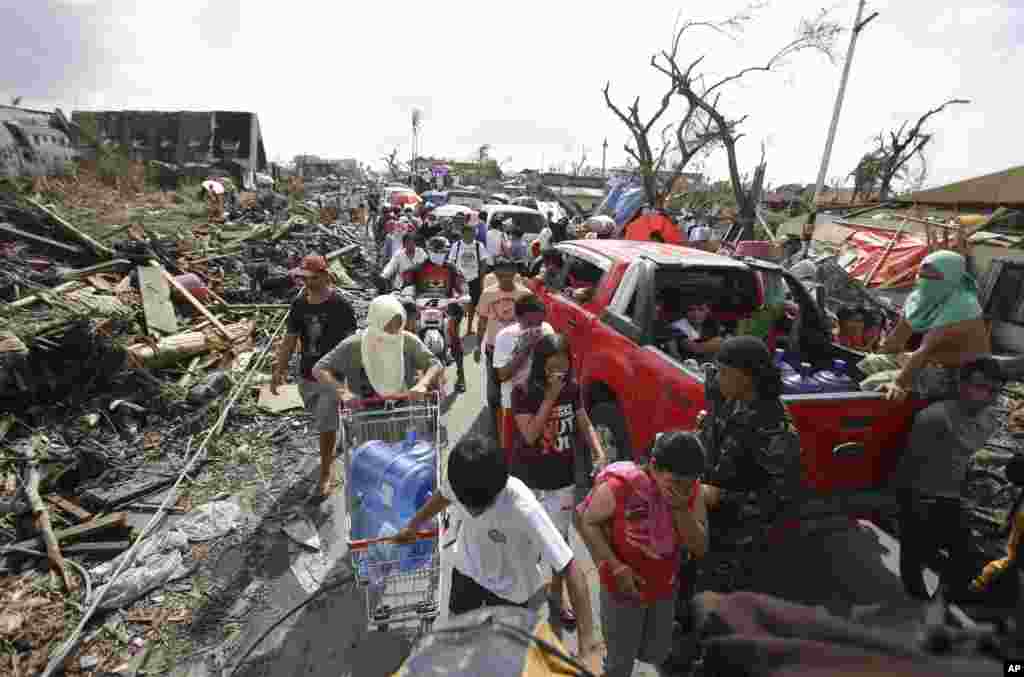
2/11Survivors fill the streets as they line up to get supplies in Tacloban city, Leyte province, central Philippines, Nov. 11, 2013.
Show moreShow less
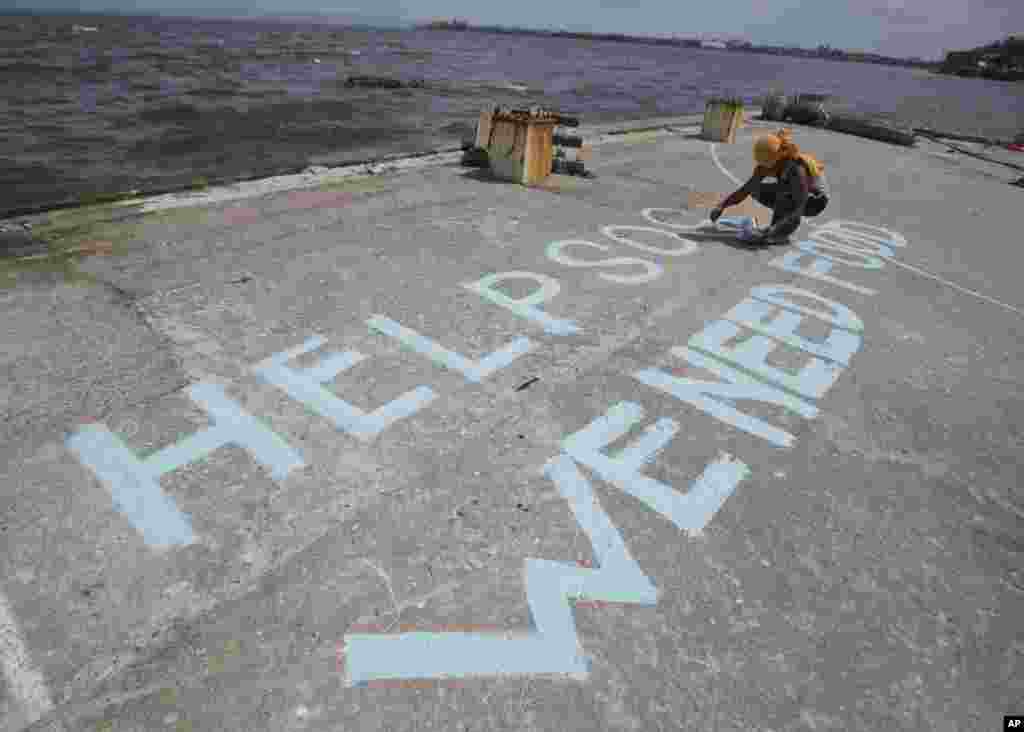
3/11A survivor writes a call for help, Tacloban city, Leyte province, central Philippines, Nov. 11, 2013.
Show moreShow less
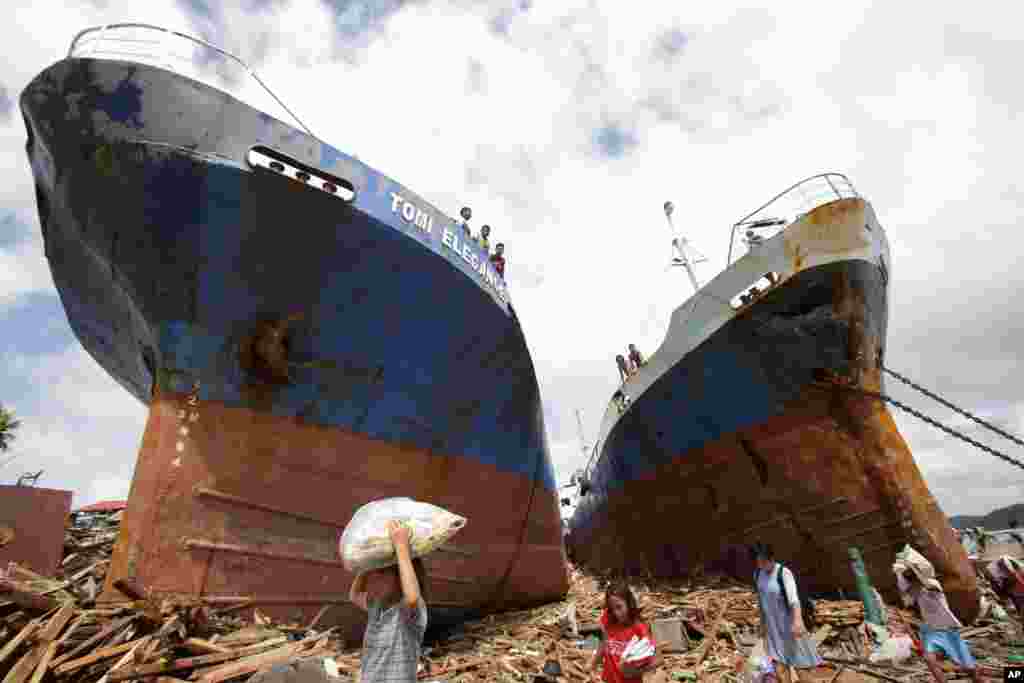
4/11Survivors pass by two large boats that were washed ashore by strong waves caused by Typhoon Haiyan in Tacloban city, Leyte province, central Philippines, Nov. 10, 2013.
Show moreShow less
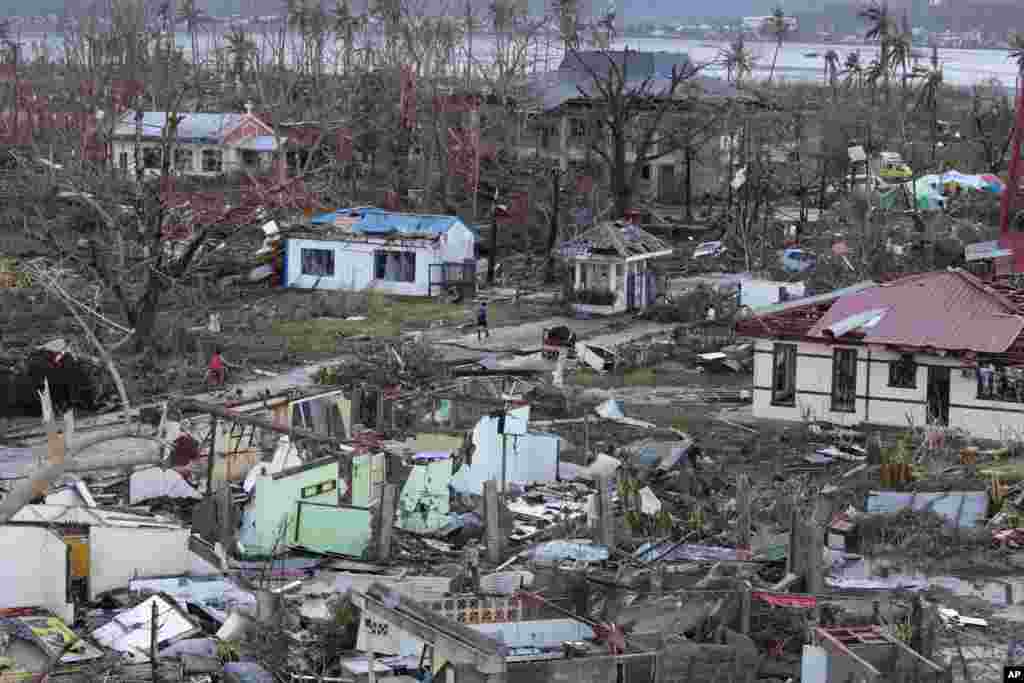
5/11A resident walks by remains of houses after powerful Typhoon Haiyan slammed into Tacloban city, Leyte province central Philippines on Nov. 9, 2013
Show moreShow less
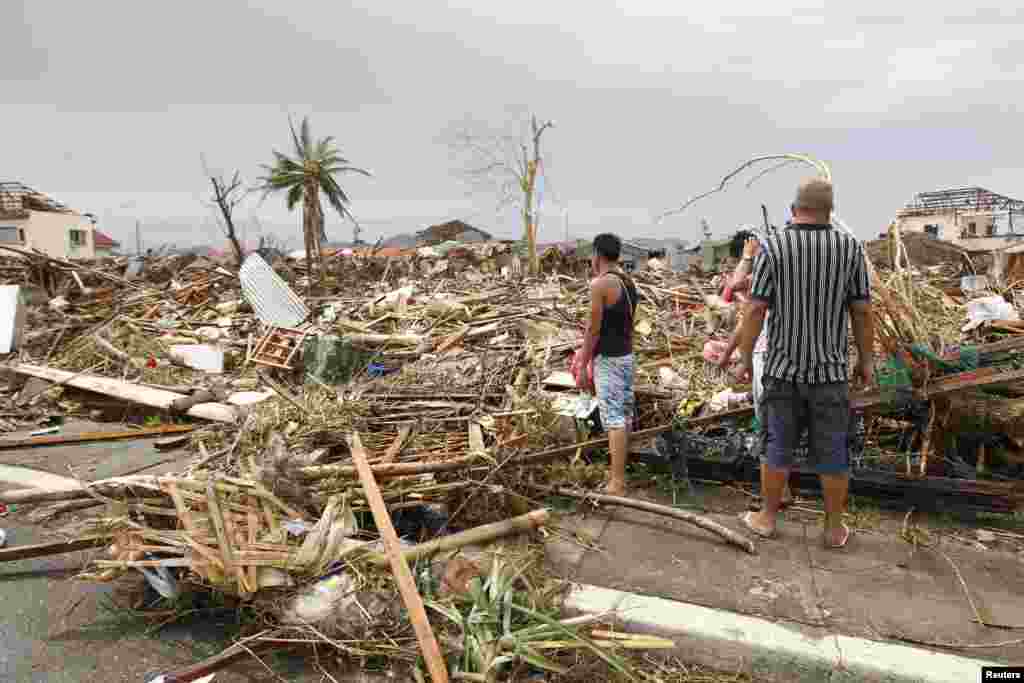
6/11Survivors assess the damage after super Typhoon Haiyan battered Tacloban city, central Philippines, Nov. 9, 2013.
Show moreShow less
7/11Tacloban Airport is covered by debris after powerful Typhoon Haiyan hit Tacloban city, in Leyte province in central Philippines, Nov. 9, 2013.
Show moreShow less
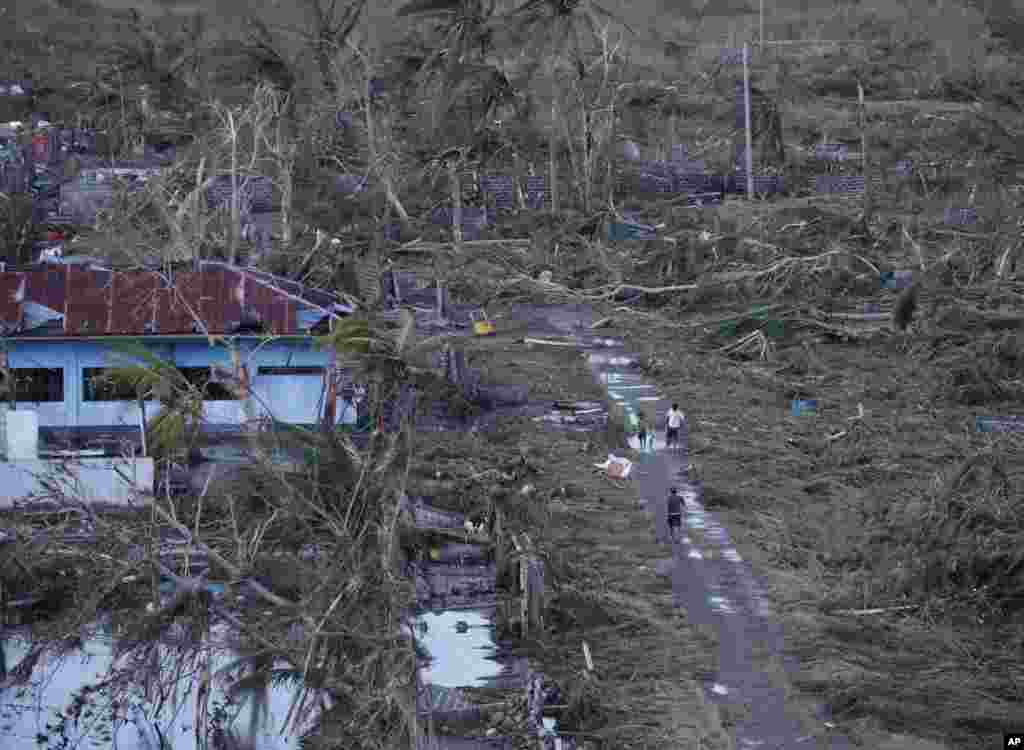
8/11Residents go on their daily business Nov. 9, 2013, following a powerful typhoon that hit Tacloban city, in Leyte province, central Philippines.
Show moreShow less
9/11A fisherman carries his net after making it safely back to shore in the fishing village after a strong winds from Typhoon Haiyan battered Bayog town in Los Banos, Laguna city, south of Manila, Nov. 8, 2013.
Show moreShow less
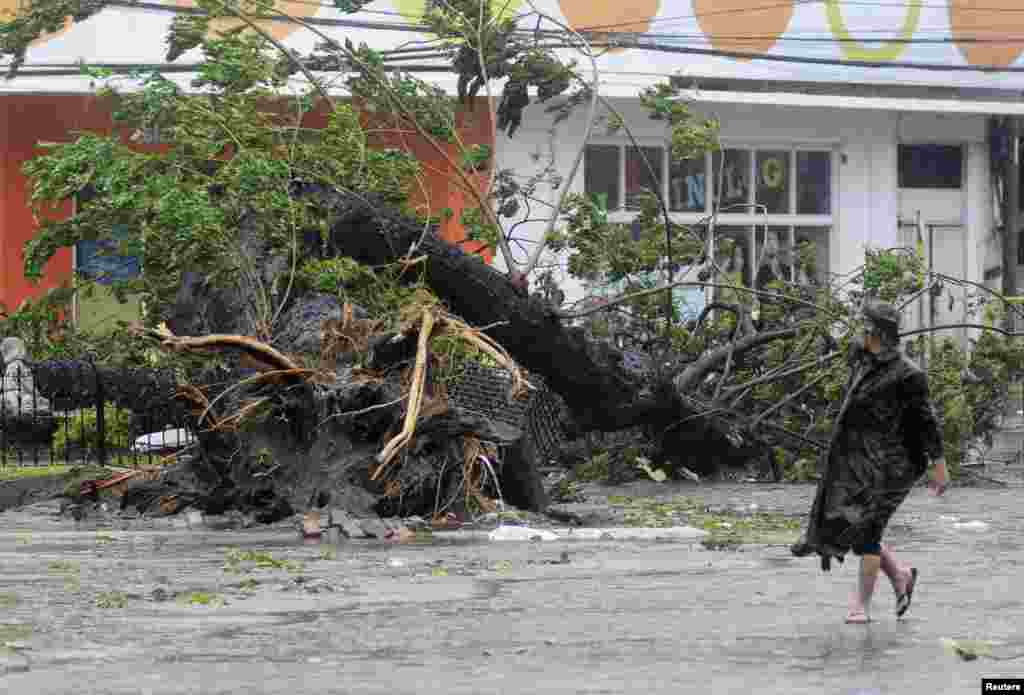
10/11A man walks past a tree uprooted by strong winds brought by super Typhoon Haiyan that hit Cebu city, central Philippines, Nov. 8, 2013.
Show moreShow less
11/11A mother takes refuge with her children as Typhoon Haiyan hits Cebu city, central Philippines, Nov. 8, 2013.
Show moreShow less
Previous slide
Next slide
U.N. emergency relief coordinator Valerie Amos said a U.N. disaster and assessment team that had been deployed to Tacloban found "scenes of total devastation." It said roads from the airport to the city of 200,000 people were impassable, leaving helicopters as the only means of travel.
The Associated Press says Tacloban's city administrator Tecson Lim told reporters as many as 400 bodies have been recovered.
Meanwhile, officials in Samar province say at least 300 people are known to have been killed on that island, with another 2,000 missing.
The death toll from some locations in the central Philippines is not yet known as communications have been knocked out by the powerful storm and land access is blocked by fallen trees and massive amounts of debris.
On Saturday, Tacloban residents wept as they recounted losing loved ones. Others appeared dazed. Bodies lay in the streets, covered in sheets and bags. People also began looting stores, looking for food to survive or carrying away household appliances.
The U.N. team leader Sebastian Rhodes Stampa said the last time he saw destruction on such a scale was in the aftermath of the December 2004 Indian Ocean Tsunami.
Super Typhoon Haiyan, known locally as Yolanda, made landfall Friday as one of the most powerful storms on record, with maximum sustained winds of about 300 kilometers an hour, sending waves up to five meters high crashing through island communities.
It is now in open water, churning towards Vietnam, where forecasters expect it to make landfall late Sunday or early Monday.
Vietnamese authorities have evacuated several hundred thousand people from coastal areas, where the storm's outer bands are already causing high winds and rough seas.
Separately, U.N. Secretary General Ban Ki-moon offered his condolences to the Philippines, saying he was deeply saddened by the "extensive loss of life."
The U.S. is assisting with relief efforts. In a Saturday statement, the Defense Department said the U.S. Pacific Command had been directed to assist in search and rescue operations and aircraft support.
Also, a U.S. relief team has been deployed to the region. The U.S. Agency for International Development says the team will conduct damage assessments, track conditions and "advise on additional needs."
The U.S. has also made $100,000 available for relief supplies, and the World Food Program is providing emergency assistance to government agencies that are helping victims.
Typhoon Haiyan weakened after crossing the Philippines but regained some strength as it began moving westward in the South China Sea.
The storm's new projected path also puts the southern Chinese island of Hainan at risk of strong winds and heavy rain. The Chinese government issued an alert to local authorities to prepare for flooding and called fishing boats back to port.
The Voice of America provides news and information in more than 40 languages to an estimated weekly audience of over 326 million people. Stories with the VOA News byline are the work of multiple VOA journalists and may contain information from wire service reports.