


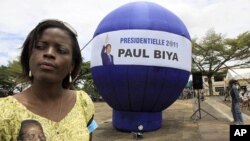
Cameroonian President Paul Biya called on his country to be "indulgent" of any imperfections in the voting process, as he cast his ballot in Sunday's presidential election.
Although results may not be announced for two weeks, Mr. Biya is widely expected to win a new seven-year term, extending his 29-year rule over the central African state.
Mr. Biya said the world is not perfect, but he said that despite any irregularities, there is no intention to cheat. He is running against a record 22 candidates. His most high-profile challenger, John Fru Ndi of the Social Democratic Front, received only 17 percent of the vote in 2004.
Observers said turnout was extremely low Sunday, with many Cameroonians expressing apathy, saying the winner is already decided.
Nationwide figures are not available, but observers said polling stations were conspicuously uncrowded, with some reporting fewer than 15% of registered voters turning up.
Voting also got off to a late start. In some cases, polling stations opened hours behind schedule. And some voters told the Associated Press they were issued more than one voting card, potentially allowing them to vote multiple times.
Two military policemen were killed Sunday by unidentified armed gunmen in the oil-rich Bakassi peninsula. The much-disputed region near the Nigerian border is home to separatist rebels, and has seen a number of shootings and kidnappings. The French news agency (AFP) quotes Cameroon's interior minister as saying the officers had been deployed to the area to "secure the electoral process."
The opposition has accused Cameroon's electoral commission of favoring the ruling party, and there have been complaints about irregularities on voter lists. A top member of the election board, Elecam, was fired days before Sunday’s vote on allegations of violating the oath of office by campaigning for President Biya.
Mr. Biya won the 2004 election with 70 percent of the ballots.
The 78-year-old leader has ruled Cameroon since 1982. In 2008 he eliminated constitutionally mandated term limits so he could run for re-election this year. That move sparked street protests in which at least 40 people were killed.
Cameroonians remain frustrated by high unemployment and the rising cost of living.
Some information for this report was provided by AP and AFP.