CAIRO —
These are chaotic days for Egypt, which recently marked two years since a revolution brought one system to an end. But the new one - a government dominated by Islamists of the Muslim Brotherhood - is being met with fierce resistance.
In Port Said and cities across Egypt, anti-government forces are calling for secession. President Mohamed Morsi imposed a state of emergency in some areas of unrest, while the army chief warned the state could collapse.
Analyst Mustafa el Labbad said the Brotherhood, which operated for decades underground, was given a chance at democracy and has overreached.
"[The] Muslim Brotherhood, after 84 years, is willing to take over not only the political system but the whole Egyptian state," said Labbad, director of the Cairo-based Al Sharq Center for Regional and Strategic Studies. "They're geared to exclude others and to take everything.”
Egyptian Crisis Continues
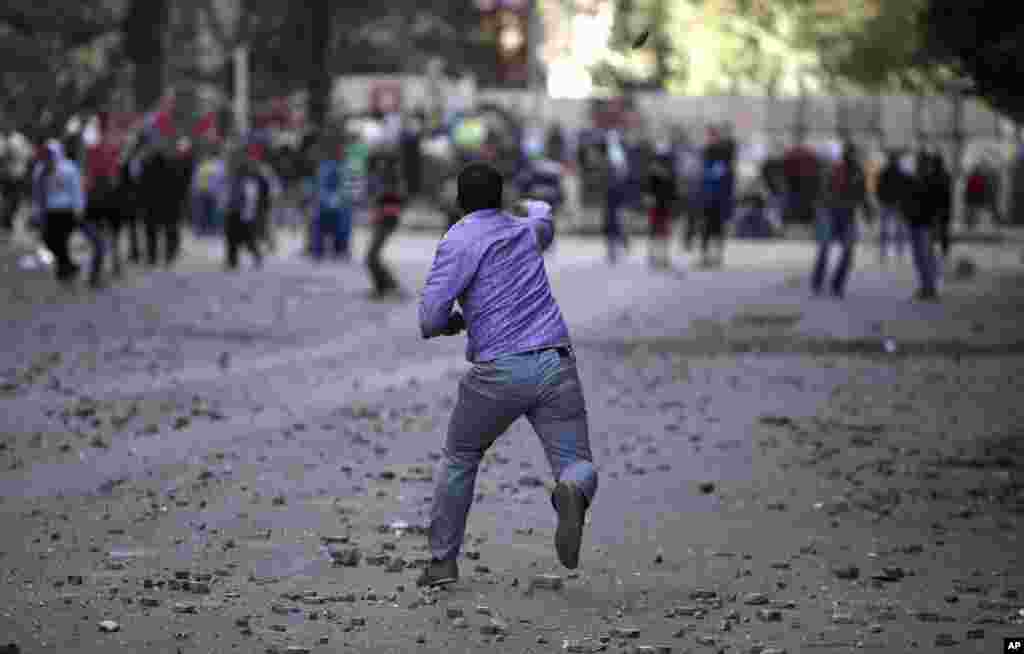
1/10Pro and anti-government protesters throw stones during clashes near Tahrir Square in Cairo, Egypt, January 30, 2013.
Egyptian President Mohamed Morsi is making a shortened visit to Germany Wednesday, as a political crisis marked by days of protests continues at home.
Show moreShow less
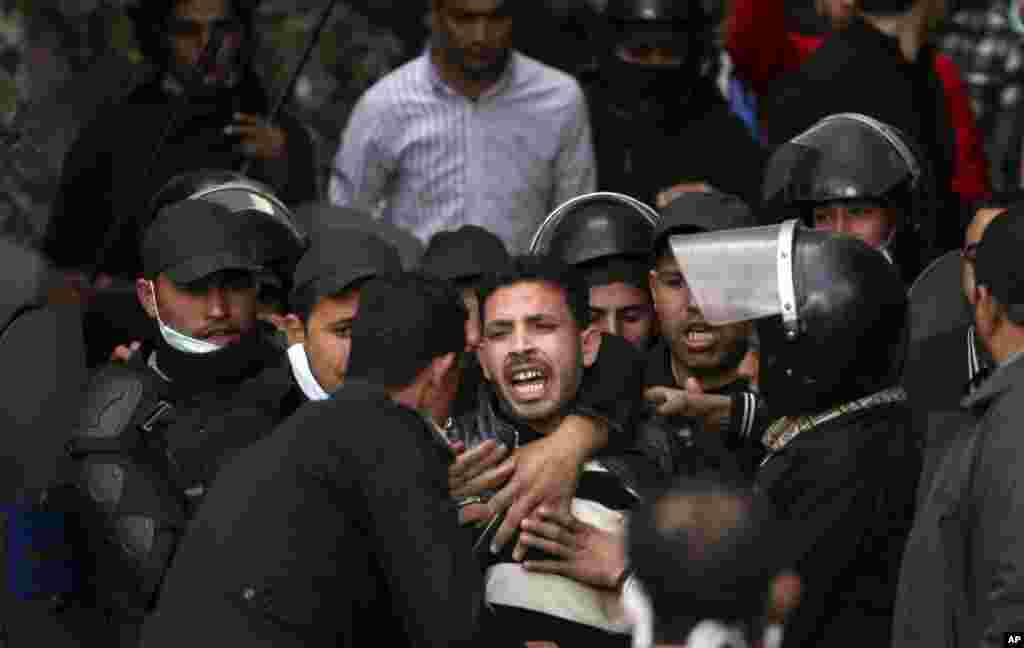
2/10Egyptian riot police arrest a man during clashes with protesters near Tahrir Square in Cairo, Egypt, January 30, 2013.
Egyptian President Mohamed Morsi is making a shortened visit to Germany Wednesday, as a political crisis marked by days of protests continues at home.
Show moreShow less
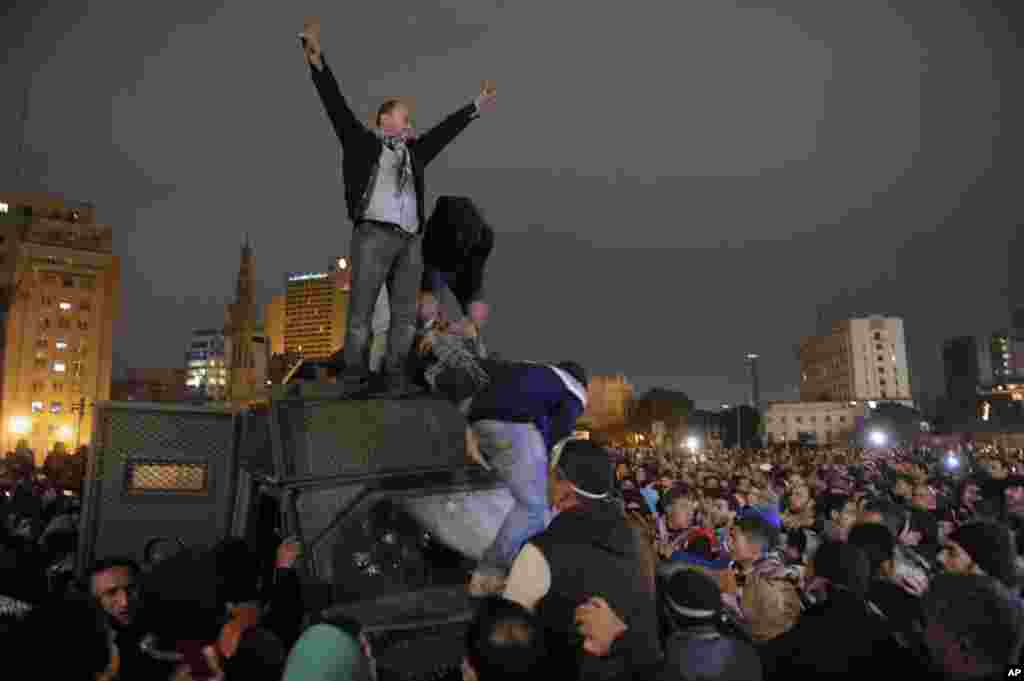
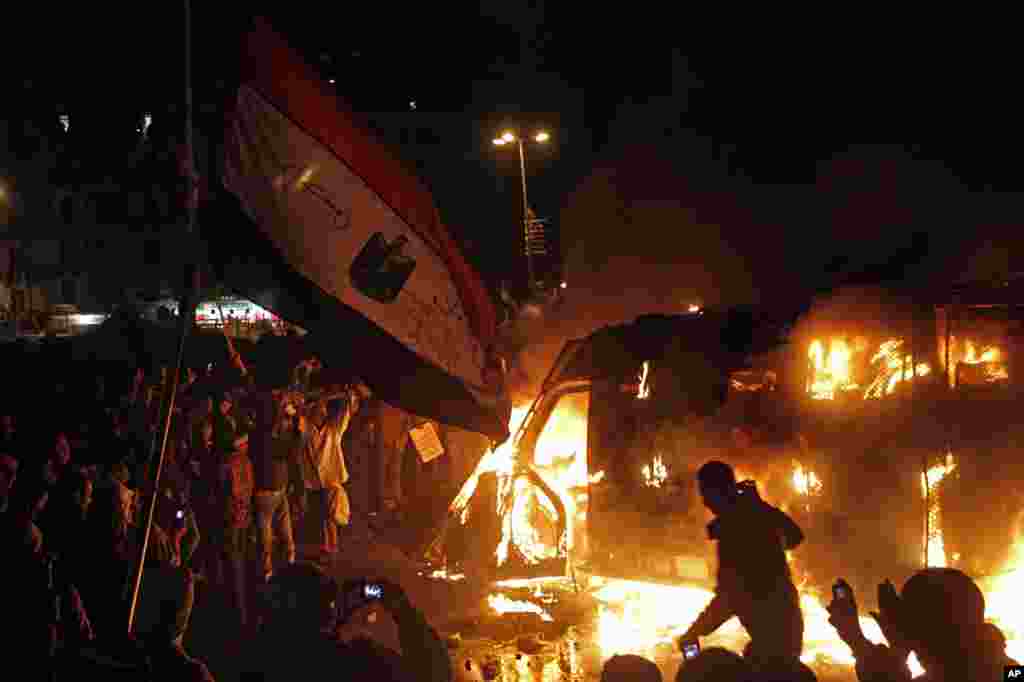
3/10Protesters celebrate the capture of a state security armored vehicle that demonstrators commandeered during clashes with security forces and brought to nearby Tahrir Square in Cairo, Egypt, January 28, 2013.
Egyptian President Mohamed Morsi is making a shortened visit to Germany Wednesday, as a political crisis marked by days of protests continues at home.
Show moreShow less
4/10De meilleures pratiques culturales permettent de combattre la désertification
Egyptian President Mohamed Morsi is making a shortened visit to Germany Wednesday, as a political crisis marked by days of protests continues at home.
Show moreShow less
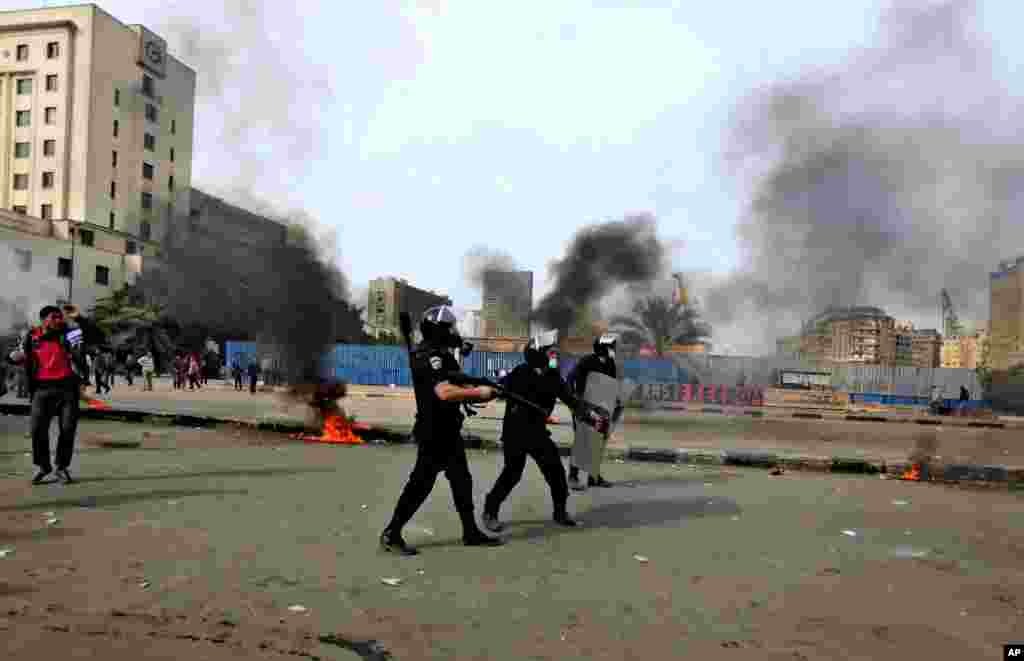
5/10Egyptian riot police clash with protesters, not seen, near Tahrir Square, Cairo, Egypt, January 27, 2013.
Egyptian President Mohamed Morsi is making a shortened visit to Germany Wednesday, as a political crisis marked by days of protests continues at home.
Show moreShow less
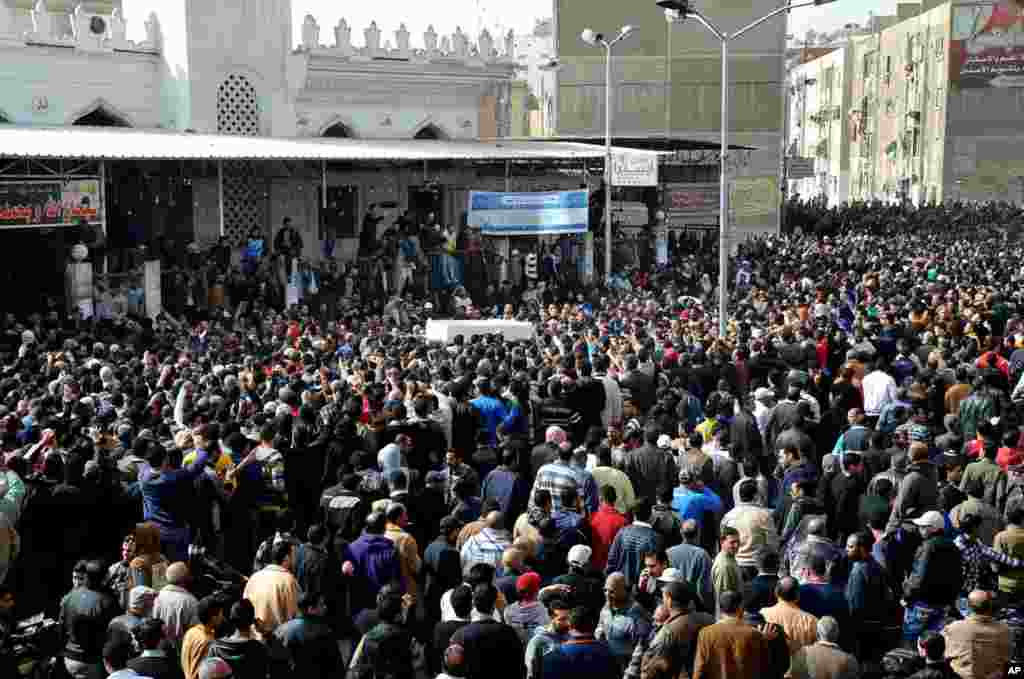
6/10Egyptians carry the coffin of a man killed protests a day earlier in Port Said, Egypt, January 27, 2013.
Egyptian President Mohamed Morsi is making a shortened visit to Germany Wednesday, as a political crisis marked by days of protests continues at home.
Show moreShow less
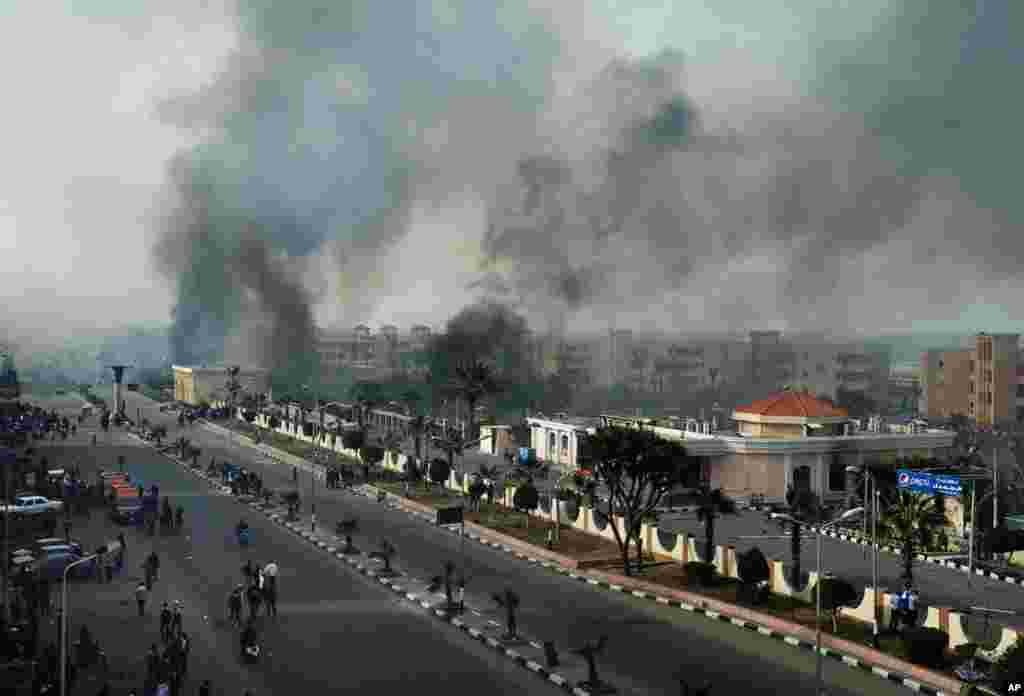
7/10Smoke rises after Egyptian protesters clash with police, unseen, in Port Said, Egypt, January 27, 2013.
Egyptian President Mohamed Morsi is making a shortened visit to Germany Wednesday, as a political crisis marked by days of protests continues at home.
Show moreShow less
8/10A riot police officer gestures during clashes with protesters opposing Egyptian President Mohamed Morsi throwing stones at him near Tahrir Square, Cairo, Egypt, January 25, 2013.
Egyptian President Mohamed Morsi is making a shortened visit to Germany Wednesday, as a political crisis marked by days of protests continues at home.
Show moreShow less
9/10A protester opposing Egyptian President Mohamed Morsi throws a tear gas canister, earlier thrown by riot police near Tahrir Square, Cairo, Egypt, January 25, 2013.
Egyptian President Mohamed Morsi is making a shortened visit to Germany Wednesday, as a political crisis marked by days of protests continues at home.
Show moreShow less
10/10Protesters opposing Egyptian President Mohamed Morsi throw stones towards riot police during clashes near Tahrir Square, Cairo, Egypt, January 25, 2013.
Egyptian President Mohamed Morsi is making a shortened visit to Germany Wednesday, as a political crisis marked by days of protests continues at home.
Show moreShow less
Previous slide
Next slide
But government supporters say that characterization is unfair.
Amr Darrag, a senior official with the Brotherhood's political wing, the Freedom and Justice Party, said some are portraying the current unrest as a confrontation between the Brotherhood and everyone else.
"It's not like that," he said. "If it was, this would have meant that the rest of the Egyptian people are thugs and use violence, which is not the case.”
Darrag blames the current violence on a small number of “violent criminals” who he said are hurting all Egyptians by burning public property and scaring away foreign investors and tourists.
Discontent runs deep
Opposition leaders say discontent is much wider, and point to the many peaceful protests of the past months. They argue that a lack of economic improvement and social justice warrants a new, “national unity government.”
Key opposition figure and Nobel Peace Prize laureate Mohammed ElBaradei has made that a precondition for government-proffered talks.
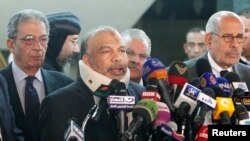
Saad al-Katatni, head of the Egyptian Muslim Brotherhood's Freedom and Justice party, talks during a news conference next to former Foreign Minister Amr Moussa (L) and liberal politician Mohamed ElBaradei (R) after their meeting in Cairo, January 31, 2013.
ElBaradei and others met Thursday with other political forces, including ultraconservative Salafists and members of the Freedom and Justice Party, and again called for a new government.
“The president should commit himself to have a real dialogue with the opposition," said analyst Labbad, who dismissed previous talks between the government and its opponents as little more than photo opportunities for Morsi.
But the political transition, government supporters say, is not complete: there has been a presidential election, but Egyptians must still choose a new parliament.
Perils of transition
Many are wary of that process, especially after Morsi helped push through a controversial new constitution late last year, by assuming temporary sweeping powers.
That move brought tens of thousands out to the streets in protest.
Opposition figures initially called for a boycott of the referendum on the constitution, and some are saying that parliamentary elections can't be held under current conditions.
But political analyst and publisher Rania Al Malki, who took part in the revolution, believes the opposition needs a strategy beyond protests and boycotts.
“You have to be part of that institution," she said, "otherwise you won't have a voice and you are always going to depend on the popular anger for those protesting youth to further your own political agenda.”
History has not always been kind to rulers in Egypt who assume power in a time of change and inherit the problems of the old order.
At this point, it appears some of Egypt's new insiders wouldn't mind sharing responsibility, and what comes with it - blame.
Freedom and Justice Party official Darrag said everyone needs to take part of the responsibility.
I believe the president is trying to do his best," he said. "Of course he made mistakes," Darrag said. "He was never a president before so he's also on the learning curve.”