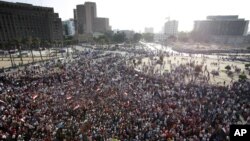
Egyptians gather in Tahrir Square in Cairo, Egypt, June 2, 2012.
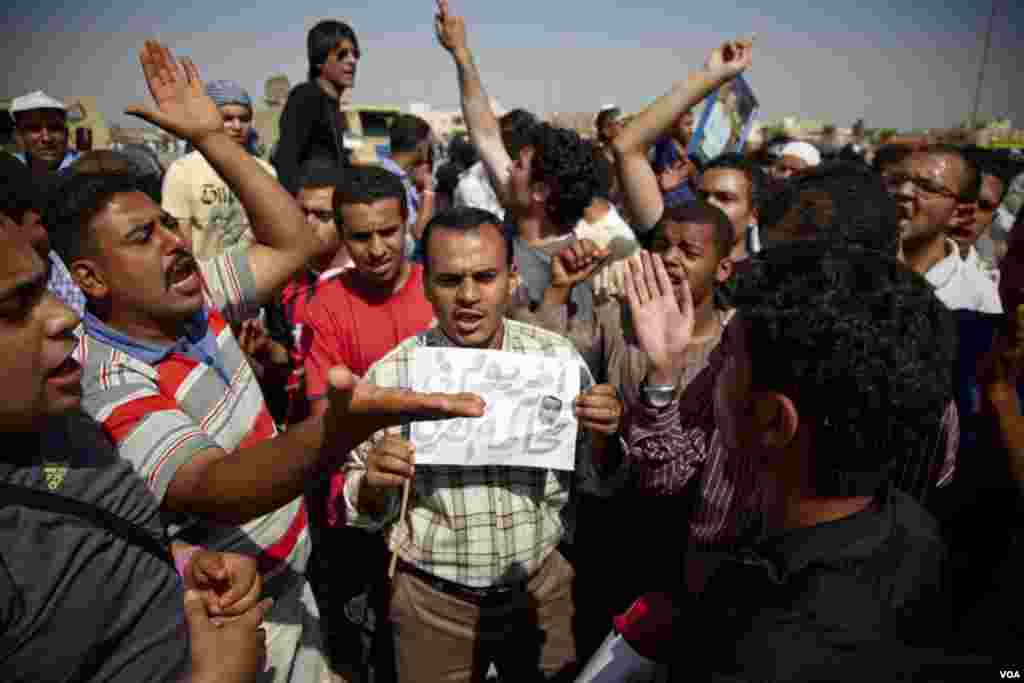
Former Egyptian President Hosni Mubarak's life prison sentence for complicity in the killings of anti-government protesters has failed to appease some Egyptians who have taken to the streets in protest.
Thousands of demonstrators gathered in cities including Cairo and Alexandria on Saturday after Mubarak and former interior minister Habib al-Adly were convicted for their roles in the 2011 killings of hundreds of protesters, but six ex-police commanders were acquitted.
The court also acquitted Mubarak and his sons, Gamal and Alaa, of corruption charges.
Prosecutors had called for the death penalty for Mubarak, the only leader toppled in the Arab Spring uprisings to be tried in his own country.
Jubilant Mubarak opponents initially embraced and wept outside of the Cairo courthouse as the verdicts were announced, but the mood changed when it became clear that the former president and other former officials had not been convicted on all charges.
Video: Reaction in Tahrir Square after sentence announced
VOA correspondent Elizabeth Arrott says some Mubarak opponents have gathered in Cairo's Tahrir Square, the site of mass protests in the lead-up to the former president's resignation last year.
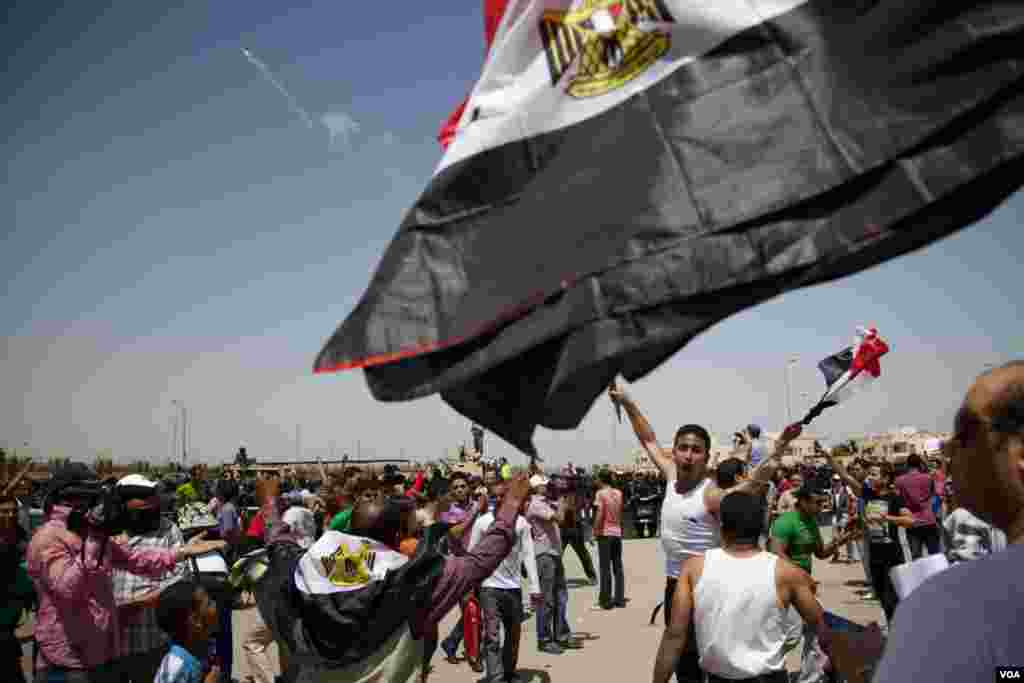
"They are waving the Egyptian flag. They are shouting for a cleansing of the judiciary. They are calling for new trials. And, it is quite a broad spectrum of people who have gone down there," Arrott noted.
Slideshow
Egyptians React to Mubarak Sentencing
1/12Anti-Mubarak protesters chant in front of a Cairo courthouse, awaiting a verdict in the trial of former Egyptian President Hosni Mubarak, June 2, 2012. (VOA/Y. Weeks)
Ousted Egyptian president Hosni Mubarak has received a sentence of life in prison for complicity in the killing of hundreds of anti-government protesters during last year's uprising that forced him from power. The verdict brought protesters and Mubarak supporters to the courthouse where his trial took place.
Show moreShow less
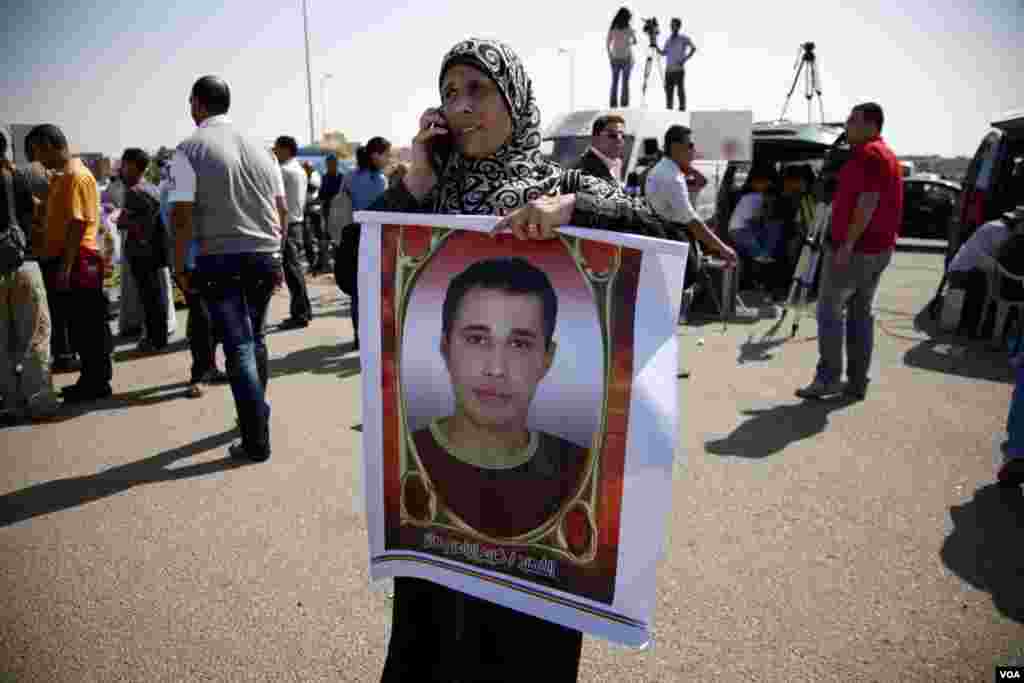
2/12A woman holds a sign with the image of a slain protester in front of a courthouse in Cairo awaiting a verdict in the trial of former Egyptian president Hosni Mubarak, June 2, 2012. (VOA/Y. Weeks)
Ousted Egyptian president Hosni Mubarak has received a sentence of life in prison for complicity in the killing of hundreds of anti-government protesters during last year's uprising that forced him from power. The verdict brought protesters and Mubarak supporters to the courthouse where his trial took place.
Show moreShow less
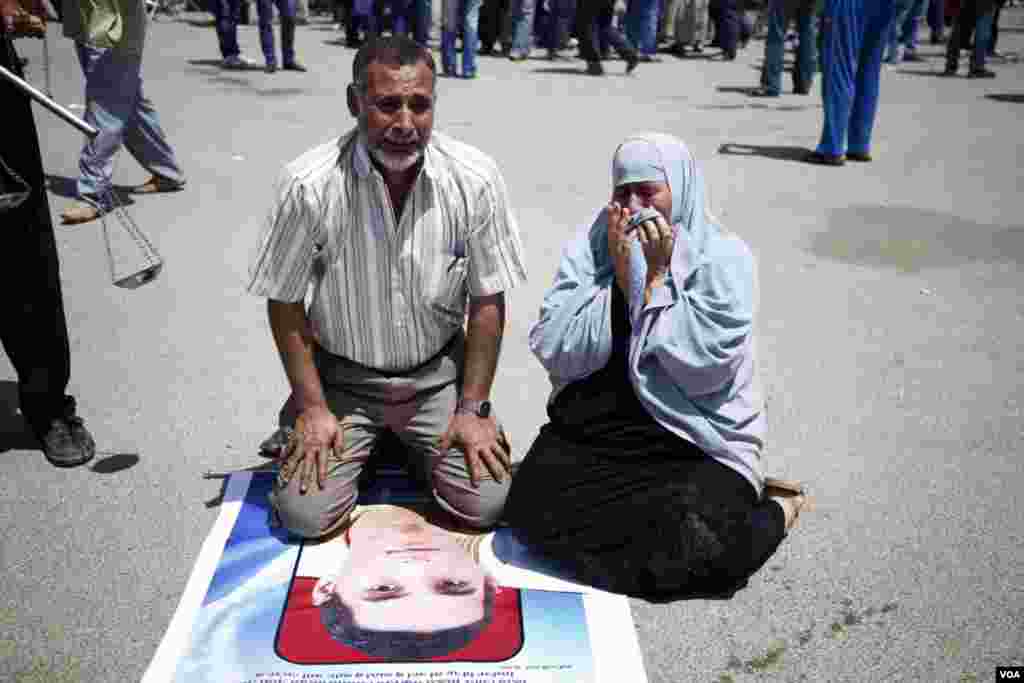
3/12A couple honors one the protesters killed during the uprising, June 2, 2012. (VOA/Y. Weeks)
Ousted Egyptian president Hosni Mubarak has received a sentence of life in prison for complicity in the killing of hundreds of anti-government protesters during last year's uprising that forced him from power. The verdict brought protesters and Mubarak supporters to the courthouse where his trial took place.
Show moreShow less
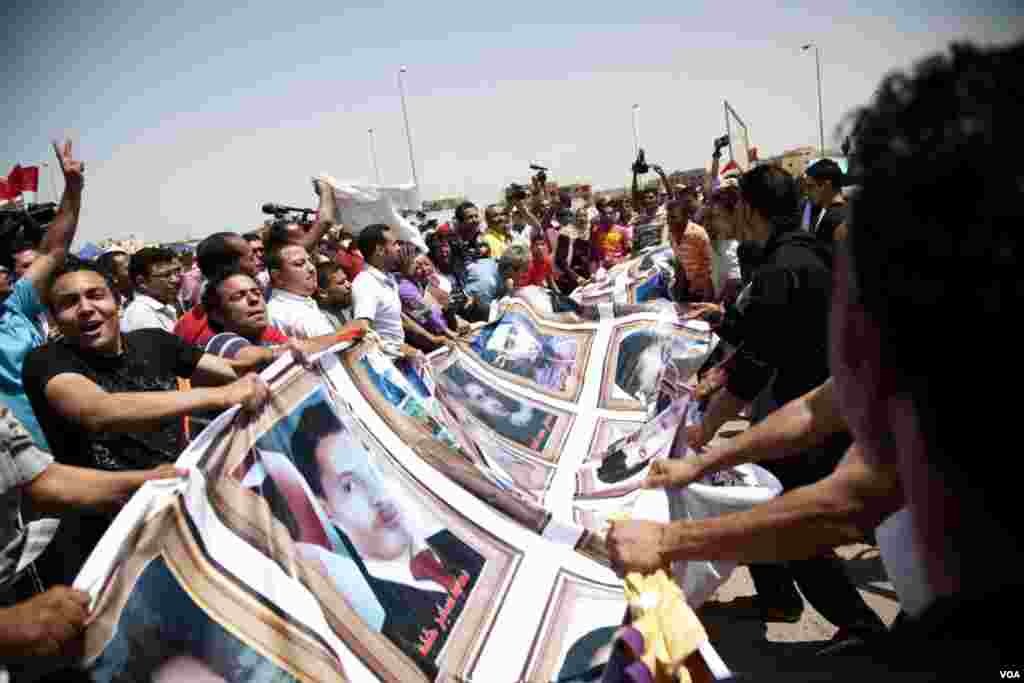
4/12The crowd displays a banner with photos of those killed in the uprising in Cairo, June 2, 2012. (VOA/Y. Weeks)
Ousted Egyptian president Hosni Mubarak has received a sentence of life in prison for complicity in the killing of hundreds of anti-government protesters during last year's uprising that forced him from power. The verdict brought protesters and Mubarak supporters to the courthouse where his trial took place.
Show moreShow less
5/12Anti-Mubarak protesters embrace at the news of his guilty verdict in Cairo, June 2, 2012. (VOA/Y. Weeks)
Ousted Egyptian president Hosni Mubarak has received a sentence of life in prison for complicity in the killing of hundreds of anti-government protesters during last year's uprising that forced him from power. The verdict brought protesters and Mubarak supporters to the courthouse where his trial took place.
Show moreShow less
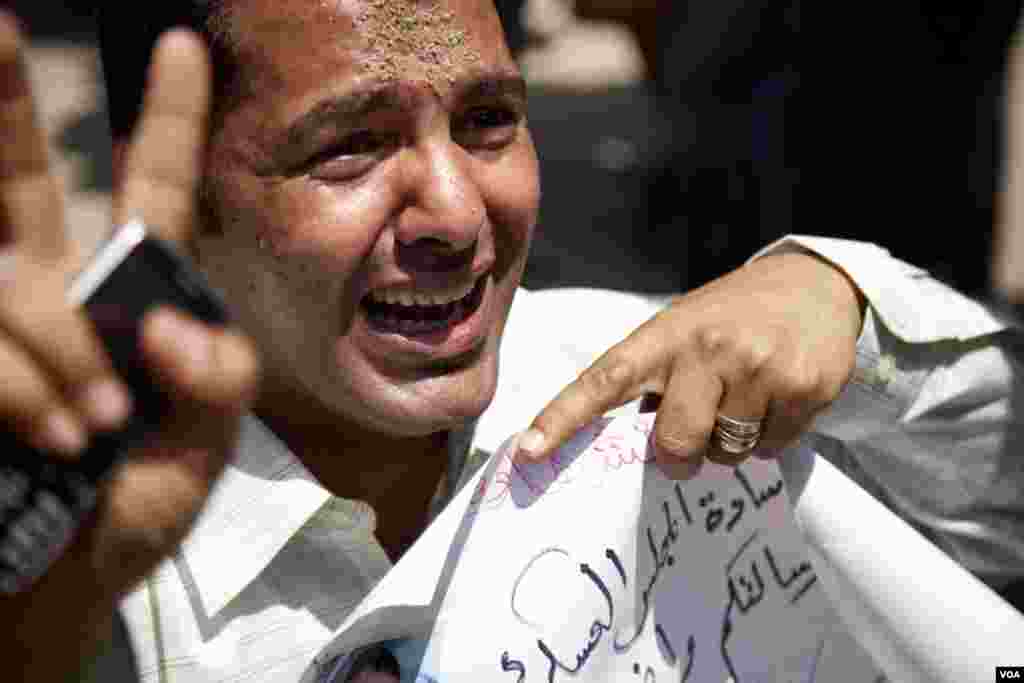
6/12A brother of the protester killed during the Tahrir uprising protests in Cairo, June 2, 2012. (VOA/Y. Weeks)
Ousted Egyptian president Hosni Mubarak has received a sentence of life in prison for complicity in the killing of hundreds of anti-government protesters during last year's uprising that forced him from power. The verdict brought protesters and Mubarak supporters to the courthouse where his trial took place.
Show moreShow less
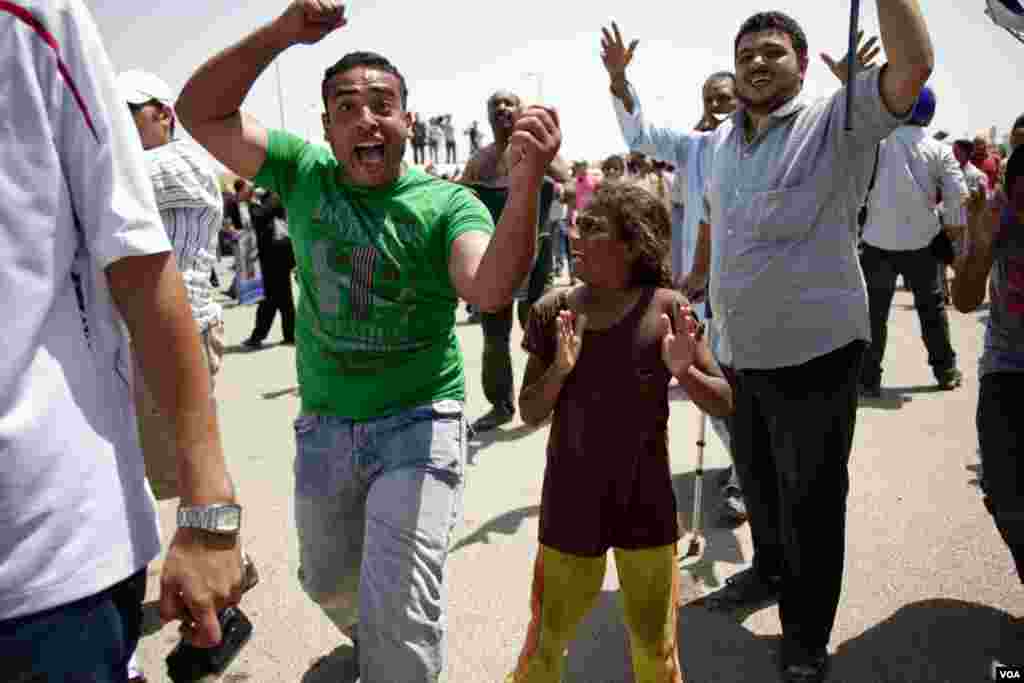
7/12Jubilation as news of the guilty verdict spreads in Cairo, June 2, 2012. (VOA/Y. Weeks)
Ousted Egyptian president Hosni Mubarak has received a sentence of life in prison for complicity in the killing of hundreds of anti-government protesters during last year's uprising that forced him from power. The verdict brought protesters and Mubarak supporters to the courthouse where his trial took place.
Show moreShow less
8/12The crowd sets off fireworks as Mubarak is found guilty, June 2, 2012. (VOA/Y. Weeks)
Ousted Egyptian president Hosni Mubarak has received a sentence of life in prison for complicity in the killing of hundreds of anti-government protesters during last year's uprising that forced him from power. The verdict brought protesters and Mubarak supporters to the courthouse where his trial took place.
Show moreShow less
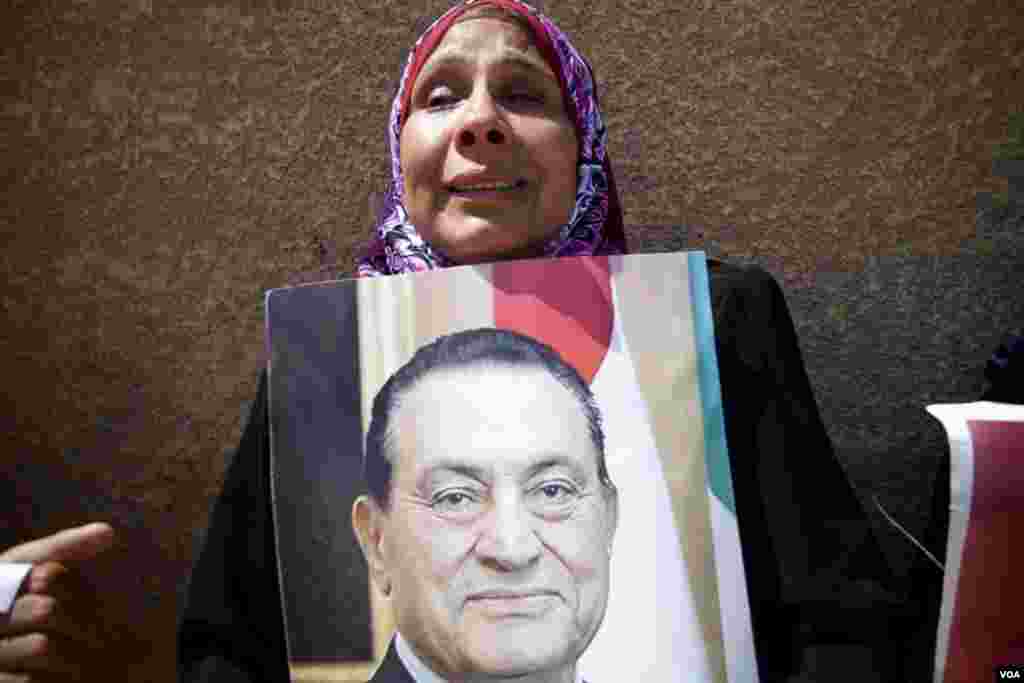
9/12Also near the courthouse, but separated by a sea of riot police, were Mubarak supporters, June 2, 2012. (VOA/Y. Weeks)
Ousted Egyptian president Hosni Mubarak has received a sentence of life in prison for complicity in the killing of hundreds of anti-government protesters during last year's uprising that forced him from power. The verdict brought protesters and Mubarak supporters to the courthouse where his trial took place.
Show moreShow less
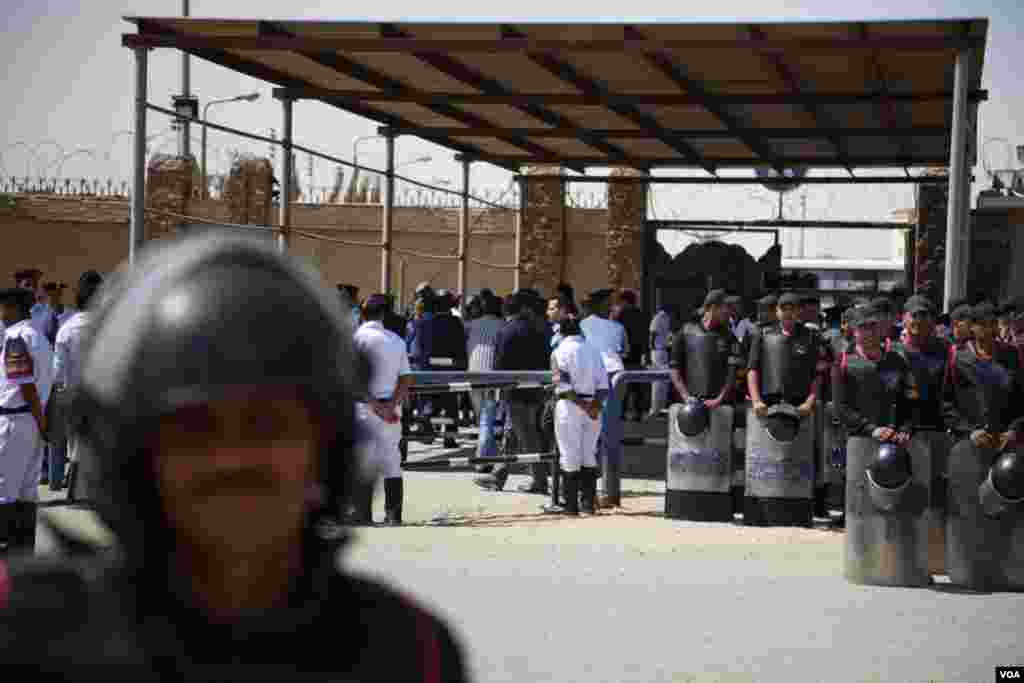
10/12Riot police stood guard outside of a Cairo courthouse just before former Egyptian president Hosni Mubarak was sentenced to life in prison, June 2, 2012. (VOA/Y. Weeks)
Ousted Egyptian president Hosni Mubarak has received a sentence of life in prison for complicity in the killing of hundreds of anti-government protesters during last year's uprising that forced him from power. The verdict brought protesters and Mubarak supporters to the courthouse where his trial took place.
Show moreShow less
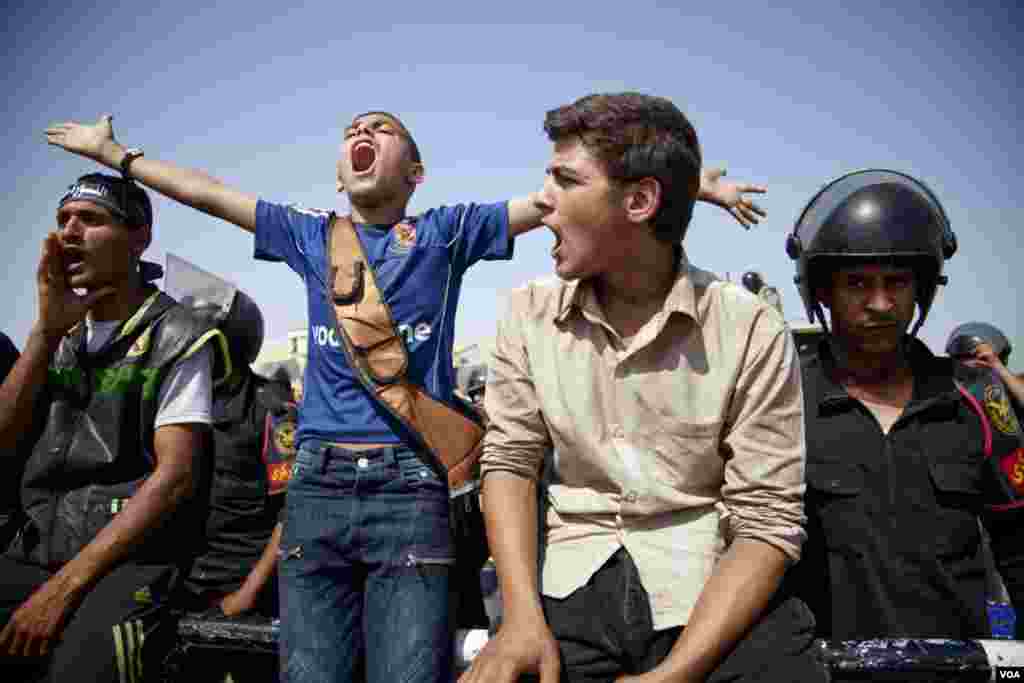
11/12Young anti-Mubarak protesters chant outside of the Cairo courthouse where former Egyptian president Hosni Mubarak awaited a verdict in his trial, June 2, 2012. (VOA/Y. Weeks)
Ousted Egyptian president Hosni Mubarak has received a sentence of life in prison for complicity in the killing of hundreds of anti-government protesters during last year's uprising that forced him from power. The verdict brought protesters and Mubarak supporters to the courthouse where his trial took place.
Show moreShow less
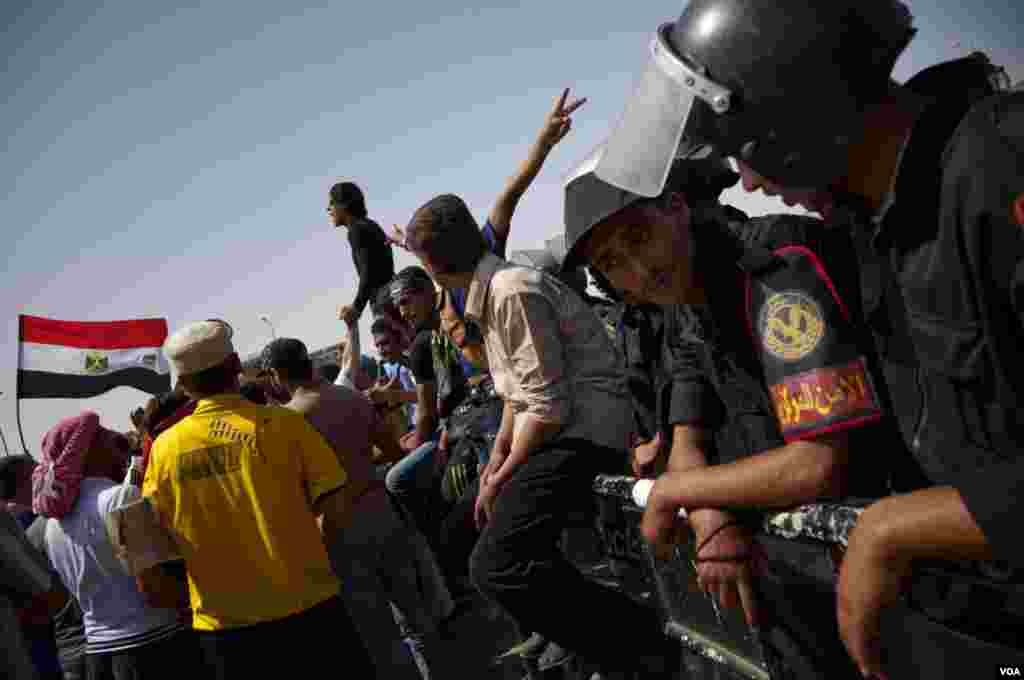
12/12Riot police stand guard as anti-Mubarak protesters chant in the background in Cairo, June 2, 2012. (VOA/Y. Weeks)
Ousted Egyptian president Hosni Mubarak has received a sentence of life in prison for complicity in the killing of hundreds of anti-government protesters during last year's uprising that forced him from power. The verdict brought protesters and Mubarak supporters to the courthouse where his trial took place.
Show moreShow less
Previous slide
Next slide
Meanwhile, Egyptian state media say Mubarak suffered an unspecified "health crisis" after the verdict. He received treatment at a prison hospital. The 84-year-old former president had consistently arrived in court on a stretcher.
Mubarak's abrupt resignation in February 2011 ended his almost 30-year rule in Egypt. His lawyers are expected to appeal his sentence.
U.S. Secretary of States Hillary Clinton declined to comment on Mubarak's conviction on Saturday. However, speaking in Norway, she expressed hope that Egypt's election process would produce a result that is "accepted as reflecting the will of the Egyptian people."
Some information for this report was provided by AP, AFP and Reuters.
The Voice of America provides news and information in more than 40 languages to an estimated weekly audience of over 326 million people. Stories with the VOA News byline are the work of multiple VOA journalists and may contain information from wire service reports.