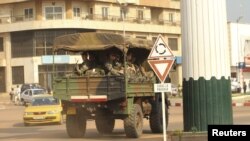
Residents are anxiously celebrating the new year in the Central African Republic where a tense standoff is under way between the government and rebels who are threatening to invade the capital, Bangui.
A strict dusk to dawn curfew remains in place in Bangui Tuesday.
Fighters for a coalition of three rebel groups, known as Seleka, are holding positions about 75 kilometers outside the city. The rebels say they may still push into the capital, despite an offer from President Francois Bozize to form a unity government.
The rebels began their lightening offensive in the north on December 10 and have since captured about a third of the country, including several major cities.
The Seleka coalition has accused President Bozize of failing to honor a 2007 agreement that included provisions for its fighters to be reintegrated and paid, after they laid down their arms in a previous uprising.
After meeting with African Union chief Thomas Yayi Boni on Sunday, Bozize said he was willing to join with the rebels in governing the country. But the media quoted representatives for the rebel alliance Monday as calling for outside intervention in the crisis and accusing the president's government of persecuting political foes in Bangui.
The C.A.R. is a former French colony, and Paris normally has about 250 troops stationed there as part of a peacekeeping mission. In recent days, the French government has increased that number to nearly 600, but it insists they are only there to protect France's interests and nationals and not intervene in the war.
Also, dozens of troops from the neighboring Republic of Congo began arriving in Bangui late Monday as part of an effort to increase the presence of a multi-national regional military force.
On Monday, French President Francois Hollande called for an opening of dialogue between the government and "all parties present," including rebels.
Meanwhile, the U.S. said it was deeply concerning about C.A.R.'s "deteriorating security situation." In a statement released late Monday, State Department spokeswoman Victoria Nuland said the U.S. is urging government forces to respect human rights and rebels to "cease hostilities and movements towards the capital."
C.A.R. has been plagued by insecurity for decades. President Bozize came to power during a 2003 coup.
A strict dusk to dawn curfew remains in place in Bangui Tuesday.
Fighters for a coalition of three rebel groups, known as Seleka, are holding positions about 75 kilometers outside the city. The rebels say they may still push into the capital, despite an offer from President Francois Bozize to form a unity government.
The rebels began their lightening offensive in the north on December 10 and have since captured about a third of the country, including several major cities.
The Seleka coalition has accused President Bozize of failing to honor a 2007 agreement that included provisions for its fighters to be reintegrated and paid, after they laid down their arms in a previous uprising.
After meeting with African Union chief Thomas Yayi Boni on Sunday, Bozize said he was willing to join with the rebels in governing the country. But the media quoted representatives for the rebel alliance Monday as calling for outside intervention in the crisis and accusing the president's government of persecuting political foes in Bangui.
The C.A.R. is a former French colony, and Paris normally has about 250 troops stationed there as part of a peacekeeping mission. In recent days, the French government has increased that number to nearly 600, but it insists they are only there to protect France's interests and nationals and not intervene in the war.
Also, dozens of troops from the neighboring Republic of Congo began arriving in Bangui late Monday as part of an effort to increase the presence of a multi-national regional military force.
On Monday, French President Francois Hollande called for an opening of dialogue between the government and "all parties present," including rebels.
Meanwhile, the U.S. said it was deeply concerning about C.A.R.'s "deteriorating security situation." In a statement released late Monday, State Department spokeswoman Victoria Nuland said the U.S. is urging government forces to respect human rights and rebels to "cease hostilities and movements towards the capital."
C.A.R. has been plagued by insecurity for decades. President Bozize came to power during a 2003 coup.