


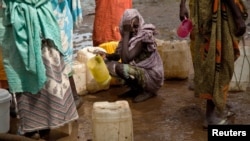
Over 170,000 refugees are living in refugee camps in South Sudan's Unity and Upper Nile states, a number that has almost doubled since last April. Most of the refugees are coming from South Kordofan and Blue Nile states in Sudan, where ongoing fighting between the SPLA-N and Sudanese government troops has displaced civilians.
Kitty Mckinsey, a spokesperson for the U.N. refugee agency (UNHCR), said refugees are fleeing “mainly because of the fighting, but the fighting has also made it impossible to farm, so some say they’re just going hungry at home.”
Mckinsey described the refugee's condition as serious, partly because many had never seen a doctor in their home villages.
"Then they walk for days or even weeks, so when they arrive at the refugee camps they’re already exhausted, maybe dehydrated, they maybe haven’t eaten, so they’re in a state where they could easily get sick if they’re not already sick,” Mckinsey said.
In a media briefing, the UNHCR's Deputy Director of the Division of Programme Support and Management, Paul Spiegel, said that refugees were making their way through the rain to the remote camps on roads that are almost non-existent.
The rainy season has made refugees even more susceptible to illnesses such as respiratory tract infections and malaria. Siegal said children under five are dying at rates the U.N. considers emergency levels. But the rainy season has also made getting food and other supplies to the camps much more difficult.
In the meantime, U.N. spokesperson Kitty Mckinsey said refugees are doing what they can to stay well.
“We’re training some of the refugees themselves and we work with other partners to go around and impress upon the refugees the importance of what we in the west would consider really basic stuff, like washing their hands, going to the health center the second anybody in the family has diarrhea, washing their buckets, washing their jerry cans, and all these really basic precautions so that they don’t get sick, or if they do get sick they don’t pass their illness on to anyone else,” Mckinsey said.
She added that the situation, while very serious, is not hopeless. Already campaigns to improve hygiene and immunizations are helping. But with South Sudan's oil revenues on hold while Sudanese and South Sudanese leaders continue to negotiate oil transportation fees and other issues, the refugees' host country cannot offer them much more than land and sympathy.
Kitty Mckinsey, a spokesperson for the U.N. refugee agency (UNHCR), said refugees are fleeing “mainly because of the fighting, but the fighting has also made it impossible to farm, so some say they’re just going hungry at home.”
Mckinsey described the refugee's condition as serious, partly because many had never seen a doctor in their home villages.
"Then they walk for days or even weeks, so when they arrive at the refugee camps they’re already exhausted, maybe dehydrated, they maybe haven’t eaten, so they’re in a state where they could easily get sick if they’re not already sick,” Mckinsey said.
In a media briefing, the UNHCR's Deputy Director of the Division of Programme Support and Management, Paul Spiegel, said that refugees were making their way through the rain to the remote camps on roads that are almost non-existent.
The rainy season has made refugees even more susceptible to illnesses such as respiratory tract infections and malaria. Siegal said children under five are dying at rates the U.N. considers emergency levels. But the rainy season has also made getting food and other supplies to the camps much more difficult.
In the meantime, U.N. spokesperson Kitty Mckinsey said refugees are doing what they can to stay well.
“We’re training some of the refugees themselves and we work with other partners to go around and impress upon the refugees the importance of what we in the west would consider really basic stuff, like washing their hands, going to the health center the second anybody in the family has diarrhea, washing their buckets, washing their jerry cans, and all these really basic precautions so that they don’t get sick, or if they do get sick they don’t pass their illness on to anyone else,” Mckinsey said.
She added that the situation, while very serious, is not hopeless. Already campaigns to improve hygiene and immunizations are helping. But with South Sudan's oil revenues on hold while Sudanese and South Sudanese leaders continue to negotiate oil transportation fees and other issues, the refugees' host country cannot offer them much more than land and sympathy.