News / USA

Remote US Museum Survives in Hells Canyon

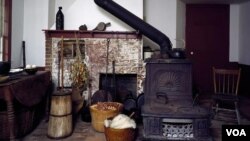
Grace Jordan’s kitchen has been spiffed up a bit from the Depression days when it was heavily used by her family and its ranch hands. (Carol M. Highsmith)
TEXT SIZE - +
Ted Landphair
The rushing Snake River cut America’s deepest gorge through Idaho in the Rocky Mountains of the American Northwest.

Today, it’s known as Hells Canyon.

Every few kilometers along the way, the river widened and scoured out sandbars.  There, protected from biting winds and howling snowstorms high above, Nez Percé Indians fashioned winter villages and buried their dead. Later, around 1880, ranchers took their place.

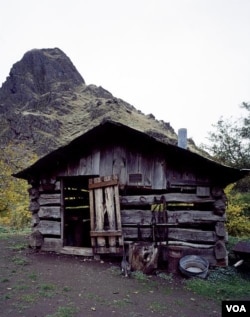
And in the 1930s, at the height of the Great Depression, ranch foreman Len Jordan and his wife, Grace, bought a ranch there that included a white-frame house, a blacksmith shop, and a rustic cabin.
Only in America-Hells Canyon Ranch
Loading
12:00:00 / -:--:--

And because Grace kept a journal that grew into the book Home Below Hell’s Canyon, and Len would become Idaho’s governor, the story of their rough-hewn existence on the remote sandbar would spread throughout the Great Northwest.
This old blacksmith shop is part of the rustic museum complex in hard-to-reach Hells Canyon, Idaho. (Carol M. Highsmith)This old blacksmith shop is part of the rustic museum complex in hard-to-reach Hells Canyon, Idaho. (Carol M. Highsmith)
x
This old blacksmith shop is part of the rustic museum complex in hard-to-reach Hells Canyon, Idaho. (Carol M. Highsmith)

The only electricity came from a clever water wheel in Kirkwood Creek that Len had jerry-rigged out of cowbells, bolted to a wheel from an old Model-T Ford.

Grace cooked on a simple wood stove for her husband and three children, and dozens of smelly sheephands.

The Jordans sold the ranch in 1943, and it passed through several owners.  

In the 1970s, the U.S. Forest Service rejected proposals to dam the Snake River to provide hydroelectric power and irrigation to nearby towns. 

Instead, it established the Hells Canyon National Recreation Area, restoring the Jordans’ ranch buildings as a museum and creating a spot where rafters could stop and picnic.

But there are only two ways to reach it, even today: by raft down the Snake, or on foot or horseback along a narrow, precipitous trail.  

Those who go there are reminded that there’ll be no cellphone service or Internet connection. Now that, in this day and age, is a hardship.


You May Like

Pakistan Reiterates Opposition to US Drone Strikes

Day earlier US President Barack Obama justified 'constrained' drone usage to save lives More

Study Identifies Risks of Human Spread of H7N9 Bird Flu

Study suggest that international measures to contain the H7N9 influenza, in the event of severe outbreak, will need to be targeted in Asia More

Violence Continues in Conakry Over Upcoming Elections

Opposition has called for boycott of elections More

Video Syria's Civil War Fuels Violence in Iraq

Analysts say al-Qaida-linked militants are flowing back and forth from both countries More

Video Star Trek Influence Lives Long and Prospers

As new movie thrills, many are once again discussing the iconic franchise's influence on society, science and technology More

OECD: Developing Green Cities Key to Sustainable Future

OECD suggests strategies to mitigate rapid growth, industrialization in urban centers, which produce about two-thirds of greenhouse gas emissions More

This forum has been closed.
Comment Sorting
Comments
     
by: Renata from: Poland
October 29, 2012 8:35 AM
my dream is to visit once such places..... awesome!

Featured Videos

Your JavaScript is turned off or you have an old version of Adobe's Flash Player. Get the latest Flash player.
Video

Video Volunteers Help Revive LA's Concrete River

The Los Angeles River is a concrete drainage channel through much of its 80-kilometer length. It channels waste-water from storm drains and has become a receptacle for much of the city's trash. But as Mike O'Sullivan reports, the river is slowly being restored with the help of volunteers, who take part in an annual clean-up.