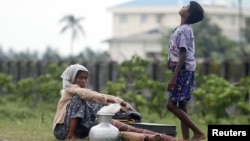
Activists and rights groups say violence continues against Burma's ethnic Muslim minorities, six weeks after a state of emergency was declared in western Rakhine state.
The government says at least 78 people have been killed in the region since late May, when longstanding tensions between the Buddhist Rakhines and Muslim Rohingyas erupted into communal violence.
Amnesty International says the state of emergency imposed June 10 has reduced sectarian clashes in some areas. But the group's Burma researcher Benjamin Zawacki tells VOA attacks against Rohingya Muslims are still on the rise.
"One would have expected by now a net human rights gain in terms of the restoration of order and security and the protection of people's rights. What we've found is that even as communal violence has decreased in much of the state, violence against Muslims generally and ethnic minority Rohingyas specifically has actually increased," he said.
Zawacki says Rohingyas and other Muslims have been subject to attacks - including rape, property destruction, and unlawful killings - by not only Rakhine Buddhists, but also state security services.
He also says hundreds of Muslims are being held incommunicado following mass arrests in Rohingya areas, noting that most are men and young boys who were apparently targeted because of their religion.
"They're being detained on a discriminatory basis and on the grounds of their religious and ethnic affiliation," he explained. "And as such, those detained - in Amnesty's view - constitute political prisoners."
Zawacki says such abuses erode the human rights progress made by Burma in the past year. But he points out that the political reforms brought along by President Thein Sein have done little to improve the situation in Burma's ethnic minority areas.
"This in many ways is simply keeping with what's been the case, not only with respect to the Rohingyas, but in other ethnic minority areas, as well," said Zawacki. "In many ways, the human rights progress made over the past year or so has always been confined to the political and economic centers, and is not extended to the ethnic minority areas."
The situation has reportedly worsened since Burmese President Thein Sein said earlier this month that deportation or refugee camps were the only solutions to the Rohingya crisis - a statement that prompted an outcry by activists.
Chris Lewa of the Arakan Project, a group that works closely with the Rohingyas, tells VOA there are reports that the president's statements have emboldened those who attack Rohingyas.
"This statement seems to have encouraged Rakhine villagers to actually chase away Rohingyas from different areas," Lewa said. "And it seems the local authorities seem to support this."
Up to 90,000 people have been displaced from the unrest in Rakhine, creating a potential humanitarian crisis. But Lewa says it is difficult to tell their condition because Burma is restricting access for aid workers and international monitors.
"On the one hand, international staff seem to have a problem obtaining travel permissions. And on the other hand, there have been threats circulating against the staff of these agencies if they would assist the camps," she said.
State-run media said Friday several government officials visited Rakhine this week to monitor recovery efforts and visit displaced villagers. The New Light of Myanmar said construction was underway on rebuilding houses damaged in the unrest.
The violence has also highlighted attempts by activists to convince Burma to amend or repeal laws denying citizenship to Rohingya Muslims. The Burmese government regards the technically stateless group as illegal immigrants from neighboring Bangladesh.
The government says at least 78 people have been killed in the region since late May, when longstanding tensions between the Buddhist Rakhines and Muslim Rohingyas erupted into communal violence.
Amnesty International says the state of emergency imposed June 10 has reduced sectarian clashes in some areas. But the group's Burma researcher Benjamin Zawacki tells VOA attacks against Rohingya Muslims are still on the rise.
"One would have expected by now a net human rights gain in terms of the restoration of order and security and the protection of people's rights. What we've found is that even as communal violence has decreased in much of the state, violence against Muslims generally and ethnic minority Rohingyas specifically has actually increased," he said.
Zawacki says Rohingyas and other Muslims have been subject to attacks - including rape, property destruction, and unlawful killings - by not only Rakhine Buddhists, but also state security services.
He also says hundreds of Muslims are being held incommunicado following mass arrests in Rohingya areas, noting that most are men and young boys who were apparently targeted because of their religion.
"They're being detained on a discriminatory basis and on the grounds of their religious and ethnic affiliation," he explained. "And as such, those detained - in Amnesty's view - constitute political prisoners."
Zawacki says such abuses erode the human rights progress made by Burma in the past year. But he points out that the political reforms brought along by President Thein Sein have done little to improve the situation in Burma's ethnic minority areas.
"This in many ways is simply keeping with what's been the case, not only with respect to the Rohingyas, but in other ethnic minority areas, as well," said Zawacki. "In many ways, the human rights progress made over the past year or so has always been confined to the political and economic centers, and is not extended to the ethnic minority areas."
The situation has reportedly worsened since Burmese President Thein Sein said earlier this month that deportation or refugee camps were the only solutions to the Rohingya crisis - a statement that prompted an outcry by activists.
Chris Lewa of the Arakan Project, a group that works closely with the Rohingyas, tells VOA there are reports that the president's statements have emboldened those who attack Rohingyas.
"This statement seems to have encouraged Rakhine villagers to actually chase away Rohingyas from different areas," Lewa said. "And it seems the local authorities seem to support this."
Up to 90,000 people have been displaced from the unrest in Rakhine, creating a potential humanitarian crisis. But Lewa says it is difficult to tell their condition because Burma is restricting access for aid workers and international monitors.
"On the one hand, international staff seem to have a problem obtaining travel permissions. And on the other hand, there have been threats circulating against the staff of these agencies if they would assist the camps," she said.
State-run media said Friday several government officials visited Rakhine this week to monitor recovery efforts and visit displaced villagers. The New Light of Myanmar said construction was underway on rebuilding houses damaged in the unrest.
The violence has also highlighted attempts by activists to convince Burma to amend or repeal laws denying citizenship to Rohingya Muslims. The Burmese government regards the technically stateless group as illegal immigrants from neighboring Bangladesh.