


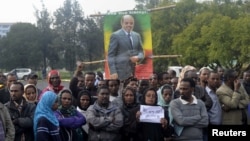
JOHANNESBURG — Ethiopian Prime Minister Meles Zenawi has died at the age of 57 after a long hospitalization and months of speculation about his health. In announcing his death Tuesday, state TV said he died on Monday at a hospital abroad, as a result of a sudden infection.
The thing I'll never forget about Meles was his wide grin. He smiled with his entire face, his eyes twinkled, and he leaned in, as if to share his infectious joy.
This was the grin he showed me whenever I asked him a challenging question.
“Ato Meles," I would ask, using the honorific, "let’s talk about your human-rights record.”
Or, "Ato Meles, since you wouldn't answer the question posed by my colleague from the BBC, I'll ask it again."
After two years, we got to the point where he began grinning every time I raised my hand, though he never called me by name.
Ethiopia is a complicated, difficult country, but it has been led by extraordinary men, and women, throughout its long and rich history.
Leaders such as Emperor Haile Selassie, Emperor Tewodros - considered the first ruler of modern Ethiopia - and the legendary powerful Queen of Sheba.
In Meles’ case, here was a man utterly convinced of his own moral rectitude. His critics called that arrogance, and they may have been right.
Meles seized power in 1991 after a Marxist dictator had ravaged the nation and ignored a massive famine. He struggled to maintain the economy after he allowed coastal Eritrea to claim independence, giving up the nation's seaports with it.
He ushered the country through solid economic growth, mostly kept the country at peace - though critics complained of his authoritarian tactics - and maintained Ethiopia’s historic dominance in the region.
But then in 2005, just as the international community was beginning to laud him for being one of Africa’s great modern leaders, he held an election.
And afterwards, when the opposition contested his victory, Meles' military used force against protests in the capital. Nearly 200 people died in post-election violence and protests, and hundreds more were jailed, including opposition politicians and journalists. International criticism was intense.
I arrived in Addis Ababa as a reporter two years later. The nation was still in shock.
In 2008, when the government held local elections, it was handled more smoothly. However, I visited the countryside and spoke to dozens of terrified peasants who whispered to me that they’d been threatened with the loss of their jobs, housing and food aid if they did not vote for the ruling party.
Not surprisingly, the ruling party won overwhelmingly, and filled offices across the nation with loyalists - the very people charged with observing and running the campaign in the remote rural areas. In 2010, when Meles ran again, he won a striking 99 percent of the vote.
Soon after, the government again started jailing journalists who criticized the prime minister.
On the international stage, Meles somehow managed to reconcile Ethiopia’s strong national identity with the demands of the modern world.
He did this while accepting billions of dollars in U.S. aid money, outsourcing many of his people’s basic needs to foreign donors. He also was a key U.S. ally in the war against terror, allowing U.S. military drones to be stationed in Ethiopia for missions over neighboring Somalia.
Meles stood alone among many African leaders who worked under the mantle of colonialism. Ethiopia is the only African nation that never was colonized, and Meles frequently reminded everyone of that.
“Ethiopia is not some banana republic,” he once intoned disapprovingly to a reporter who asked about international criticism of one of his controversial decisions.
He never doubted he was right, and he never accepted that his nation - despite its poverty, its challenges and its problems - was anything less than extraordinary.
While his legacy will be hotly debated in coming weeks and years, many Ethiopians will mourn him this week.
I will always remember that smile.
The thing I'll never forget about Meles was his wide grin. He smiled with his entire face, his eyes twinkled, and he leaned in, as if to share his infectious joy.
This was the grin he showed me whenever I asked him a challenging question.
“Ato Meles," I would ask, using the honorific, "let’s talk about your human-rights record.”
Or, "Ato Meles, since you wouldn't answer the question posed by my colleague from the BBC, I'll ask it again."
After two years, we got to the point where he began grinning every time I raised my hand, though he never called me by name.
Ethiopia is a complicated, difficult country, but it has been led by extraordinary men, and women, throughout its long and rich history.
Leaders such as Emperor Haile Selassie, Emperor Tewodros - considered the first ruler of modern Ethiopia - and the legendary powerful Queen of Sheba.
In Meles’ case, here was a man utterly convinced of his own moral rectitude. His critics called that arrogance, and they may have been right.
Meles seized power in 1991 after a Marxist dictator had ravaged the nation and ignored a massive famine. He struggled to maintain the economy after he allowed coastal Eritrea to claim independence, giving up the nation's seaports with it.
He ushered the country through solid economic growth, mostly kept the country at peace - though critics complained of his authoritarian tactics - and maintained Ethiopia’s historic dominance in the region.
But then in 2005, just as the international community was beginning to laud him for being one of Africa’s great modern leaders, he held an election.
And afterwards, when the opposition contested his victory, Meles' military used force against protests in the capital. Nearly 200 people died in post-election violence and protests, and hundreds more were jailed, including opposition politicians and journalists. International criticism was intense.
I arrived in Addis Ababa as a reporter two years later. The nation was still in shock.
In 2008, when the government held local elections, it was handled more smoothly. However, I visited the countryside and spoke to dozens of terrified peasants who whispered to me that they’d been threatened with the loss of their jobs, housing and food aid if they did not vote for the ruling party.
Not surprisingly, the ruling party won overwhelmingly, and filled offices across the nation with loyalists - the very people charged with observing and running the campaign in the remote rural areas. In 2010, when Meles ran again, he won a striking 99 percent of the vote.
Soon after, the government again started jailing journalists who criticized the prime minister.
On the international stage, Meles somehow managed to reconcile Ethiopia’s strong national identity with the demands of the modern world.
He did this while accepting billions of dollars in U.S. aid money, outsourcing many of his people’s basic needs to foreign donors. He also was a key U.S. ally in the war against terror, allowing U.S. military drones to be stationed in Ethiopia for missions over neighboring Somalia.
Meles stood alone among many African leaders who worked under the mantle of colonialism. Ethiopia is the only African nation that never was colonized, and Meles frequently reminded everyone of that.
“Ethiopia is not some banana republic,” he once intoned disapprovingly to a reporter who asked about international criticism of one of his controversial decisions.
He never doubted he was right, and he never accepted that his nation - despite its poverty, its challenges and its problems - was anything less than extraordinary.
While his legacy will be hotly debated in coming weeks and years, many Ethiopians will mourn him this week.
I will always remember that smile.