


PORTLAND, Oregon — Public participation in scientific research is mushrooming in a trend known as "citizen science." It can take the form of volunteer monitoring, data collection, crowd-sourced science or science education with a research component. There is a science project for everyone, and - for the most part - researchers are happy to have the help.
Over the past six growing seasons, Project BudBurst has enlisted thousands of volunteer observers. They record when nearby plants leaf out, bloom and fruit. The observations flow into a massive open-access database. Then botanists can analyze the data to spot changes over time.
Project director Sandra Henderson says participatory science like this is proliferating at an "astronomical" pace.
"Originally, it was I don't want to say limited, but it was a lot of weather data and bird data," she says. "Now what we're seeing is more and more taxa [plant and animal categories], more and more interest. As a result, there's really a citizen science project to meet just about any interest."
Great World Wide Star Count (October 5-19, 2012) International event encourages everyone to go outside, look skywards after dark, count the stars they see in certain constellations, and report what they see online
World Water Monitoring Challenge™ International education and outreach program that builds public awareness and involvement in protecting water resources around the world by engaging citizens to conduct basic monitoring of their local water bodies. The program runs annually from March 22-Dec. 31
Fold It You solve geometric puzzles online in a game setting, in the process helping scientists at the University of Washington and elsewhere unravel complex protein structures
USGS’s "Did You Feel It?" Earthquake reporting
Citizen Sky Amateur astronomers monitor brightness changes of variable star
For instance, amateur astronomers can monitor the changing brightness of a mysterious star.
Or examine satellite images to find potential archeological dig sites in the search for the lost tomb of Mongol ruler Genghis Khan.
If whales are more your thing, you can listen to underwater microphones and then notify researchers when orca whales are present.
Thousands of Americans and Canadians signed up to count birds this past season as part of Project FeederWatch.
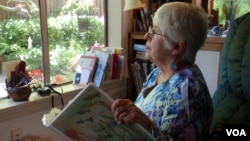
"It has been fun to be a part of the whole thing," says retired teacher Joan Davies Rapp of Tacoma, Washington, a longtime volunteer observer. "I've noticed migration of different birds coming up the last 12 years. Things have changed a bit."
Water sampling is another field experiencing rapid growth in citizen science. Amanda Bruner coordinates SoundCitizen, a project based at the University of Washington-Tacoma which monitors pollutants in Puget Sound.
"Maybe a few scientists on a boat can go out and collect 20 samples in a day," she says, "but when we involve the public, we can talk about thousands of samples, which certainly gives us much more confidence in what we're finding."
The confidence level is important because Bruner says some people, including other scientists, still question whether average citizens can collect reliable data.
A rapidly expanding collection of technology addresses data quality while, at the same time, digital tools accelerate the spread of citizen science.
Dennis Ward pulls out his smartphone to demonstrate the app for Project BudBurst. The educational technologist scrutinizes a maple tree in a public plaza. He takes a close up picture of the seed pods, confirms his identification of species with the app, and uploads the sighting.
"One of the wonderful things about using mobile technology is that, as you can see, it actually has the longitude and latitude that is taken from the phone when I took the picture," Ward says. "And I can even say a little bit about the site."
Ward finds that smartphone apps and interactive websites reduce errors and make it easier to participate and share data.
Public health research is another area where average citizens are getting involved in study design and execution. Some epidemiologists have even found they have no choice but to involve the public in certain places. A health researcher from New England who has had that experience shared this catchphrase: "No more research about us without us."
Over the past six growing seasons, Project BudBurst has enlisted thousands of volunteer observers. They record when nearby plants leaf out, bloom and fruit. The observations flow into a massive open-access database. Then botanists can analyze the data to spot changes over time.
Project director Sandra Henderson says participatory science like this is proliferating at an "astronomical" pace.
"Originally, it was I don't want to say limited, but it was a lot of weather data and bird data," she says. "Now what we're seeing is more and more taxa [plant and animal categories], more and more interest. As a result, there's really a citizen science project to meet just about any interest."
Citizen Science Opportunities
CITIZEN SCIENCE OPPORTUNITIESGreat World Wide Star Count (October 5-19, 2012) International event encourages everyone to go outside, look skywards after dark, count the stars they see in certain constellations, and report what they see online
World Water Monitoring Challenge™ International education and outreach program that builds public awareness and involvement in protecting water resources around the world by engaging citizens to conduct basic monitoring of their local water bodies. The program runs annually from March 22-Dec. 31
Fold It You solve geometric puzzles online in a game setting, in the process helping scientists at the University of Washington and elsewhere unravel complex protein structures
USGS’s "Did You Feel It?" Earthquake reporting
Citizen Sky Amateur astronomers monitor brightness changes of variable star
For instance, amateur astronomers can monitor the changing brightness of a mysterious star.
Or examine satellite images to find potential archeological dig sites in the search for the lost tomb of Mongol ruler Genghis Khan.
If whales are more your thing, you can listen to underwater microphones and then notify researchers when orca whales are present.
Thousands of Americans and Canadians signed up to count birds this past season as part of Project FeederWatch.
"It has been fun to be a part of the whole thing," says retired teacher Joan Davies Rapp of Tacoma, Washington, a longtime volunteer observer. "I've noticed migration of different birds coming up the last 12 years. Things have changed a bit."
Water sampling is another field experiencing rapid growth in citizen science. Amanda Bruner coordinates SoundCitizen, a project based at the University of Washington-Tacoma which monitors pollutants in Puget Sound.
"Maybe a few scientists on a boat can go out and collect 20 samples in a day," she says, "but when we involve the public, we can talk about thousands of samples, which certainly gives us much more confidence in what we're finding."
The confidence level is important because Bruner says some people, including other scientists, still question whether average citizens can collect reliable data.
A rapidly expanding collection of technology addresses data quality while, at the same time, digital tools accelerate the spread of citizen science.
Dennis Ward pulls out his smartphone to demonstrate the app for Project BudBurst. The educational technologist scrutinizes a maple tree in a public plaza. He takes a close up picture of the seed pods, confirms his identification of species with the app, and uploads the sighting.
"One of the wonderful things about using mobile technology is that, as you can see, it actually has the longitude and latitude that is taken from the phone when I took the picture," Ward says. "And I can even say a little bit about the site."
Ward finds that smartphone apps and interactive websites reduce errors and make it easier to participate and share data.
Public health research is another area where average citizens are getting involved in study design and execution. Some epidemiologists have even found they have no choice but to involve the public in certain places. A health researcher from New England who has had that experience shared this catchphrase: "No more research about us without us."