




Bioengineers in the United States have developed an implantable wireless monitor for diabetics that can measure glucose levels continuously for up to a year before needing replacement. The device, if approved by federal regulators, would give diabetics a more reliable and less painful alternative to current glucose monitoring devices.
The glucose monitoring system is designed to be implanted just under the skin, where it automatically measures glucose or blood sugar levels and transmits the data to an external receiver. The device, a small disc about 38 millimeters across and 16 millimeters thick, could be substituted for painful finger-stick devices and implanted needle-like sensors that monitor glucose levels continuously, but need to be replaced every three to seven days.
Diabetics have difficulty maintaining healthy blood glucose levels because they cannot produce enough of the sugar-processing hormone insulin - a condition called Type 1 or juvenile diabetes - or because the insulin they do produce is unable to properly convert dietary glucose into energy - a condition known as Type 2 or adult-onset diabetes.
Large studies have shown that strict blood sugar control, through continual glucose measurements and adjustment when blood sugar levels get too high or too low, reduces the risk of diabetic complications, including kidney, eye and heart disease.
Bioengineer David Gough of the University of California, San Diego is lead author of the study describing the new monitoring system and its successful performance in animal tests.
Gough says the sensor would allow diabetics to keep a much closer eye on their blood sugar levels than conventional methods. "So they could adjust the insulin or exercise, diet or other therapy and better manage their diabetes. So this device would be implanted subcutaneously for long periods of time, say a year or more," he said.
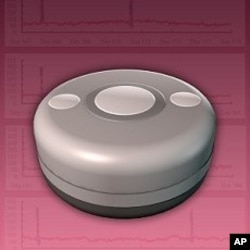
The monitor is made up of two oxygen sensors. One contains an enzyme catalyst called glucose oxydase that triggers a chemical reaction in proportion to the amount of oxygen consumed by sugar in the interstitial fluid beneath the skin.
The second sensor reads the amount of oxygen from the first sensor and compares it to a reference level, producing a blood glucose reading.
Gough says the dual sensors could be implanted during a simple outpatient procedure, at the waist or lower abdomen, or just below the collar bone, where heart pacemakers are often located.
The bioengineer says the readings would be sent wirelessly to a receiver outside the body. "You could have the receiver attached to your belt or it might ultimately be a cell phone or something like that," he said.
The wireless glucose monitor would guard against one of the most dangerous aspects of diabetes - hypoglycemia, a condition in which blood sugar levels fall very low. It is especially dangerous, Gough says, if the condition develops while a patient is asleep.
"Those people are under an immediate concern because they can lose cognitive ability and have an accident or something. So this device would warn when glucose was too low as well. And both of those things - both the short term problems of diabetes and long term problems of diabetes - could, in principal, be ameliorated," he said.
Gough says the glucose sensors could be used to send a cell phone wake-up call to parents of diabetic children if their child's glucose level dropped dangerously low during the night.
Researchers say their goal is to create a closed-loop system in which the wireless monitor continuously measures blood glucose and an external insulin pump automatically adjusts the amount of insulin being administered.
Gough says researchers hope to begin human clinical trials of the glucose monitor within the next few months and to gain federal regulatory approval soon after that.
An article describing the wireless blood sugar monitor is published in the journal Science Translational Medicine.