


A Cambodian-led research team has uncovered a rare photograph of one of the few Westerners to be killed at a notorious Khmer Rouge prison in the 1970s.
The Documentation Center for Cambodia sent the photograph of French Embassy worker Andre Gaston Courtigne to VOA's Khmer Service Thursday. Chief archivist Chhang Youk said his team found the photograph by chance while sifting through thousands of paper documents at the center, which seeks to preserve the history of Khmer Rouge genocide victims. The ultra-leftist group ruled Cambodia from 1975-79.
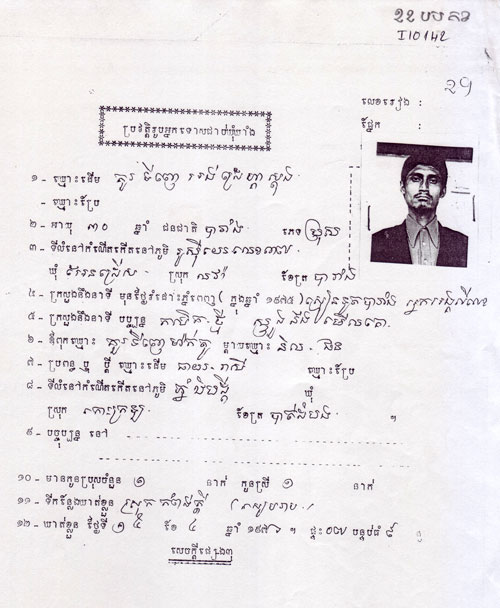
1 – Name of origin: COURTIGNE, André Gaston - Alias …………………………………………
2 – Age: 30 Years old Nationality: French Sex: Male
3 – Place of Birth: Village: Rosiers 37 Commune: Andrezé District: Loire Province: France
4 – Ministry and role before Phnom Penh Liberation Day (in 1975): Clerk at French embassy, Typist
5 – Ministry and current role: new farmer, rice growing and herding cows
6 – Father’s name: COURTIGNE Makto Mother’s name: Nil Phorn
7 – Spouse’s name: Chhay Rasy Alias: …………………………..
8 – Place of Birth: Village: Phnom Thipdey Commune: …………………
District: Kas Kralor Province: Battambang
9 – Current Address: ……………………………………
10 – Number of sons: 1 Daughter: 1
11 – Place of arrest: Kampong Kdey District (Siem Reap) 12 – Arrested on: Day 15 Month: 4 Year: 1976 House: 7 Room: 9
Courtigne already was known to have been one of 11 Westerners killed at the Khmer Rouge's Tuol Sleng interrogation center, also referred to as S-21. But the newly released photograph is the first known to show the Frenchman after his detention.
Chhang Youk said researchers stumbled on Courtigne's image during a document search aimed at trying to identify two other Western prisoners whose photographs were among hundreds donated to the center earlier this month.
"This document [about Courtigne] had been in our hands [before we received the donated photographs], but we had to search for it manually because we had not catalogued it yet," he said.
The two other Westerners have not yet been identified.
The Courtigne photograph was attached to several pages documenting his detention at Tuol Sleng, where the Khmer Rouge killed more than 10,000 prisoners, almost all Cambodians, after interrogating and forcing them to confess to alleged anti-regime crimes. The first page of Courtigne's file shows that the 30-year-old was arrested in Siem Reap in April 1976, when he worked as a French Embassy clerk and typist.
It also shows that he was married to a Cambodian woman and had a son and a daughter. The documents listed his birthplace as Maine-et-Loire in west-central France.
The researchers also have sent the documents to the French Embassy in Phnom Penh. Chhang Youk said French diplomats told him they were looking into the case.
Kimseng Men contributed to this report.
The Documentation Center for Cambodia sent the photograph of French Embassy worker Andre Gaston Courtigne to VOA's Khmer Service Thursday. Chief archivist Chhang Youk said his team found the photograph by chance while sifting through thousands of paper documents at the center, which seeks to preserve the history of Khmer Rouge genocide victims. The ultra-leftist group ruled Cambodia from 1975-79.
1 – Name of origin: COURTIGNE, André Gaston - Alias …………………………………………
2 – Age: 30 Years old Nationality: French Sex: Male
3 – Place of Birth: Village: Rosiers 37 Commune: Andrezé District: Loire Province: France
4 – Ministry and role before Phnom Penh Liberation Day (in 1975): Clerk at French embassy, Typist
5 – Ministry and current role: new farmer, rice growing and herding cows
6 – Father’s name: COURTIGNE Makto Mother’s name: Nil Phorn
7 – Spouse’s name: Chhay Rasy Alias: …………………………..
8 – Place of Birth: Village: Phnom Thipdey Commune: …………………
District: Kas Kralor Province: Battambang
9 – Current Address: ……………………………………
10 – Number of sons: 1 Daughter: 1
11 – Place of arrest: Kampong Kdey District (Siem Reap) 12 – Arrested on: Day 15 Month: 4 Year: 1976 House: 7 Room: 9
Courtigne already was known to have been one of 11 Westerners killed at the Khmer Rouge's Tuol Sleng interrogation center, also referred to as S-21. But the newly released photograph is the first known to show the Frenchman after his detention.
Chhang Youk said researchers stumbled on Courtigne's image during a document search aimed at trying to identify two other Western prisoners whose photographs were among hundreds donated to the center earlier this month.
"This document [about Courtigne] had been in our hands [before we received the donated photographs], but we had to search for it manually because we had not catalogued it yet," he said.
The two other Westerners have not yet been identified.
The Courtigne photograph was attached to several pages documenting his detention at Tuol Sleng, where the Khmer Rouge killed more than 10,000 prisoners, almost all Cambodians, after interrogating and forcing them to confess to alleged anti-regime crimes. The first page of Courtigne's file shows that the 30-year-old was arrested in Siem Reap in April 1976, when he worked as a French Embassy clerk and typist.
It also shows that he was married to a Cambodian woman and had a son and a daughter. The documents listed his birthplace as Maine-et-Loire in west-central France.
The researchers also have sent the documents to the French Embassy in Phnom Penh. Chhang Youk said French diplomats told him they were looking into the case.
Kimseng Men contributed to this report.