New Radiation Hot Spots Found at Japanese Nuclear Plant
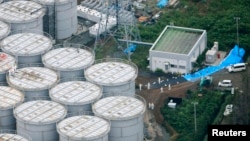
An aerial view shows workers wearing protective suits and masks working atop contaminated water storage tanks at Tokyo Electric Power Co. (TEPCO)'s tsunami-crippled Fukushima Daiichi nuclear power plant in Fukushima, August 20, 2013.
TOKYO —
The operator of Japan's crippled Fukushima nuclear plant said on Thursday new spots of high radiation had been found near storage tanks holding highly contaminated water, raising fear of fresh leaks as the disaster goes from bad to worse.
The announcement comes after Tokyo Electric Power Co (Tepco) said this week contaminated water with dangerously high levels of radiation was leaking from a storage tank.
A tsunami crashed into the Fukushima Daiichi power plant north of Tokyo on March 11, 2011, causing fuel-rod meltdowns at three reactors, radioactive contamination of air, sea and food and triggering the evacuation of 160,000 people.
It was the world's worst nuclear accident since Chernobyl in 1986 and no one seems to know how to bring the crisis to an end.
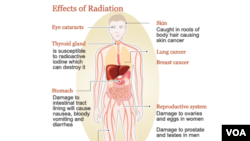
Click to enlarge
In an inspection carried out following the revelation of the leakage, high radiation readings - 100 millisieverts per hour and 70 millisieverts per hour - were recorded at the bottom of two tanks in a different part of the plant, Tepco said.
Although no puddles were found nearby and there were no noticeable changes in water levels in the tanks, the possibility of stored water having leaked out cannot be ruled out, a Tokyo Electric spokesman said.
The confirmed leakage prompted Japan's nuclear watchdog to say it feared the disaster was “in some respect” beyond Tepco's ability to cope.
The U.N.'s International Atomic Energy Agency (IAEA) said on Wednesday it viewed the situation at Fukushima “seriously” and was ready to help if called upon.
China said it was “shocked” to hear contaminated water was still leaking from the plant, and urged Japan to provide information “in a timely, thorough and accurate way”.
Photo Gallery: Japan Marks Tsunami Anniversary
Japan Marks 2nd Tsunami Anniversary
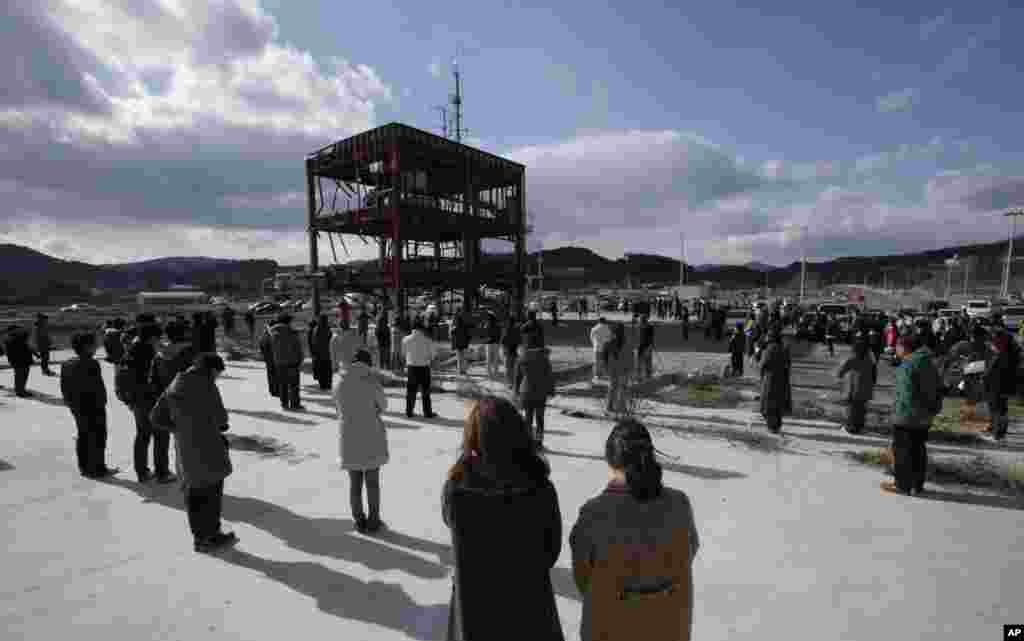
1/9People bow their heads in a moment of silence around what is left of a disaster control center devastated by the March 11, 2011 earthquake and tsunami, Minamisanriku, Miyagi prefecture, Japan, March 11, 2013.
Japan observed a moment of silence to mark the second anniversary of a devastating earthquake and tsunami that claimed nearly 19,000 lives and caused the worst nuclear accident since the 1986 Chernobyl disaster.
Show moreShow less
2/9Japanese Prime Minister Shinzo Abe bows to Emperor Akihito and Empress Michiko during the national memorial service for the victims of the March 11, 2011, earthquake and tsunami in Tokyo, March 11, 2013.
Japan observed a moment of silence to mark the second anniversary of a devastating earthquake and tsunami that claimed nearly 19,000 lives and caused the worst nuclear accident since the 1986 Chernobyl disaster.
Show moreShow less
3/9Japanese Emperor Akihito and Empress Michiko leave the national memorial service for the victims of the March 11, 2011 earthquake and tsunami in Tokyo, March 11, 2013.
Japan observed a moment of silence to mark the second anniversary of a devastating earthquake and tsunami that claimed nearly 19,000 lives and caused the worst nuclear accident since the 1986 Chernobyl disaster.
Show moreShow less
4/9People observe a moment of silence for the victims of the March 11, 2011 earthquake and tsunami during an event at a park in Tokyo, March 11, 2013.
Japan observed a moment of silence to mark the second anniversary of a devastating earthquake and tsunami that claimed nearly 19,000 lives and caused the worst nuclear accident since the 1986 Chernobyl disaster.
Show moreShow less
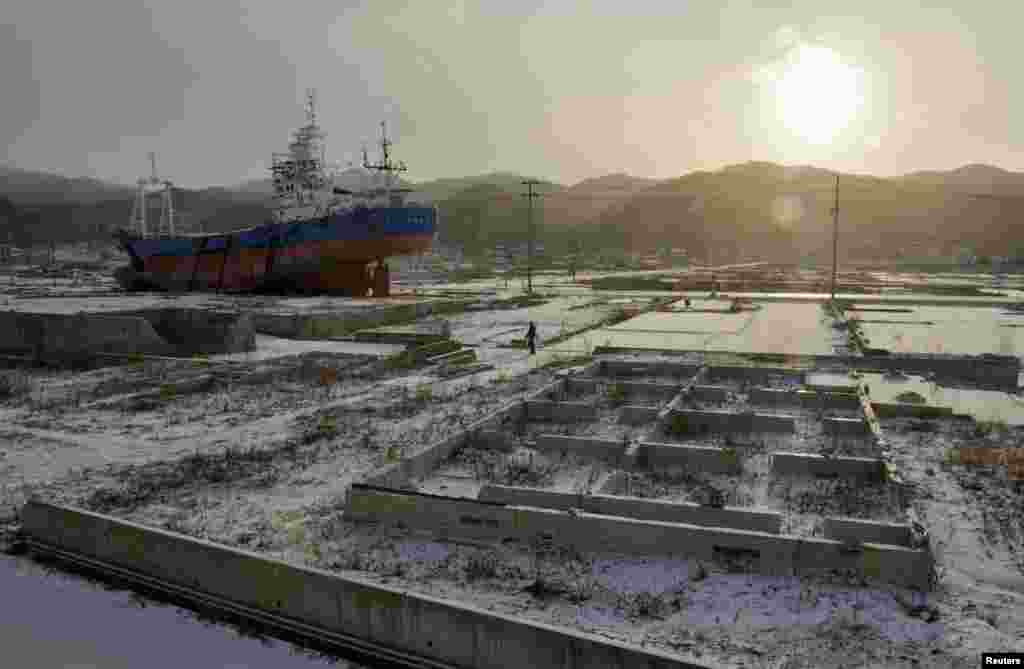
5/9A local resident and a dog walk near a ship brought ashore by the March 11, 2011 tsunami and earthquake in Kesennuma, Miyagi Prefecture, Japan, March 11, 2013.
Japan observed a moment of silence to mark the second anniversary of a devastating earthquake and tsunami that claimed nearly 19,000 lives and caused the worst nuclear accident since the 1986 Chernobyl disaster.
Show moreShow less
6/9The Netherlands (top) and Cuban baseball teams offer a silent tribute to victims of March 11, 2011 earthquake and tsunam, before their World Baseball Classic (WBC) second round game in Tokyo, March 11, 2013.
Japan observed a moment of silence to mark the second anniversary of a devastating earthquake and tsunami that claimed nearly 19,000 lives and caused the worst nuclear accident since the 1986 Chernobyl disaster.
Show moreShow less
7/9Buddhist monks chant sutras in front of the main entrance of Okawa Elementary School where 74 of the 108 students went missing after the March 11, 2011 tsunami in Ishinomaki, Miyagi prefecture, Japan, March 11, 2013.
Japan observed a moment of silence to mark the second anniversary of a devastating earthquake and tsunami that claimed nearly 19,000 lives and caused the worst nuclear accident since the 1986 Chernobyl disaster.
Show moreShow less
8/9Police officers search for the remains of those who went missing in the March 11, 2011 tsunami on the coastline in Ishinomaki, Miyagi Prefecture, northern Japan, March 11, 2013.
Japan observed a moment of silence to mark the second anniversary of a devastating earthquake and tsunami that claimed nearly 19,000 lives and caused the worst nuclear accident since the 1986 Chernobyl disaster.
Show moreShow less
9/9A visitor lights a candle to remember the victims of the March 11, 2011 tsunami and earthquake, in Tokyo, March 10, 2013.
Japan observed a moment of silence to mark the second anniversary of a devastating earthquake and tsunami that claimed nearly 19,000 lives and caused the worst nuclear accident since the 1986 Chernobyl disaster.
Reuters is a news agency founded in 1851 and owned by the Thomson Reuters Corporation based in Toronto, Canada. One of the world's largest wire services, it provides financial news as well as international coverage in over 16 languages to more than 1000 newspapers and 750 broadcasters around the globe.