



LAUSANNE —
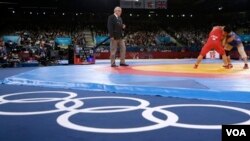
The surprise recommendation to drop wrestling from the Olympics has angered athletes, officials and fans around the world and the International Olympic Committee (IOC) played down the finality of its decision on Wednesday.
The IOC's 15-member executive board voted on Tuesday to recommend that the sport be dropped from the 2020 Olympic program, with a final decision resting with the IOC session in September in Buenos Aires.
The vote prompted an instant wave of protest and anger from the sport's global community with the international federation (FILA) calling it an aberration. Petitions launched with the White House and online wrestling support groups seek to sign up thousands of supporters.
India's government said on Wednesday it would seek the support of other countries where wrestling is popular to help the sport remain an Olympic discipline.
"These reactions, they are quite normal," IOC Vice President Thomas Bach told reporters. "This would have happened with any decision. You have to find the right balance between tradition and progress.
"This was a decision about core sports and nothing more," he said of Tuesday's vote that cut the core Olympic sports from 26 to 25, leaving out wrestling.
"I am happy about FILA's reaction, to draw up a plan to act," added Bach, a potential IOC presidential candidate. "That is the right way. Keep in mind a final decision has not yet been taken. If they (FILA) continue like that they will win a lot of sympathies."
In St. Petersburg this May the IOC's executive board will decide which of eight candidate sports, including wrestling, will be put forward to win the spot left vacant for the 2020 Games.
Painful decision
It will then put its recommendation for the 25 core sports and the new entry to a vote at its session in Argentina.
"It was always going to be a painful decision," said IOC member and head of the organization's finance commission Richard Carrion, also a potential presidential candidate.
"No matter what we do, it will be criticized by someone," said Carrion, a Puerto Rican whose country won a silver medal in wrestling at the London 2012 Olympics, one of two medals overall.
"From a personal point of view I am sad," he said. "I have become attached to the wrestling club [in Puerto Rico], which doesn't even have a regulation-size mat and still managed to send three athletes to the Games."
For Juan Antonio Samaranch Jr., who is both an executive board member and a modern pentathlon vice-president, the decision was a good one.
"I am very sorry for wrestling as it is a sport I respect," the son of former IOC president Samaranch told reporters. "I cannot be surprised by the reaction because any sport would have created the same reaction."
Wrestling's surprise exit has been blamed by some on a lack of political support within the executive board, where other sports at risk — including modern pentathlon and taekwondo — had the upper hand with representatives in the 15-member group.
Asked whether his double capacity was a conflict of interest, Samaranch said: "I am here in my capacity as executive board member."
The IOC's 15-member executive board voted on Tuesday to recommend that the sport be dropped from the 2020 Olympic program, with a final decision resting with the IOC session in September in Buenos Aires.
The vote prompted an instant wave of protest and anger from the sport's global community with the international federation (FILA) calling it an aberration. Petitions launched with the White House and online wrestling support groups seek to sign up thousands of supporters.
India's government said on Wednesday it would seek the support of other countries where wrestling is popular to help the sport remain an Olympic discipline.
"These reactions, they are quite normal," IOC Vice President Thomas Bach told reporters. "This would have happened with any decision. You have to find the right balance between tradition and progress.
"This was a decision about core sports and nothing more," he said of Tuesday's vote that cut the core Olympic sports from 26 to 25, leaving out wrestling.
"I am happy about FILA's reaction, to draw up a plan to act," added Bach, a potential IOC presidential candidate. "That is the right way. Keep in mind a final decision has not yet been taken. If they (FILA) continue like that they will win a lot of sympathies."
In St. Petersburg this May the IOC's executive board will decide which of eight candidate sports, including wrestling, will be put forward to win the spot left vacant for the 2020 Games.
Painful decision
It will then put its recommendation for the 25 core sports and the new entry to a vote at its session in Argentina.
"It was always going to be a painful decision," said IOC member and head of the organization's finance commission Richard Carrion, also a potential presidential candidate.
"No matter what we do, it will be criticized by someone," said Carrion, a Puerto Rican whose country won a silver medal in wrestling at the London 2012 Olympics, one of two medals overall.
"From a personal point of view I am sad," he said. "I have become attached to the wrestling club [in Puerto Rico], which doesn't even have a regulation-size mat and still managed to send three athletes to the Games."
For Juan Antonio Samaranch Jr., who is both an executive board member and a modern pentathlon vice-president, the decision was a good one.
"I am very sorry for wrestling as it is a sport I respect," the son of former IOC president Samaranch told reporters. "I cannot be surprised by the reaction because any sport would have created the same reaction."
Wrestling's surprise exit has been blamed by some on a lack of political support within the executive board, where other sports at risk — including modern pentathlon and taekwondo — had the upper hand with representatives in the 15-member group.
Asked whether his double capacity was a conflict of interest, Samaranch said: "I am here in my capacity as executive board member."