


International and local media rights groups have welcomed the release of 21 journalists in Somaliland and have called for authorities to release another four who are still detained. But some journalists in Somaliland are concerned for their safety and job effectiveness following the arrests.
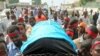
The autonomous region of Somaliland is facing intense criticism after the detention of 25 journalists last weekend. On Sunday, local journalists organized a peaceful protest in front of the state house, a day after police stormed and closed a local TV station.
National Union of Somali Journalists Secretary General Mohammed Ibrahim says the group is convinced Somaliland authorities were angered by the independent media reporting on a tribal conference in the Taleeh district of the Sool region.
“Somaliland authorities have systematically cracked down on journalists and media," said Ibrahim. "They are doing this because Somaliland authorities believe that the outcome of this conference will cause insecurity to the Somaliland administration that are currently in control most of the region in Somaliland.”
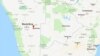
Following the January 5 conference, elders in the Dhulbahante clan announced the Sool, Sanaag and Aeyn regions are forming a independent state. The three regions are claimed by both Somaliland and Somalia's semi-autonomous Puntland region.
A Somali political analyst with Southlink Consultants in Nairobi, Abdiwahab Sheikh Abdi Samed, says Somaliland's reaction is clear it will not tolerate political interference from outside.
“They are saying the unity of Somaliland is untouchable," said Samed. "Somaliland, they want to secure her border and they have a very clear border between Somalia and Somaliland. So any one who is going to tempt that border they mark as enemy number one.”
He also said Somaliland authorities would continue to censor media and arrest journalists.
“They want to censor media so that people of Somaliland, they do not get to know much about Dhulbahante state," said Samed. "That [is] why they are cracking down on some of the media houses. So that [the people] do not have a factual and accurate reporting what is going on today in Taleeh and also the declaration of the new state.”
Somalia has not had a functioning central government since President Mohammed Siad Barre was overthrown in 1991. Somalia split into a number of clan-ruled territories, while the people of northwest Somalia formed their own administration called Somaliland. The region runs its own affairs, though it does not have international recognition as an independent state.