


Earlier this month, Russia, Belarus and Kazakhstan signed an agreement forming a customs union between the three countries. The ultimate goal is to create, sometime in the future, a single common market of about 170 million people.
Anders Aslund, with the Peterson Institute for International Economics, says it is unclear exactly what the three countries agreed to do. And he points out there have been numerous attempts to create such a trade zone before.
"First if you remember the union between Russia and Belarus in January 1994," he said. "Then a customs union with Kazakhstan and Russia in 1995, with then Belarus and then added Kyrgyzstan and Tajikistan. And then it was renamed EURASEC [Eurasian Economic Community] in 2000 and it sort of all fell apart," said Aslund.
Aslund says that was followed in September 2003 by the Common Economic Space with Russia, Belarus, Kazakhstan and Ukraine. But he says that fell apart because of the "Orange Revolution" in Ukraine.
"And this [new] customs union is essentially based on the Common Economic Space that should have included Ukraine also but has not, rather than the customs union of 1995," said Aslund. "Here we have lots of documents that have been signed over the years and they haven't meant really anything. So this is just a big conundrum [riddle] of bureaucracy and nobody seems to obey any laws, so why believe in it?" He asked.
Robert Legvold with Columbia University agrees:
"I don't think anybody who is looking at this believes that it is going to reach any kind of maturity or fruition anytime soon," he said. "The Russians and Belarussians are feuding continually. There would be fundamental problems anyway, even if there were goodwill among all the parties to it - and that goodwill is simply not there right now," said Legvold.
Some analysts say Russia's participation in a customs union might hurt its chances of becoming a member of the World Trade Organization - the agency overseeing the rules of international trade.
Other experts - such as Legvold and Aslund - say it won't. Once again, Anders Aslund.
"When I've talked to senior Russian officials recently, they say nobody in Moscow takes the customs union seriously. Russian officials have been here extensively in Washington explaining that this will not be an impediment to their WTO accession," Aslund said.
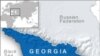
Analysts say a much bigger obstacle than the customs union is the Georgian government's opposition to Russia's WTO membership. Under WTO rules, any member can block a new country from joining simply by vetoing it, because the WTO operates by consensus. Tbilisi has over the years threatened to use its vote against Moscow.
Georgia has been angered by Russia's economic embargo on that country. And Tbilisi strongly opposes Moscow's support for the breakaway regions of Abkhazia and South Ossetia.
Lawyer (with DLA Piper) and trade expert David Christy, who has helped governments in their WTO bids, looks at another contentious issue between Moscow and Tbilisi.
"During Russia's accession, there was a dispute with basically treatment of border posts in Abkhazia and South Ossetia, which caused Georgia to stop the formal working party process for Russia. The way that the members involved in the Russian accession dealt with that was to have in essence 'gray meetings' - informal meetings - to try to push the process along," said Christy.
But that process has gained little ground.
Christy says the Georgians are still opposed to Russia joining the WTO.
"I don't think that they are - put it this way - as formally opposed as they were, but I also don't think that they are on board," he said. "They had concluded a bilateral [agreement] with Russia. In Russia's case, there are roughly 60 separate bilateral agreements with individual members of the WTO. The bilateral with Georgia had been concluded earlier but was undone by both parties in 2006 and has yet to be put back together. Putting these back together is not like putting Humpty Dumpty back together - but it will take a bit of work, that's for sure," Christy explained.
Christy says if Georgia is the only country opposed to Russia's WTO membership, the political pressure brought to bear on Tbilisi would eventually become intense and could overwhelm that country.
Russia has been trying to join the World Trade Organization - or WTO - since 1993. But it's WTO bid faces two possible obstacles: the creation of a new customs union and Georgia's opposition.