



In the days of the Soviet Union, Moscow was a major player in the Arab world. But in the last two years, the Kremlin has repeatedly backed the losing sides in the Arab Spring.
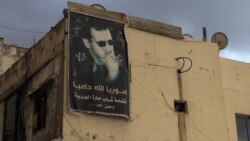
In Syria, President Bashar al-Assad is using Russian-made rockets, rifles and tanks to battle rebels.
But in Moscow, Russian officials are trying to put daylight between the Kremlin and the Assad government. Russian President Vladimir Putin says the Kremlin is not concerned about the fate of the Assad regime, which has ruled Syria for four decades, and that changes are needed. But Russia is worried about what will come next.
How does Russia’s position play in Anjar, a Lebanese border town clogged with Syrian refugees?
Deeb Abdel Khalik runs charity groups helping refugees from the same Syrian Muslim branch that is rebelling against President Assad.
He says Arabs now face two Israels -- Israel and its sister, Russia.
Inside Syria, Sunni rebels are threatening to kill Russian speakers, starting with Anhar Kochneva, a Ukrainian journalist kidnapped last month. In two weeks, a Russian naval task force is to reach Syrian waters to be ready to help in the possible evacuation of Russians.
In Tripoli, a northern Lebanese city, Sunni Sheikh Walid Taboush says Russia has lost support throughout the Arab world.
He says Russia does not care about the Syrian people, or the whole of the Arab world.
Only one kilometer away, but on the far side of the Muslim world’s deep sectarian divide, Abo Ali Zoumar leads a Lebanese militia of the same Alawite Shia sect as Syria’s ruling clan. He praises Russia’s position.
He says Russia’s position is honorable. He praises President Putin for remaining loyal to a friend, in good times and bad.
But in the mathematics of Islam, about 80 percent of Muslims in the world are Sunni, including almost all of Russia’s Muslims. The only two major Shia-controlled nations are Syria and Iran.
In Beirut, Paul Salem is a policy analyst directing the Carnegie Middle East Center. He says President Putin has made a losing bet on Syria’s president.
"The reading from here is a kind of incomprehension that the Russians would take such a strong position on an apparently losing bet, and continue to insist on going down with the ship as it were,“ Salen said.
Salem says this is undermining Russia’s influence in the Arab world.
“This has certainly damaged Russia’s image, Russia’s profile, in the Middle East, in the Arab world, in the Muslim world in general. It comes at a pretty high price, with almost no gain," Salem said.
After backing the losing sides in Arab Spring revolutions in Tunisia, in Egypt and in Libya, is Russia doing it again -- in Syria?
In Syria, President Bashar al-Assad is using Russian-made rockets, rifles and tanks to battle rebels.
But in Moscow, Russian officials are trying to put daylight between the Kremlin and the Assad government. Russian President Vladimir Putin says the Kremlin is not concerned about the fate of the Assad regime, which has ruled Syria for four decades, and that changes are needed. But Russia is worried about what will come next.
How does Russia’s position play in Anjar, a Lebanese border town clogged with Syrian refugees?
Deeb Abdel Khalik runs charity groups helping refugees from the same Syrian Muslim branch that is rebelling against President Assad.
He says Arabs now face two Israels -- Israel and its sister, Russia.
Inside Syria, Sunni rebels are threatening to kill Russian speakers, starting with Anhar Kochneva, a Ukrainian journalist kidnapped last month. In two weeks, a Russian naval task force is to reach Syrian waters to be ready to help in the possible evacuation of Russians.
In Tripoli, a northern Lebanese city, Sunni Sheikh Walid Taboush says Russia has lost support throughout the Arab world.
He says Russia does not care about the Syrian people, or the whole of the Arab world.
Only one kilometer away, but on the far side of the Muslim world’s deep sectarian divide, Abo Ali Zoumar leads a Lebanese militia of the same Alawite Shia sect as Syria’s ruling clan. He praises Russia’s position.
He says Russia’s position is honorable. He praises President Putin for remaining loyal to a friend, in good times and bad.
But in the mathematics of Islam, about 80 percent of Muslims in the world are Sunni, including almost all of Russia’s Muslims. The only two major Shia-controlled nations are Syria and Iran.
In Beirut, Paul Salem is a policy analyst directing the Carnegie Middle East Center. He says President Putin has made a losing bet on Syria’s president.
"The reading from here is a kind of incomprehension that the Russians would take such a strong position on an apparently losing bet, and continue to insist on going down with the ship as it were,“ Salen said.
Salem says this is undermining Russia’s influence in the Arab world.
“This has certainly damaged Russia’s image, Russia’s profile, in the Middle East, in the Arab world, in the Muslim world in general. It comes at a pretty high price, with almost no gain," Salem said.
After backing the losing sides in Arab Spring revolutions in Tunisia, in Egypt and in Libya, is Russia doing it again -- in Syria?