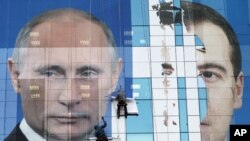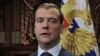



Russia’s upper house of parliament formally set March 4, 2012 as the date for the country’s presidential election. Russian Prime Minister Vladimir Putin is widely expected to return to the job for a third term after President Dmitry Medvedev in September agreed to step aside, in a job swap with Mr. Putin.
The prospect of having the former president return to power apparently has some Russians upset. Mr. Putin was recently, and unprecedentedly, booed in public at a sporting event in Moscow and he has fallen in some public opinion polls.
This rare show of animosity towards one of Russia’s most popular men has analysts weighing in.
Alexei Mukhin says that this may mean problems for Mr. Putin in next year’s elections.
Mukhin says that any sign that Vladimir Putin is unpopular is a political sensation, because in the past Mr. Putin has been seen as a widely accepted leader. Now, according to Mukhin, it looks like some groups might be turning away from him.
Mr. Putin's ruling United Russia party is also predicted to lose seats in the upcoming December 4th parliamentary elections although its widely expected to retain its majority.
The former KGB agent first became the country's leader, when Boris Yeltsin dramatically resigned as president on New Year’s Eve in 1999. Mr. Putin is widely credited with restoring Russia’s economy after its' collapse.
If Mr. Putin is elected president again, which he is widely expected to be; the 59-year-old could serve another two terms. Russia’s constitution was recently changed and next year’s leader will serve six years, so Mr. Putin could remain in power until 2024, making him the longest-serving leader since dictator Joseph Stalin.
Meanwhile, once the date of the presidential election is published in the state’s newspaper, Rossiskaya Gazeta, the campaign process will start and parties will be able to formally launch their candidates.
Russia to Hold Presidential Elections in March 2012