A scandal that ruined the career of prominent Chinese Communist Party leader Bo Xilai, and led to murder charges against his wife, has widened to include four of his former security chiefs being charged with covering up the crime.
A statement from the court in eastern China's Hefei city said the trial - which began Friday - is for the four men, who held senior security roles in the central city of Chongqing while Bo served as its Communist Party chief.
James Feinerman, the co-director of Georgetown Law School’s Asia program, said drawing the police into the case could lead to Bo’s own indictment.
“If you want to conclusively nail down the lid on Bo Xilai’s coffin, one of the things that you would do is admit in open court to having conspired to do this, and then the obvious implication is that Bo Xilai was overseeing this, or at least was informed of what they were doing,” he said.
Bo Xilai, left, Beijing, 2005; British businessman Neil Heywood, Beijing, 2010; Gu Kailai, wife of Bo.
Implicated in Cover Up
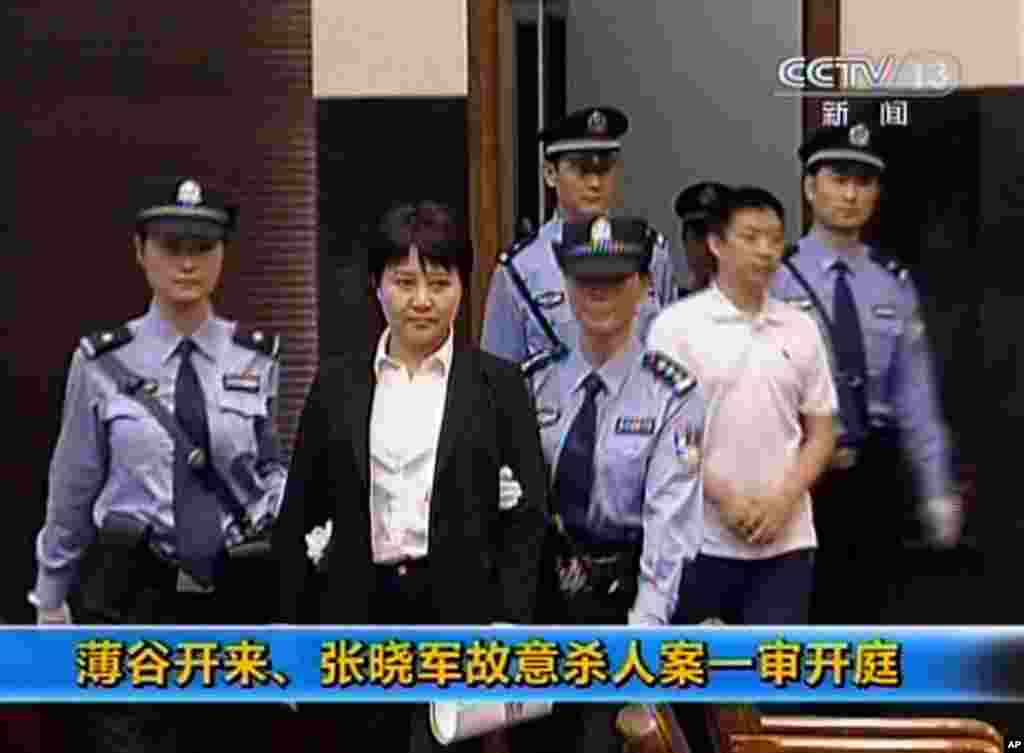
Bo’s wife, Gu Kailai, appeared at a brief trial Thursday on charges she conspired with a family butler to poison British businessman Neil Heywood in a Chongqing hotel room last November. The court said the four Chongqing security officials have been charged with covering up Gu's role in the incident and "bending the law to achieve personal benefit."
There was no verdict announced after the trial of Gu and the butler, Zhang Xiaojun, at the Hefei court. Heywood was a business partner of Gu's, and prosecutors said she killed him after a financial dispute. A court official later said Gu did not deny the allegations against her, but she has never publicly given her side of the story.
The disclosure of charges against Bo Xilai's former security chiefs is the first time the Chinese government has publicly implicated them in the scandal. The central government removed Bo from his Chongqing post in March for unspecified offenses after his wife was accused of murder. But he has not been publicly charged in the case.
Timeline of Bo Xilai Scandal
Timeline of the Bo Xilai Scandal
Feb. 2: Bo's key ally and Chongqing police chief Wang Lijun is demoted
Feb. 6: Wang visits U.S. consulate in Chengdu, reportedly to seek asylum
Mar. 2: Xinhua says Wang is under investigation
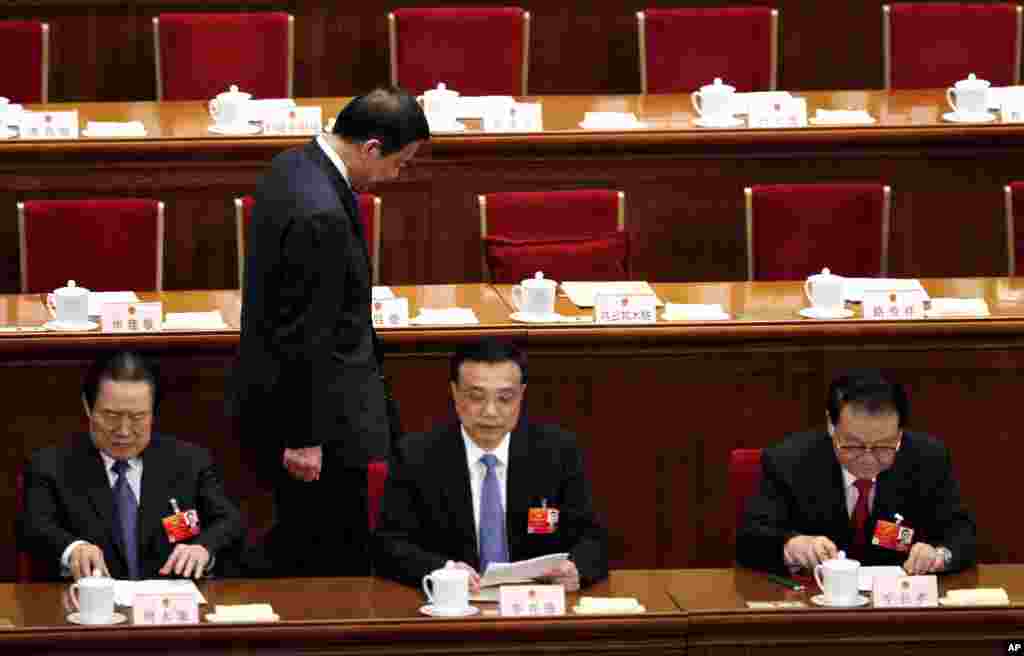
Mar. 9: Bo defends himself and his wife, Gu Kailai, at a press conference at the National People's Congress
Mar.15: Bo dismissed as Chongqing party chief
Mar. 26: Britain asks China to investigate November death of Briton Neil Heywood in Chongqing
Apr. 10: Bo suspended from Communist Party posts. China says his wife is being investigated for Heywood's death
Apr. 17: New York Times reports U.S. officials held Wang so he could be handed to Beijing authorities instead of local police.
Jul. 26: Bo's wife, Gu kailai, charged with the murder of Briton Neil Heywood
August 9: Gu Kailai's trial begins in Hefei.
Security Chiefs Linked to Bo
The four men due on trial Friday include the former deputy chief of Chongqing's Public Security Bureau, Guo Weiguo, the former chief of the bureau's criminal section, Li Yang, and former security officials Wang Pengfei and Wang Zhi. The defendants had served under former public security bureau chief Wang Lijun, who first revealed the murder allegations against Gu to U.S. diplomats in February.
Wang and his deputies had worked under Bo's authority for years, dating back to Bo's tenure as governor of the northeastern province of Liaoning in the early 2000s. They followed Bo to Chongqing after he became municipal party chief in 2007.
Bo and Wang carried out a so-called “smash black” campaign against corruption and crime in Chongqing, a crackdown critics say included unlawful practices like framing suspects, forcing confessions and extorting potential targets.
Containing the Case
Jacques deLisle, a China legal expert with the University of Pennsylvania Law School, says the Chinese Communist Party is likely looking for a way to hold Bo accountable for some misbehavior without examining all of his practices.
“The easiest charge to bring against him politically is covering up Gu’s crime because that’s a one-off. If you get into things like he used the police to systematically go after enemies and highly corrupt activities, then you [raise the point that] that goes on with a lot of Chinese officials,” he said.
Chinese officials are not commenting on the trial, and state media has done little reporting, leaving much open to speculation.
Feinerman says there is also a chance the police officials could say they acted on their own will. Whichever direction the trial takes, he says Chinese officials are looking to clean up the police administration in Chongqing, which was called into question after its chief, Wang, fled to a U.S. consulate.
“They had to go back through it and try and see up and down who was allied with Wang Lijun and who was taking orders from Bo Xilai, and make sure they had people who were going to be more loyal to the center,” he said.
Getting the police and Bo’s allies in line is crucial to ensuring a smooth leadership transition during November’s Communist Party Congress, according to Feinerman.
“The problem that they [Chinese leaders] face is there are still people who were allied with Bo Xilai or leftists who took heart in what seemed to be his coming rise who need to be tamped down to make sure there will be a smooth transition without a lot of factionalism,” he said.
Security Tight in Hefei
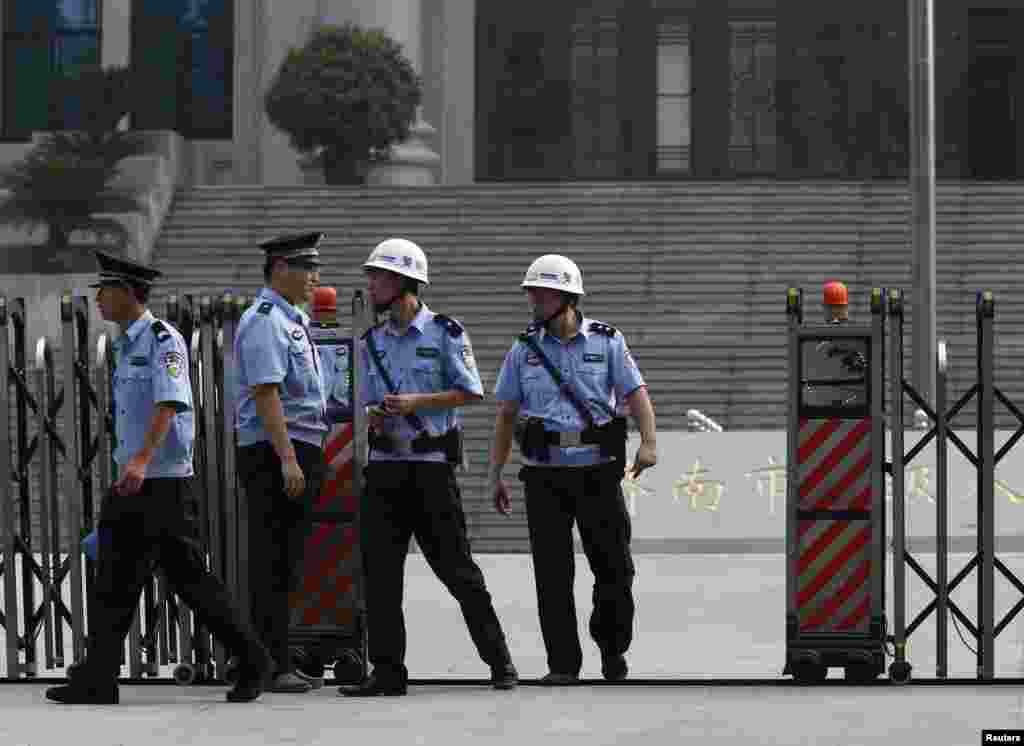
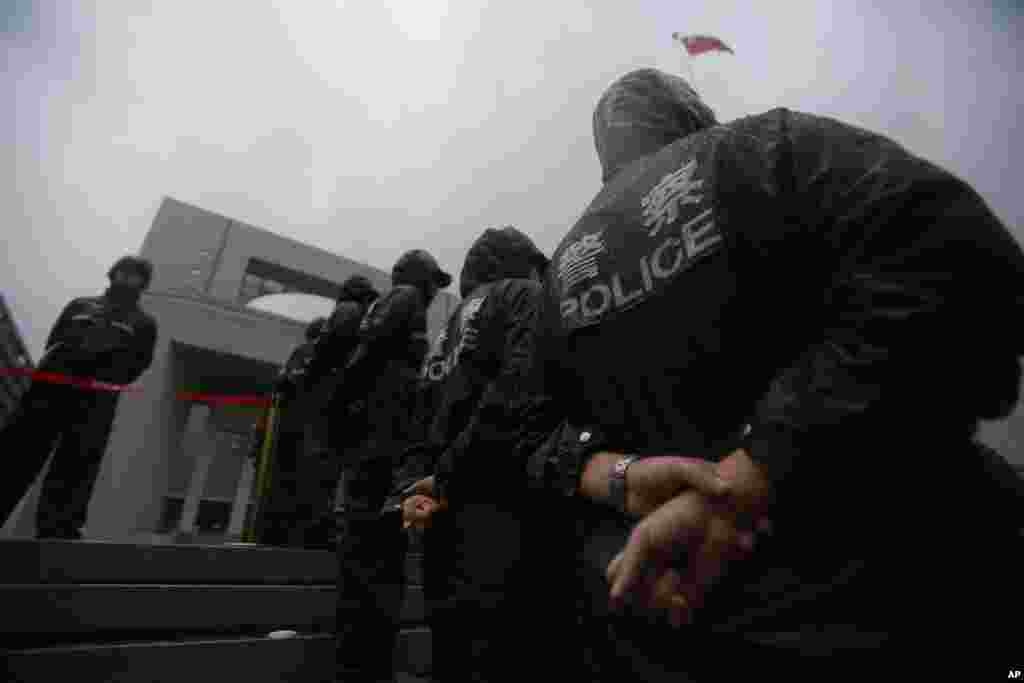
During the one-day trial of Gu Kailai and her co-defendant, uniformed and plainclothes police were deployed in neighborhoods and even shopping malls around the courthouse.
Reporter Shannon Van Sant said a group of about 20 people showed up at the courthouse in Thursday morning and spoke with reporters about their support for Bo Xilai, whom they saw as an alternative to what they referred to as China's current corrupt leadership.
“Initially there were some undercover police and thugs tried to block cameras with their umbrellas,” Van Sant said. “Eventually some other police came over as the people started speaking more forcefully and more passionately of their support for Bo Xilai.” Van Sant said the police beat several protesters, and eventually forced at least two men inside one of their cars.
Bo Xilai was previously widely expected to be in line for a seat at the Standing Committee of the party’s Politburo. During his tenure in Chongqing, he led a controversial revival of Communist themes and tried to clean up the city by planting trees and cracking down on organized crime. He was considered a popular politician among residents.
China's Bo Xilai Scandal
1/12In this photo released by the Jinan Intermediate People's Court, Bo Xilai is handcuffed and held by police officers as he stands at the court in Jinan, in eastern China's Shandong province, Sept. 22, 2013.
Show moreShow less
2/12A minivan believed to be carrying Bo Xilai arrives at the Jinan Intermediate People's Court ahead of the fifth day of Bo's trial, August 26, 2013.
Show moreShow less
3/12In this image taken from video, Bo Xilai addresses a court at Jinan Intermediate People's Court in eastern China's Shandong province, Aug. 24, 2013.
Show moreShow less
4/12A woman protests outside the Jinan Intermediate People's Court, eastern China's Shandong province, August 21, 2013.
Show moreShow less
5/12Gu Kailai, wife of Bo Xilai, is seen in a still image taken from an August 10, 2013 video provided by the Jinan Intermediate People's Court.
Show moreShow less
6/12Policemen are seen at a court building where the trial for Bo Xilai was held in Jinan, Shandong province.
Show moreShow less
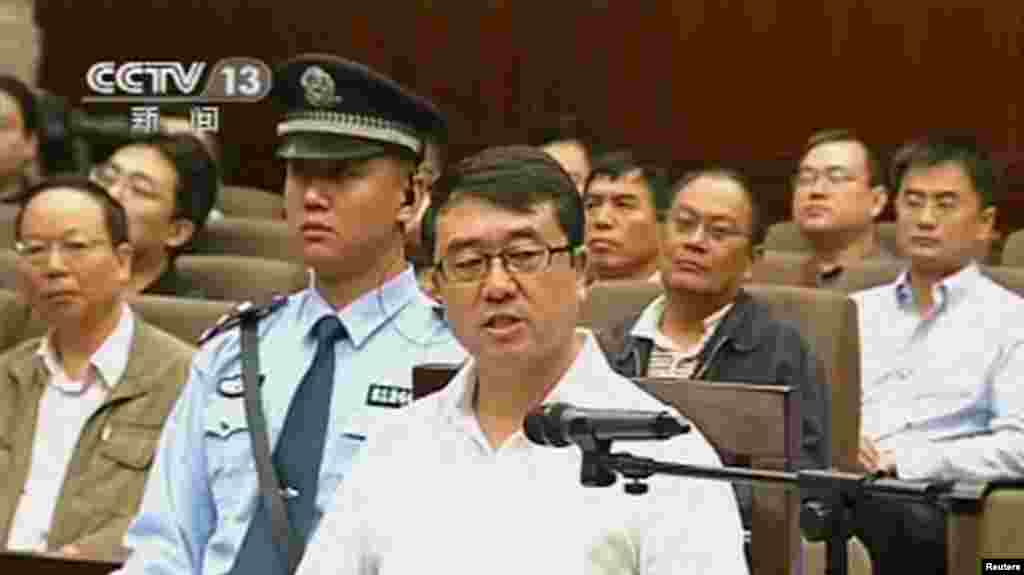
7/12Former police chief Wang Lijun speaks during a court hearing in Chengdu, China, in this still image taken from CCTV video, Sept. 18, 2012.
Show moreShow less
8/12This video image taken from CCTV shows Gu Kailai, wife of Bo Xilai, being taken into the Intermediate People's Court in the eastern Chinese city Hefei, August 9, 2012.
Show moreShow less
9/12Police officers stand guard at the Hefei City Intermediate People's Court for the murder trial of Gu Kailai, Anhui Province, China, August 9, 2012.
Show moreShow less
10/12A combonation photo showing Neil Heywood and Gu Kailai.
Show moreShow less
11/12Bo Xilai, walks past Communist Party leaders at the National People's Congress in Beijing, March 9, 2012.
Show moreShow less
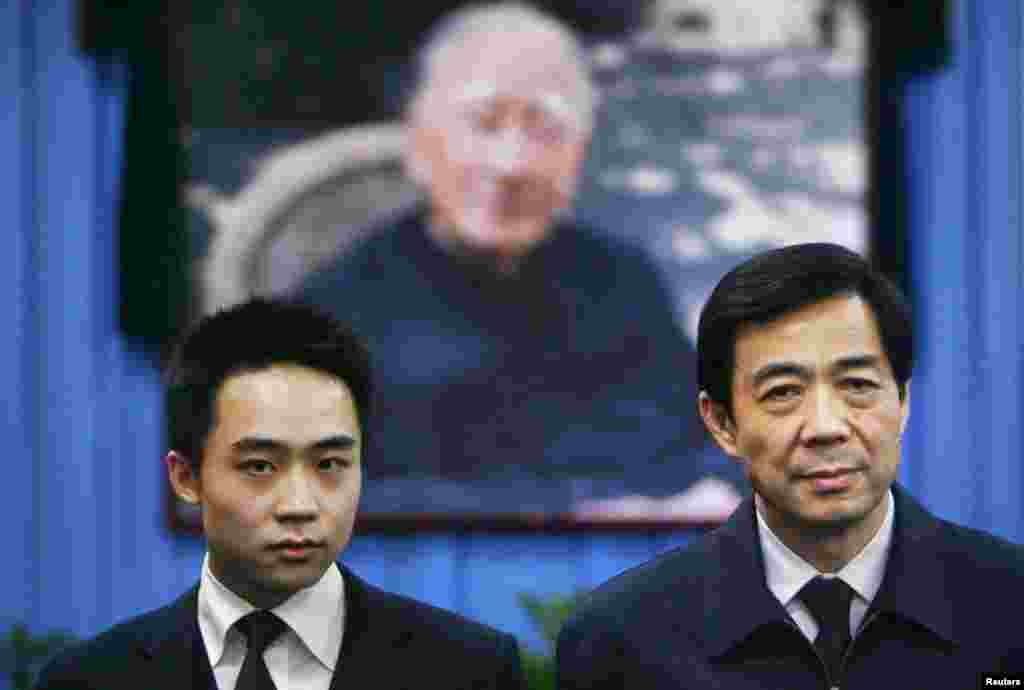
12/12Bo Xilai, right and his son, Bo Guagua, 2007.