



News / Asia

Schools Close in South Korea Amid Fears of Radioactive Rain

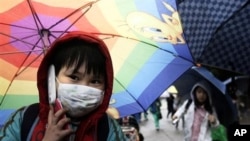
A South Korean student holding an umbrella talks on his mobile phone as he goes to his home amid fears that the rain may contain radioactive materials from the crippled nuclear reactors in Japan at Midong elementary school in Seoul, April 7, 2011
TEXT SIZE - +

Showers on the Korean peninsula prompted some schools to close Thursday. Many parents were worried about exposing children to "radioactive rain."  They were not reassured by South Korean authorities, who said there is no risk to children, even if some radioactive particles might be detected in rain water.

Fears about radiation in rain prompted classes to be canceled at some schools in South Korea.

In Gyeonggi province, 125 kindergartens and elementary schools gave students the day off.

A spokesman for the provincial education office, Cho Byung-lae, says all institutions there were asked to curtail outdoor activities, but it was left up to school principals to decide whether to cancel instruction.

Cho says they did not decide to close schools because of radiation, calling that a rather remote risk. But, he explains because there was such strong concern expressed by many parents, school authorities decided to relieve their anxiety.

In Seoul, educators refused to cancel classes and appealed for calm. However, some parents in the capital say they did not send their children to school because of the risk of radiation in the rain.

Other schools in the country dismissed class early or halted outdoor activities, including sporting events.

The South Korean prime minister’s office and other government agencies said, even if the rainfall has traces of radiation, the amount would be too small to raise any health concerns.

Worry grew after South Korea’s Institute of Nuclear Safety reported a small level of radioactive iodine and cesium was detected in rain off Jeju Cheju island, in the southern part of the country.

President Lee Myung-bak asked meanwhile for increased screening of imported food to check radiation levels. During a visit to the country’s Food and Drug Administration, he said people here are bound to be worried because South Korea is so close to Japan.  The crippled Fukushima nuclear power plant is 1,000 kilometers east of the Korean peninsula.

South Korea, along with China, has expressed frustration that Japan did not give neighboring countries timely information before its release of radioactive water from the stricken nuclear power plant into the Pacific Ocean. Japan's top government spokesman has apologized for the failure.

The plant, on Japan’s northeastern coast, was hit by the March 11 magnitude 9.0 earthquake and resulting tsunami. The nuclear plant’s operator, Tokyo Electric Power Company, Thursday began pumping nitrogen into one of the most severely damaged reactors, hoping to prevent another explosion of hydrogen gas.


Steve Herman

A veteran journalist in Asia, Steven L Herman is the Voice of America bureau chief and correspondent based in Seoul.

You May Like

Report: MI5 Tried to Recruit Woolwich Murder Suspect

Suspect's friend, arrested Friday, told BBC Michael Adebolajo had been approached by British security service months ago to work as informant More

Kerry Calls on Nigeria to Stop Human Rights Abuses

After meeting with Nigerian president, US top diplomat welcomes Abuja’s efforts to investigate, reign in excesses by troops fighting Boko Haram militants More

Vintage Apple Computer Sells for $671,400

Auctioneer says buyer is from 'Far East' and wishes to remain anonymous More

Pakistan Reiterates Opposition to US Drone Strikes

Day earlier US President Barack Obama justified 'constrained' drone usage to save lives More

Study Identifies Risks of Human Spread of H7N9 Bird Flu

Study suggest that international measures to contain the H7N9 influenza, in the event of severe outbreak, will need to be targeted in Asia More

Violence Continues in Conakry Over Upcoming Elections

Opposition has called for boycott of elections More

Video Syria's Civil War Fuels Violence in Iraq

Analysts say al-Qaida-linked militants are flowing back and forth from both countries More

Video Star Trek Influence Lives Long and Prospers

As new movie thrills, many are once again discussing the iconic franchise's influence on society, science and technology More

OECD: Developing Green Cities Key to Sustainable Future

OECD suggests strategies to mitigate rapid growth, industrialization in urban centers, which produce about two-thirds of greenhouse gas emissions More

This forum has been closed.
Comments
     
There are no comments in this forum. Be first and add one

Featured Videos

Your JavaScript is turned off or you have an old version of Adobe's Flash Player. Get the latest Flash player.
Video

Video Volunteers Help Revive LA's Concrete River

The Los Angeles River is a concrete drainage channel through much of its 80-kilometer length. It channels waste-water from storm drains and has become a receptacle for much of the city's trash. But as Mike O'Sullivan reports, the river is slowly being restored with the help of volunteers, who take part in an annual clean-up.