


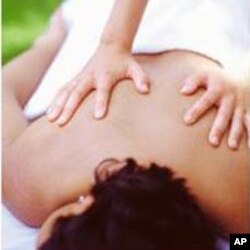
Massage not only feels good, it does good. It is a regular feature of locker rooms, to soothe the overworked muscles of athletes, and physical therapy sessions, to help patients recover from injuries.
Now, a new study suggests that massage may work on the cellular level in a manner similar to pain-relieving medications such as aspirin and other anti-inflammatory drugs.
Mark Tarnopolsky, a professor of pediatric medicine at McMaster University in Ontario, Canada, led a study that tried to pinpoint the biological mechanism that gives massage its healing property.
“People have a lot of ideas about what massage does and doesn’t do. And many of them were revolving around reduction in pain, and yet very few studies have actually been done to investigate this at the molecular and cellular level.”
Tarnopolsky's team conducted a study involving 11 young men who exercised to the point of exhaustion on stationary bikes.
The men underwent muscle biopsies in each leg prior to jumping on the bikes, and each participant had one leg - chosen at random - massaged after exercise. Muscle biopsies - small tissue samples - were taken from each leg 10 minutes after the massage therapy, and again, two-and-a-half hours later during the recovery period.
Researchers did a genetic analysis of each of the tissue samples.
“What we did is we looked at whatever genes were influenced by exercise in a different way in the massaged versus the non-massaged leg," Tarnopolsky says. "And what came out of that were two different pathways.”
In the muscle tissue of the massaged leg, researchers found a decrease in inflammatory cytokines, or proteins, and an increase in mitochondria, the energy producing units in cells, compared to tissue from the unmassaged leg.
Inflammation is an indicator of tissue damage, while mitochondrial production is a sign of tissue recovery.
The researchers say the findings suggest that massage acts on the cellular level in the same way as many pain medications, which are known to have some serious side effects. They believe that massage may be an effective and safer alternative that could used in routine medical practice.