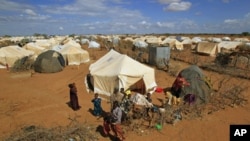
The United Nations refugee agency says insecurity continues to affect aid efforts in Kenya's Dadaab refugee complex, more than a month after the kidnapping of three aid workers. It says heavy rains and the risk of waterborne diseases are worsening conditions in the camps.
The U.N. refugee agency reports nearly 100 additional Kenyan police have been deployed in the Dadaab camps over the last month. Nevertheless, it says the situation in the Dadaab camps remains unstable. The agency says refugees and aid workers are uneasy because of what it calls security incidents.
UNHCR spokesman Andrei Mahecic said an explosive device was found next to one of the roads in the Dadaab complex last week. The device did not explode and no one was hurt.
“But, there have been other incidents along the border. There have been incidents reported widely also in the Kenyan media of the attacks on the Kenyan authorities and so on," said Mahecic. "So, we are talking about a very volatile situation along the border with the situation in Somalia not getting any better… Certainly the kidnappings that have happened in the camps have impacted on our work. We had to resort to essential services. We would like to resume the full services as soon as possible.”
Mahecic said discussions are underway on the feasibility of resuming full operations in the Dadaab complex, which houses more than 450,000 Somali refugees. He said the UNHCR welcomes the additional troops in the campsite, as this should allow greater freedom of movement and better security for the aid workers.
The spokesman said the unsafe situation is further complicated by an outbreak of cholera in the camps. He said it is likely that newly-arrived refugees from Somalia have brought the disease with them.
“There are now 60 suspected cholera cases in the camps, including 10 laboratory-confirmed cases and one refugee death. To manage the outbreak, we and partners have set up cholera treatment centers for severe cases. Most cases can be managed through oral rehydration solutions that can be given at home or at health posts. We are working with UNICEF and the Ministry of Health to train health workers in the community-based management of diarrhea so that patients can begin treatment at home,” said Mahecic.
In another complication, Mahecic said rain and flooding are affecting the trucking of water to parts of Dadaab. He said it is feared some refugees are drinking unsafe water from flooded areas, putting them at risk of waterborne diseases.
He also said aid workers are promoting good-hygiene practices among the refugees, especially the use of latrines and hand-washing with soap.
Security Lapses Threaten Kenya's Dadaab Refugee Complex
- By Lisa Schlein