



News / Africa

Senegalese Debate Whether President Too Old For Third Term

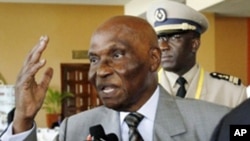
Senegalese President Abdoulaye Wade speaks to journalists at the end  of the 15th African Union Summit in Kampala, 27 Jul 2010
Senegalese President Abdoulaye Wade speaks to journalists at the end of the 15th African Union Summit in Kampala, 27 Jul 2010

Multimedia

Audio
  • Professor Mamadou Diouf, director of African Studies at New York’s Columbia University spoke with Clottey

TEXT SIZE - +
Peter Clottey

The director of African Studies at New York’s Columbia University has expressed shock that Senegal’s 84-year-old President, Abdoulaye Wade, is considering running for a third term in the West African country’s 2012 general elections.

Mamadou Diouf said it is impossible to understand that a man over 80 will insist on running as an incumbent seeking a second, seven-year term.

“The first version of the constitution was saying that the president should be elected for two, five-year terms. But, two or three years later, the constitution was amended and the amendment actually created the confusion people are fighting about now,” he said.
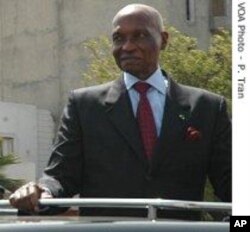
Senegal's 84- year old President, Abdoulaye Wade

Mr. Wade’s opponents have questioned the rationale behind his decision and have described it as a constitutional coup d’état aimed at ensuring the president’s son is groomed to succeed him.

President Wade has denied he is grooming his son, Karim Wade, to succeed him, despite saying that his son is qualified to run as a presidential candidate in future elections.

President Wade was quoted as saying, “I have no intention of putting my son in my place before I go. But, he is a citizen of Senegal and he is free to stand in elections when he wants to.”

Professor Diouf said there are indications the Senegalese leader is grooming his son to succeed him in the near future.

“The political problem is that it seems he [President Wade] is running in order to restructure again the whole political system among the constitution to allow his son to succeed him,” Diouf said.

President Wade named his 41-year-old son as a minister in the government in May and is believed to be a close and influential adviser to the president.

Some Senegalese constitutional lawyers contend that President Wade’s second term expires in 2012 and is thus, constitutionally, barred from running again.

But, supporters of the Senegalese leader insist Mr. Wade is entitled to seek another term despite his controversial stance.

Diouf said that Mr. Wade will be too old in 2012 to either exercise the functions of a sitting president or completely finish his term of office.

You May Like

Experts Weigh In on Challenges of Closing Guantanamo Prison

Former chief military prosecutor at Guantanamo delivers petition to White House with more than 370,000 signatures, demanding facility be closed down immediately More

Karzai to Discuss Enhancing Defense Ties with India

Afghanistan looking for more military aid as it prepares for withdrawal of NATO forces by next year More

India, China Pledge to Overcome Border Tensions

Indian prime minister and Chinese premier attempt to move past tense standoff in the Himalayas during Delhi talks More

Burmese President Opens US Visit with VOA Town Hall Meeting

Ahead of his meeting with President Obama Monday, Thein Sein answered questions on human rights and economic development in his country More

This forum has been closed.
Comments
     
There are no comments in this forum. Be first and add one

Featured Videos

Your JavaScript is turned off or you have an old version of Adobe's Flash Player. Get the latest Flash player.
Video

Video US Oil Surge Could Impact Mideast Geopolitics

The United States will account for a third of new oil supplies over the next five years, and will become energy self-sufficient in 20 years, according to a new report by the Paris-based International Energy Agency (IEA). Although U.S. oil imports from Arab Gulf countries increased last year, analysts predict the U.S. will lose its dependence on Middle East imports, which is expected to have a huge impact on international relations and the balance of power. VOA's Henry Ridgewell reports.