



In the 1930s, it took one farmer to feed every 10 Americans. Now the ratio is ten times that, and few Americans have strong ties to the food they eat or to the farmers who produce it. But a movement called Community Supported Agriculture is trying to change that.
CSA is a cooperative arrangement between farmers and the people who eat what the farmers produce. Customers share some of the risk of operating a small farm by paying farmers, in advance, for fresh food.
The movement is embraced by young people, many of whom actually go out to farms and help work the land. Not surprisingly, social media plays a central role in forming the volunteer work days. Some of these so-called 'Crop Mobs' form around Facebook pages.
Helping hands
A Place of the Heart Farm in the mountains of East Tennessee participates in community supported agriculture or CSA. With harvest season nearly complete, farmer Adrienne Gibson is cleaning out her melon patch.
"We have 23 CSA customers," says Gibson. "They subscribe to supporting the farm and in return they get a weekly basket of vegetables from May through October."
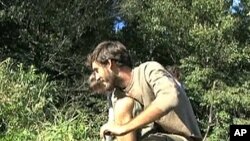
Gibson's CSA is in its seventh season, but this year, there's something new. The people who eat the food now want to help grow the food. Today, several are donating their time to help Gibson clear out the melon patch.
"I think it's wonderful that people want to come out and work on the farm and to see what it's like," she says. "I think it's a great thing and it's really helpful to us because you can get a lot of work done in a short amount of time."
In exchange, Gibson feeds the volunteers a mid-day meal of produce from the farm. One of the volunteers enjoying that meal is Lezlee Collier, who organized the work day. Collier sees labor donated to the farm as an extension of her interest in organic foods.

"It's how I want to eat my food," she says. "It's how I want my food grown and I really get to understand where my food comes from, and what goes into getting the final product."
Crop mob
Collier calls her volunteers a crop mob, a name taken from similar groups sprouting up all across the United States. The movement consists largely of young people in their late 20s and early 30s.
"It's really neat to see some younger people really into some different experiences and not strictly going to the grocery store and going home and not really thinking about where their food came from," says Collier. "I think they're a little more in tune with that."
Thinking about where food comes from is something a growing number of Americans find themselves doing, according to Vanderbilt University Professor of Community Development Jim Fraser.
"Developing a relationship between the production and the consumption of food and developing a network that's community based," says Fraser. "A movement back to organic practices and back to practices of creating food that don't rely on people being exploited in terms of labor."
Big city desert
Fraser expects the next big challenge for the community supported agriculture movement to be reinvigorating small, inner-city markets. He says these grocers are key to providing fresh food in what he refers to as big-city food deserts.
"Typically these [groceries] have focused on selling chips and soda pop, beer, and other types of food and drink products that don't produce good health outcomes," he says. "So, one of the initiatives is to kind of restore these corner stores so that they will sell fresh fruit and vegetables."
Back on the farm, volunteer Collier's agenda for her crop mob is more modest. She's just looking for fresh food, fellowship and a chance to escape the weekday cares of her office job.
"Sitting at a cubicle, you're not able to move around all that much so this is a great way to use muscles that you kind 'a forget you have when you sit at a desk all day long," she says. "It's defiantly a great way to de-stress."