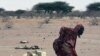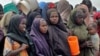



Minnesota is home to the largest Somali population in the United States and, as drought and famine take a devastating toll on their homeland, Somali immigrants are taking action to help victims back home.
As she watches televised images of starving Somali mothers and children, Fatima Abdi, 19, remembers her mother’s stories about the country’s 1992 famine. “When I was being born, my Mom had to go through all of that. One year after the war happened, my family was fleeing when my Mom was pregnant.”
Abdi’s family settled in Minnesota, where she’s now a college student. When her friend suggested a fundraiser to help the famine victims, they started brainstorming and recruiting other young people in the community.
“I called people, contacted people on Facebook, e-mails, talked to all of my friends, neighbors and let them know what was going on, give them ideas," says Zahra Farah, Abdi's friend. "There are so many ideas out there; a picnic, a carwash, knocking on doors, doing a walk. We put these ideas on the table, thinking what we can do for our people who are dying over there.”
The best idea, Abdi says, was a bake sale. “We baked traditional cookies. We sold drinks, doughnuts, cupcakes.”
And they made more money than they expected.
“Our goal was $600 and we went over it. We raised $627.”
Abdi and Farah donated the money to the American Refugee Committee (ARC), an international humanitarian organization based in Minneapolis.
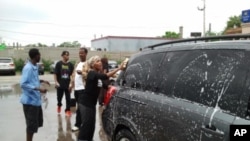
“A lot of young people are very adamant on doing as many things as quick as possible,” says Shukri Abdinur, a program assistant with ARC. “Our whole community is actually coming together. We had the masjids that are involved in fundraising. The younger kids, the students are also involved in fundraising. We have carwashes. They are very motivated in doing it.”
And, she says, there’s been a gratifying response from outside the Somali-American community.
“Our non-Somali neighbors also definitely contributed in bringing their cars to carwashes. People call in everyday to also donate money and gifts and different types of funding.”
So far, the Minnesotans have raised more than $300,000, according to Said Sheik-Abdi, ARC’s program manager for Somalia. He says the organization began working with the Somali community in Minnesota and all over the United States two years ago. It just launched a relief campaign in cooperation with Somali-Americans to develop fund-raising efforts and provide a secure way to send humanitarian aid back home.
“We did food distribution. We did distribute non-food items," says Sheik-Abdi. "And it’s not all about food. It’s about shelter, clear water, it’s about the health, it’s about providing security for those people who come to Mogadishu."
Sheik-Abdi says the situation in Somalia today is worse than it was during the 1992 famine because the country has not had a functioning government for the last 20 years. Very few humanitarian organizations have been able to work inside Somalia. In addition, many of the areas hardest-hit by drought and famine are controlled by al-Shabab, a militant group the U.S. government considers a terrorist organization. That’s challenging, admits Sheik-Abdi, but he says ARC is doing everything possible to make sure the famine relief doesn’t fall into the wrong hands.
“We’re working inside Somalia where the African Union troops are. So we’re not working in the area of al-Shabab. We have our staff on the ground who are directly providing the service to the people who really need assistance. We have Somali-Americans who know their community, who have skills and have connections, helping us to make sure that the food reaches to the right people.”
That’s ARC’s immediate relief plan. Sheik-Abdi says there is also a long-term strategy for Somalia.
“In the month of October, the Somali people, those in the south-central area, expect to have rain. If these people who are internally displaced wanted to go back and do some farming, then we’ll help them do that," he says. "We’re working with local agricultural partners to make sure that this doesn’t happen ever again, and if it happens, how to quickly respond. Because in the south-central area, there are two rivers, there's enough water there. So how can we reserve water and use it when there is drought or there is no rain.”
The goals of the American Refugee Committee in Somalia are the same as in the other countries where it works. But Said Skeik-Abdi says the vital involvement of Somali-Americans gives this effort a special meaning.