



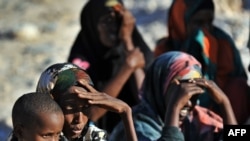
New figures released by the UNHCR reveal that Somali refugees now stand as the third highest number of refugees in the world, ranking just under numbers for Afghanistan and Iraq. While there have been some recent successes in overtaking the militant group al-Shabab, the country continues to deal with insecurity, drought and a poor economy.
The UNHCR says Somalis are facing one of the worst humanitarian crises of today. It says one in every three children living in the south-central region of the Horn of Africa is malnourished. The country is also the worst hit in the Horn by drought, and the rain failures have caused food prices to skyrocket.
In this year alone, the UNHCR said 66,227 Somalis have sought refuge in neighboring countries such as Kenya, Yemen, Egypt, Ethiopia, Eritrea, Djibouti, Tanzania and Uganda. In addition, the UNHCR reports, a total population of 700,000 internally displaced persons, IDPs.
Andy Needham, UNHCR spokesman, described the magnitude of the situation. “At the moment, the number of Somali refugees in the region is still just over one million... so the figure hasn’t changed significantly over the past number of months. What we are seeing are some increased arrivals, particularly in the Dollo Ado camp in Ethiopia.”
He said his colleagues at Dollo Ado have told him new arrivals have tripled in recent weeks. In addition, farmers and pastoralists are experiencing difficulties from the weather, and are also leaving their farms in search of assistance.
Needham explained that what people are in need of now are the basics.
“They need shelter... and what they are looking for is anything from basic rudimentary shelter, which is a plastic sheet, up to transitional shelter, which, would be something more sturdy, with wood and corrugated iron. And in certain parts of Somalia, we are even providing permanent housing,” said Needham, who added the refugees also need distribution of food and access to clean water.
The UNHCR as well as other non-governmental organizations are working diligently to provide these basics.
The UNHCR says Somalis are facing one of the worst humanitarian crises of today. It says one in every three children living in the south-central region of the Horn of Africa is malnourished. The country is also the worst hit in the Horn by drought, and the rain failures have caused food prices to skyrocket.
In this year alone, the UNHCR said 66,227 Somalis have sought refuge in neighboring countries such as Kenya, Yemen, Egypt, Ethiopia, Eritrea, Djibouti, Tanzania and Uganda. In addition, the UNHCR reports, a total population of 700,000 internally displaced persons, IDPs.
Andy Needham, UNHCR spokesman, described the magnitude of the situation. “At the moment, the number of Somali refugees in the region is still just over one million... so the figure hasn’t changed significantly over the past number of months. What we are seeing are some increased arrivals, particularly in the Dollo Ado camp in Ethiopia.”
He said his colleagues at Dollo Ado have told him new arrivals have tripled in recent weeks. In addition, farmers and pastoralists are experiencing difficulties from the weather, and are also leaving their farms in search of assistance.
Needham explained that what people are in need of now are the basics.
“They need shelter... and what they are looking for is anything from basic rudimentary shelter, which is a plastic sheet, up to transitional shelter, which, would be something more sturdy, with wood and corrugated iron. And in certain parts of Somalia, we are even providing permanent housing,” said Needham, who added the refugees also need distribution of food and access to clean water.
The UNHCR as well as other non-governmental organizations are working diligently to provide these basics.