



The U.N. says millions of people in Somalia still require humanitarian aid, despite advances against al-Shabab militants. A new funding appeal has been launched to address the country’s immediate needs and build resilience against future shocks, such as droughts, floods or further conflict.
The U.N. Office for the Coordination of Humanitarian Affairs, or OCHA, reports the food security situation in Somalia remains critical.
“Somalia indeed remains one of the largest crises we have in the world today. Now we’ve made great gains since the famine of 2011. Twelve months down the road we still have a huge crisis, although the rains, as well as humanitarian assistance that went into Somalia last year and most of this year, have reduced the number of people in need,” said Edem Wosornu, acting deputy head of office for OCHA’s Somalia branch.
Nevertheless, she said, nearly four million people are still in need of help. The number can be broken down into two categories.
“The first one is 2.1 million people who need assistance and are unable to meet their basic needs. So, they are what we call “in crisis.” And we have an additional 1.7 million people who have emerged out of the crisis from last year, but could fall back without sustained support,” she said.
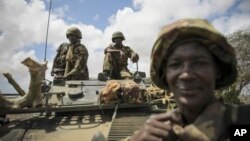
Most of the insecurity remaining in Somalia is in the southern and central regions. Government forces and their allies are trying to push al-Shabab out of the Gedo, Bay and Bakool regions. Militants had imposed a blockade on a number of towns restricting humanitarian access, as well as trade and business. That drove up food prices. Humanitarian agencies used airdrops to thwart the blockade, but such operations may not be sustainable.
Wosornu said, “We also have challenges such as sporadic fighting, which causes temporary displacements. We had one I think last week in a place called Belet Xaawo, which is on the border with Kenya with Mandera town. So we have temporary displacements into Mandera.”
Ending the conflict would go a long way toward ensuring food security. But it’s also dependent on good harvests.
“The situation remains fragile, and we continue to count on the rains. We count on the Deyr rains that are coming. We’re expecting an average harvest - October to December range,” she said.
A three year strategy has been launched called the Somalia Consolidated Appeal Plan. It asks for $1.3 billion for the first year. No figures have been set yet for the remaining years. Wosornu says there are four objectives.
“To ensure that everybody is receiving lifesaving assistance, particularly to malnourished children and people living in crisis—the 2.1 million. The second one is ensuring that we continue improvement of the quality, reliability and responsiveness of basic services,” said Wosornu.
The Consolidated Appeal Plan also calls for investment in household and community-level assistance, and strengthening the capacity of local NGOs and authorities to deal with crises.
OCHA’s latest report indicates success this year in helping malnourished children. The number of admissions to treatment centers fell from about 80,000 in January to about 20,000 in October. There are also increased efforts to help the victims of gender violence by offering them health and psychological support. About 115,000 such cases have been reported this year.
The U.N. Office for the Coordination of Humanitarian Affairs, or OCHA, reports the food security situation in Somalia remains critical.
“Somalia indeed remains one of the largest crises we have in the world today. Now we’ve made great gains since the famine of 2011. Twelve months down the road we still have a huge crisis, although the rains, as well as humanitarian assistance that went into Somalia last year and most of this year, have reduced the number of people in need,” said Edem Wosornu, acting deputy head of office for OCHA’s Somalia branch.
Nevertheless, she said, nearly four million people are still in need of help. The number can be broken down into two categories.
“The first one is 2.1 million people who need assistance and are unable to meet their basic needs. So, they are what we call “in crisis.” And we have an additional 1.7 million people who have emerged out of the crisis from last year, but could fall back without sustained support,” she said.
Most of the insecurity remaining in Somalia is in the southern and central regions. Government forces and their allies are trying to push al-Shabab out of the Gedo, Bay and Bakool regions. Militants had imposed a blockade on a number of towns restricting humanitarian access, as well as trade and business. That drove up food prices. Humanitarian agencies used airdrops to thwart the blockade, but such operations may not be sustainable.
Wosornu said, “We also have challenges such as sporadic fighting, which causes temporary displacements. We had one I think last week in a place called Belet Xaawo, which is on the border with Kenya with Mandera town. So we have temporary displacements into Mandera.”
Ending the conflict would go a long way toward ensuring food security. But it’s also dependent on good harvests.
“The situation remains fragile, and we continue to count on the rains. We count on the Deyr rains that are coming. We’re expecting an average harvest - October to December range,” she said.
A three year strategy has been launched called the Somalia Consolidated Appeal Plan. It asks for $1.3 billion for the first year. No figures have been set yet for the remaining years. Wosornu says there are four objectives.
“To ensure that everybody is receiving lifesaving assistance, particularly to malnourished children and people living in crisis—the 2.1 million. The second one is ensuring that we continue improvement of the quality, reliability and responsiveness of basic services,” said Wosornu.
The Consolidated Appeal Plan also calls for investment in household and community-level assistance, and strengthening the capacity of local NGOs and authorities to deal with crises.
OCHA’s latest report indicates success this year in helping malnourished children. The number of admissions to treatment centers fell from about 80,000 in January to about 20,000 in October. There are also increased efforts to help the victims of gender violence by offering them health and psychological support. About 115,000 such cases have been reported this year.