S. Korea, Japan Move to Bolster Defenses After North's Nuclear Test
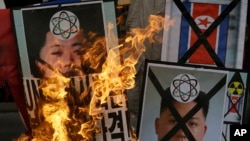
South Korean protesters burn the pictures of North Korean leader Kim Jong Un during an anti-North Korea rally following a nuclear test conducted by North Korea, in Seoul, South Korea, February 12, 2013.
SEOUL —
North Korea is being sharply criticized for conducting a third nuclear test Tuesday. The underground explosion is in defiance of previous United Nations Security Council resolutions that followed similar nuclear tests. One immediate result is tough talk by South Korea and Japan -- both U.S. allies -- about bolstering their defensive capabilities.
North Korean state media hail the nuclear test as a success, saying it "did not pose any negative impact on the surrounding ecological environment."
A television announcer in Pyongyang says the country detonated a "miniaturized and lighter nuclear device with greater explosive force" than previous tests.
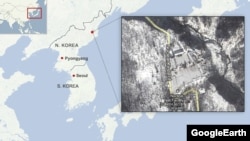
The location of the nuclear test site in North Korea.
Analysts say that indicates North Korea may have set off a plutonium-fueled bomb, suitable to be placed atop a missile.
There has been speculation North Korea has been enriching uranium for use in its nuclear weapons.
North Korea is believed to have only enough plutonium for a small number of weapons. But a supply of domestically enriched uranium would allow it to have a larger nuclear arsenal.
Japan and the United States have deployed aircraft with special equipment to collect radioactive gases. An analysis of those gases could determine what type of nuclear material was used.
South Korean officials say tremors recorded by seismographs around the world suggest the device has a yield of six to seven kilotons.
North Korean Nuclear Tests
North Korean Nuclear Tests
2006
Carried out underground at Punggye-ri
Powered by plutonium
Released radioactive materials
2009
Carried out underground at Punggye-ri
Seismic signals were consistent with a nuclear test
Radioactive material was not detected
North Korea claimed an initial underground test in 2006, but some scientists contend that one might not have triggered a nuclear explosion. A second nuclear test North Korea claimed in 2009 had an estimated yield of two to seven kilotons. By comparison, the U.S. nuclear bomb dropped on the Japanese city of Hiroshima in the final days of WWII in 1945 carried a yield of about 20 kilotons.
Chun Young-woo, South Korea's presidential secretary for foreign affairs and national security, says Seoul is maintaining a high readiness posture amid concerns of more provocations by Pyongyang.
Chun says to protect South Korean people and property from North Korean nuclear and missile threats, the government is expanding its military capability. He explains that will include deploying missiles, as soon as feasible, that will be capable of hitting a target anywhere in North Korea.
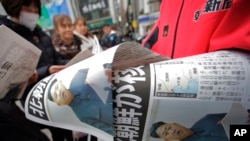
Copies of an extra edition of a Japanese newspaper reporting North Korea's nuclear test are handed out to passers-by in Tokyo Feb. 12, 2013.
Japan, which also has no diplomatic relations with Pyongyang, is feeling increasingly vulnerable as a potential target of a nuclear missile fired from North Korea.
In a VOA interview just hours after the nuclear test, Defense Minister Itsunori Onodera termed it a big threat not only to Japan, but all of East Asia.
The minister says Japan will need to bolster its defenses to counter such a threat, but the country's pacifist constitution prevents Japan from acquiring its own nuclear weapons and limits the scope of its forces. So, Onodera says, it is very important to strengthen the U.S.-Japan security alliance.
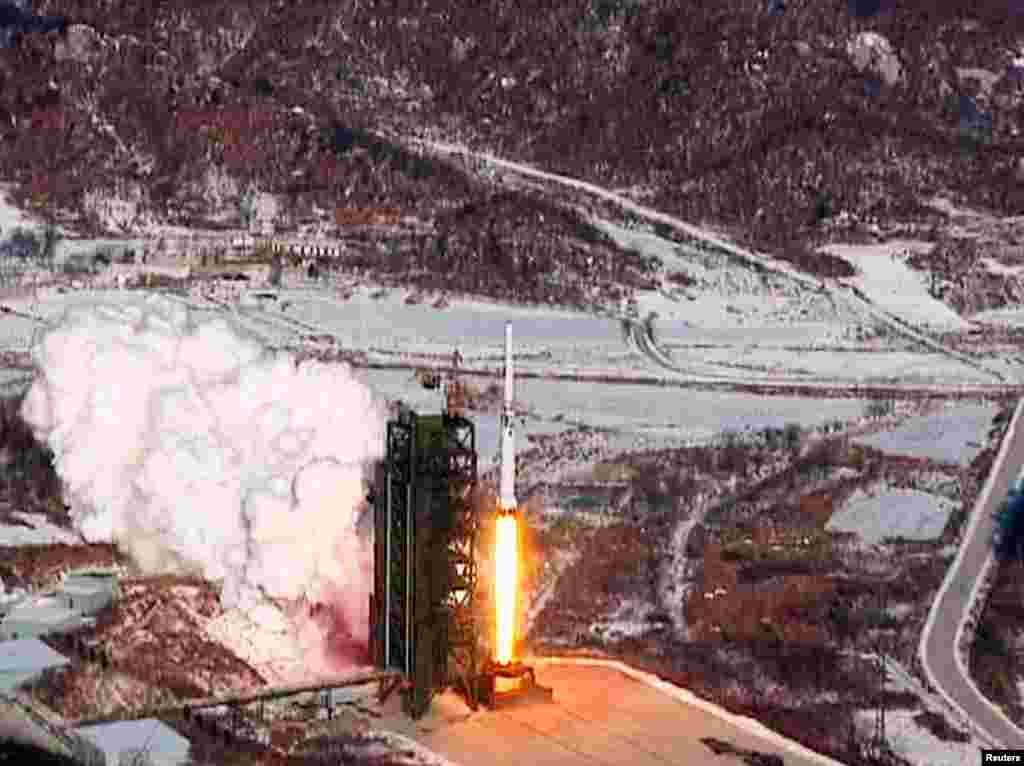
The two previous North Korean tests took place under the leadership of Kim Jong Il. This is the first such event ordered by his young son, Kim Jong Un, who succeeded his late father. It comes two months after North Korea launched a long-range rocket with a satellite into orbit.
That was also in defiance of U.N. Security Council resolutions prohibiting Pyongyang from utilizing ballistic missile technology.
North Korea Conducts Nuclear Test
1/8An extra edition of a Japanese newspaper was delivered reporting North Korea's nuclear test, in Tokyo, February 12, 2013.
Show moreShow less
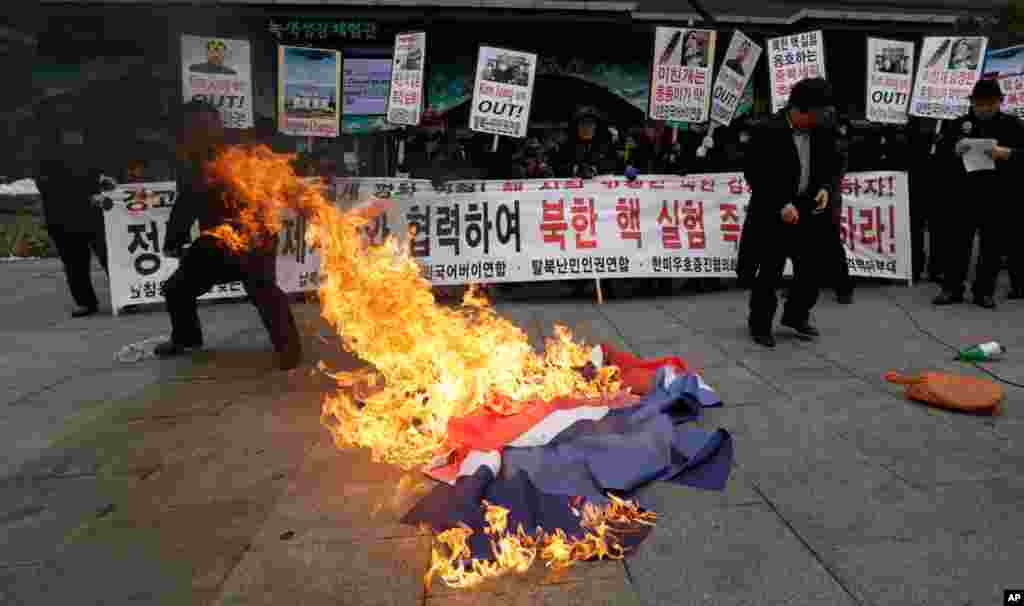
2/8South Korean protesters burn a North Korean flag following a report of the nuclear test conducted by North Korea, in Seoul, South Korea, February 12, 2013.
Show moreShow less
3/8Japan Meteorological Agency's earthquake and tsunami observations division director Akira Nagai points to a spot on the map showing the quake center during a news conference in Tokyo, February 12, 2013.
Show moreShow less
4/8South Korean soldiers check military fences as they patrol near the demilitarized zone separating North Korea from South Korea, in Paju, north of Seoul, February 12, 2013.
Show moreShow less
5/8A screen grab of the Nuclear Test Facility site in North Korea, via Google Maps satellite view.
Show moreShow less
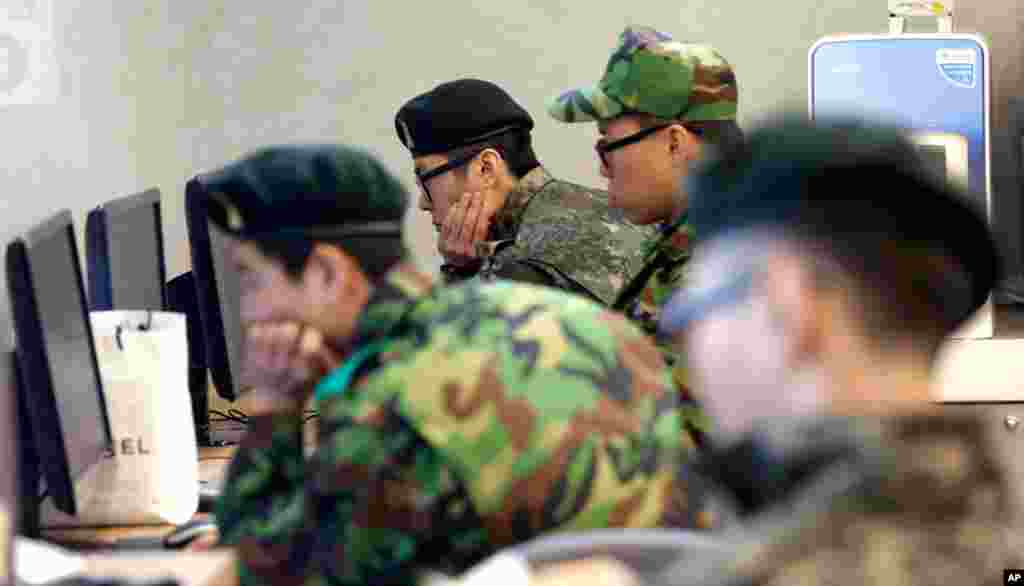
6/8South Korean soldiers monitor computers at the Seoul train station following a report about a possible nuclear test conducted by North Korea, February 12, 2013.
Show moreShow less
7/8A video grab from KCNA shows the Unha-3 (Milky Way 3) rocket launching at North Korea's West Sea Satellite Launch Site, at the satellite control center in Cholsan county, North Pyongang province December 12, 2012.
Show moreShow less
8/8North Koreans celebrate the successful launch of the Unha-3 rocket at Kim Il Sung square in Pyongyang December 14, 2012. The sign reads: "Let's glorify dignity and honor of great people of Kim Il Sung and of Korea of Kim Jong Il in the world!"