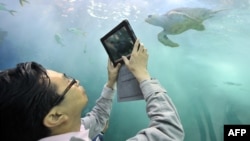
A visitor takes picture a turtle at an aquarium of the Expo 2012 in Yeosu, a small city on South Korea's south coast, May 11, 2012.
YEOSU, South Korea - A large-scale exposition in South Korea intended to lure millions of visitors and pump billions of dollars into the economy is struggling to meet expectations.
Expo 2012
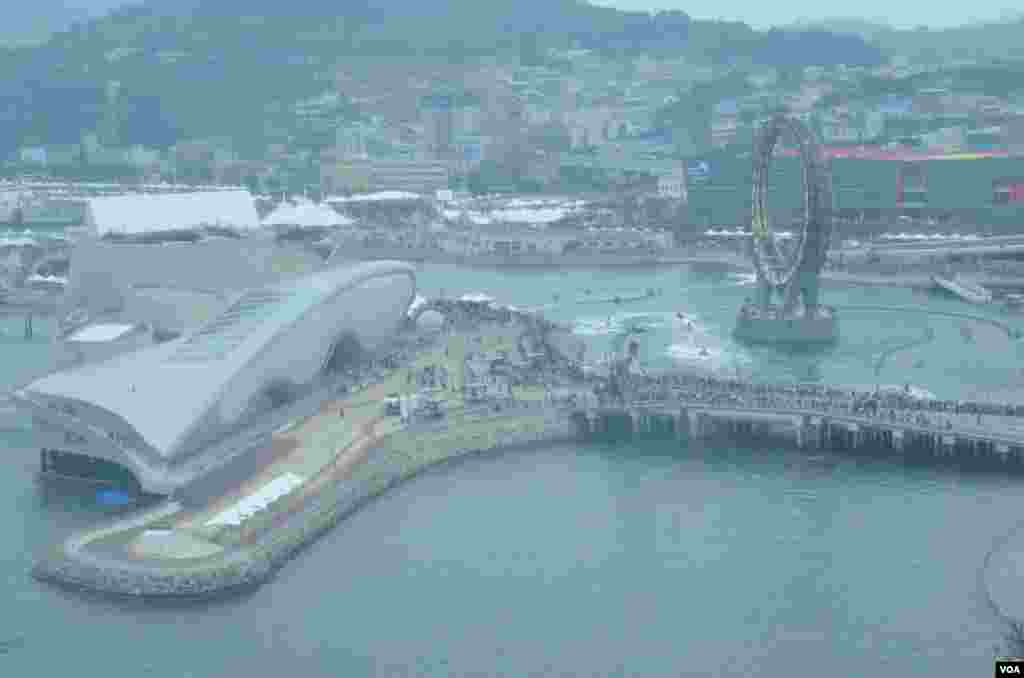
Spread over 250,000 square meters are 76 pavilions, sponsored by corporations, countries and international organizations, including the United Nations.
Hailed by travel publications as one of the top things to see in the world this year, Expo 2012 features a newly-built aquarium filled with 6,000 tons of water and marine life from beluga whales to African penguins.
With a marine resources theme, the seaside exposition, mainly staffed by 13,000 volunteers, is meant to educate as well as thrill.
There are street performances with giant marionettes on parade.
Two abandoned 67-meter-high cement silos have been converted into the world's loudest pipe organ.
Mixing with the superlatives are a few discordant notes.
South Korea's Yeosu Expo
1/11A parade with a giant marionette at the expo, Yeosu, South Korea, June 9, 2012. (S.L. Herman/VOA)
Show moreShow less
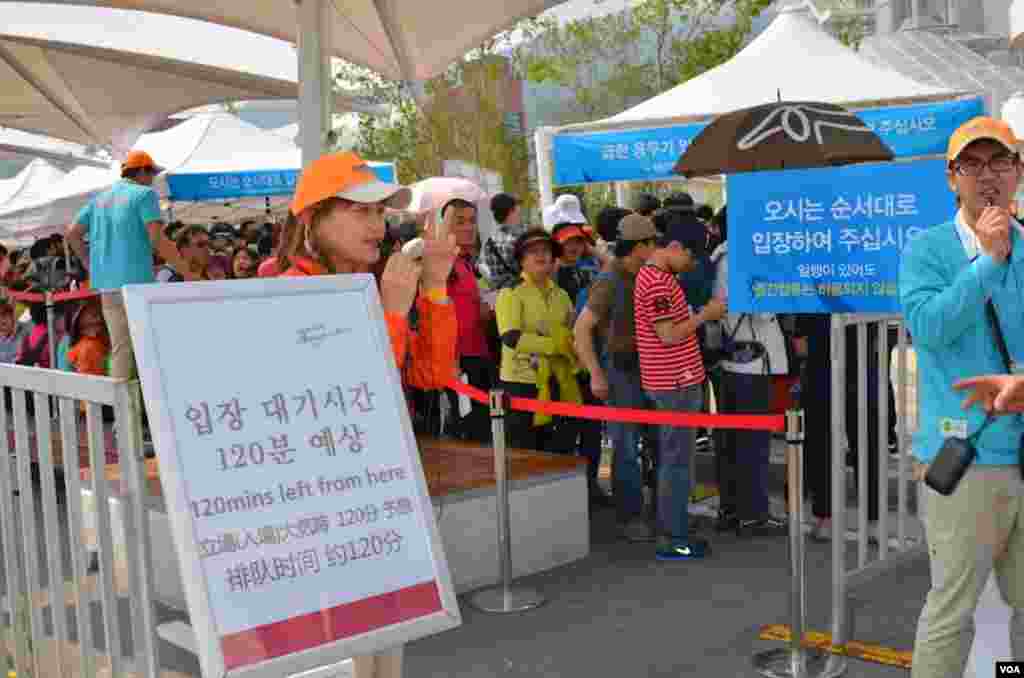
2/11Those who have visited complain of long waits to enter exhibit buildings, Yeosu, South Korea, June 9, 2012. (S.L. Herman/VOA)
Show moreShow less
3/11The Expo site covers 250,000 square meters, Yeosu, South Korea, June 9, 2012. (S.L. Herman/VOA)
Show moreShow less
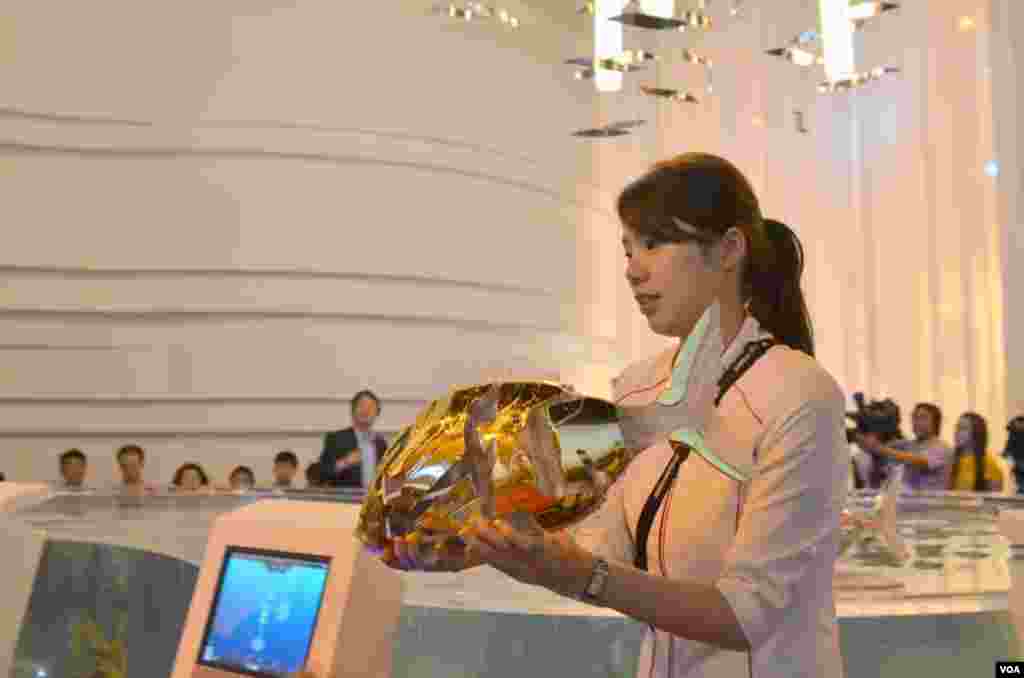
4/11A guide holds a robot fish.at the expo, Yeosu, South Korea, June 9, 2012. (S.L. Herman/VOA)
Show moreShow less
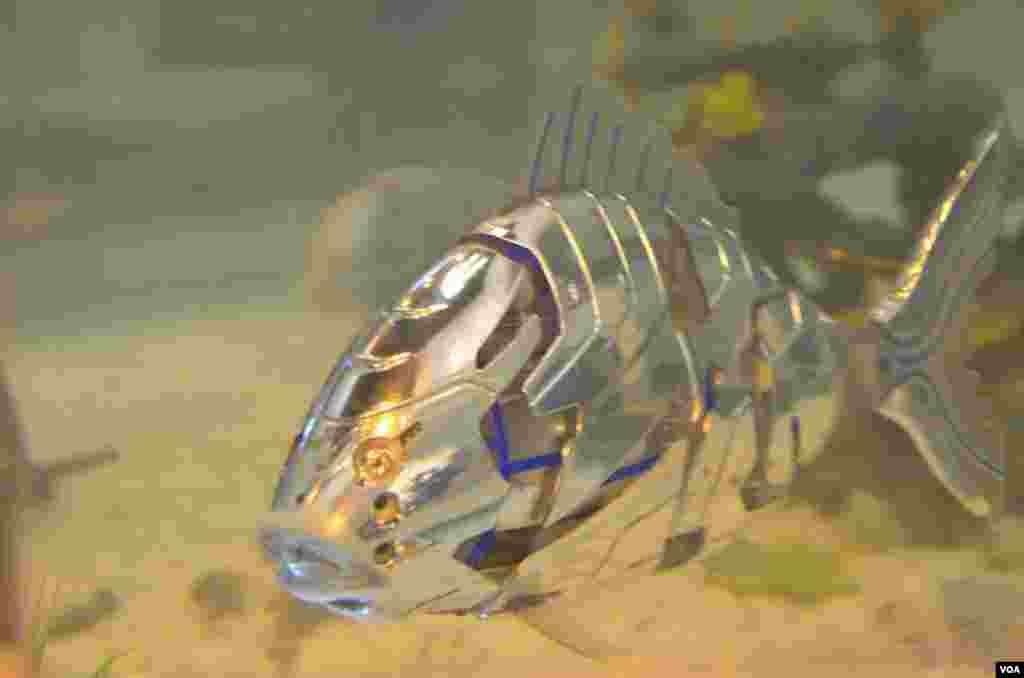
5/11A robot fish swimming in a tank at the Yeosu Expo, South Korea, June 9, 2012. (S.L. Herman/VOA)
Show moreShow less
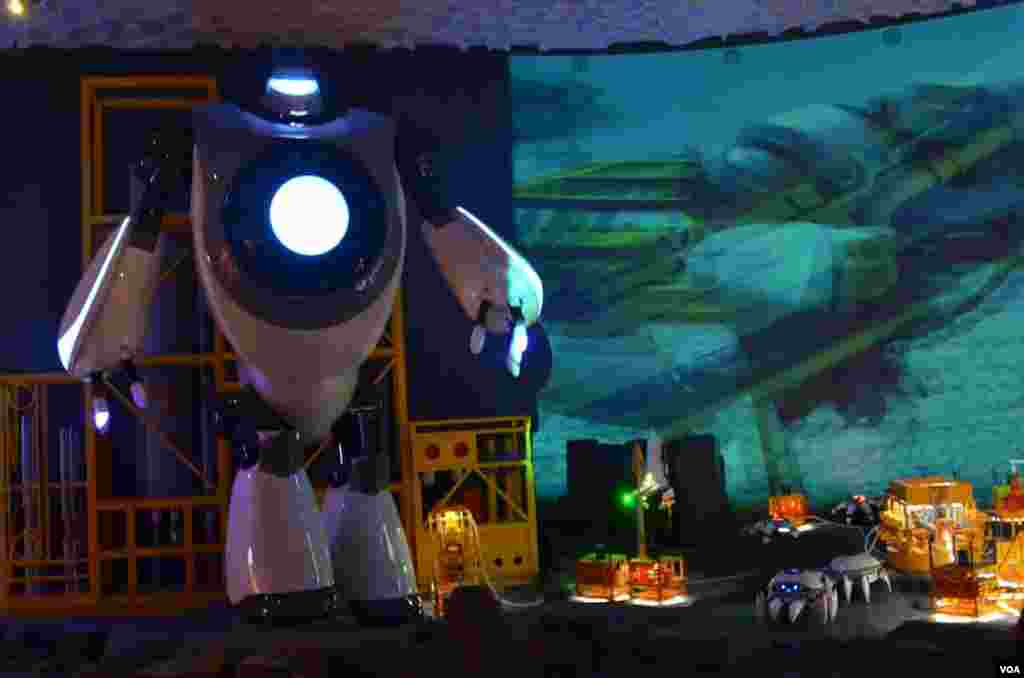
6/11A giant robot at the expo, Yeosu, South Korea, June 9, 2012. (S.L. Herman/VOA)
Show moreShow less
7/11A pair of old 67-meter high cement silos were transformed into the Sky Tower containing the "world's loudest" pipe organ, Yeosu, South Korea, June 9, 2012. (S.L. Herman/VOA)
Show moreShow less
8/11Korean-American K-pop star Park Jae-bum performs at the expo, Yeosu, South Korea, June 9, 2012. (S.L. Herman/VOA)
Show moreShow less
9/114-Minute is an Award-winning five woman group 4-minute performs at the expo, Yeosu, South Korea, June 9, 2012. (S.L. Herman/VOA)
Show moreShow less
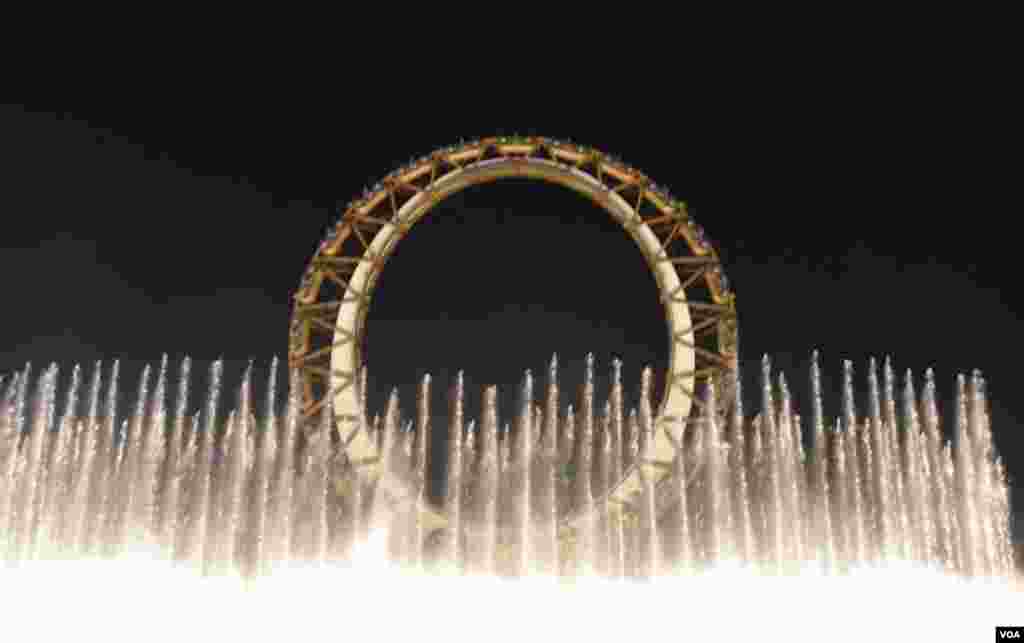
10/11The nightly Big O water fountain and laser show at Expo 2012, Yeosu, South Korea, June 9, 2012. (S.L. Herman/VOA)
Show moreShow less
11/11The nightly Big O water fountain and laser show at Expo 2012, Yeosu, South Korea, June 9, 2012. (S.L. Herman/VOA)
Show moreShow less
Previous slide
Next slide
Attracting visitors
The 93-day event is struggling to meet public expectations and projected numbers of visitors.
Kang Hyun-joo, a spokeswoman for the Expo's organizing committee, acknowledges there were management problems at the opening one month ago.
Kang says reaching the stated goal of eight million visitors seems extremely difficult based on current trends. But, there is optimism that when South Korean schools recess for summer vacation next month the numbers will rapidly pick up.
Kang compares the Expo's situation with that of the 2002 World Cup in South Korea when the participation rate was initially fairly low, but rose as enthusiasm increased over time. She says most Expo visitors have deemed themselves highly satisfied by the experience.
Some from overseas have been reluctant to visit because of a perception Yeosu is not affordable and difficult to reach. But Kang disputes that.
Kang says foreigners heard rumors of exorbitant room rates but actual costs recently were cut and accommodations can easily be secured through a real-time telephone system. Also, she explains, transportation is not a big problem with international flights, cruise ships and improved highways coming in to Yeosu.
Another hitch was the failure of a reservation system for the eight most popular pavilions. It was scrapped after so many potential visitors were unable to acquire tickets that some resorted to protesting in front of the organizing committee's headquarters.
A switch to a first-come, first served basis created another problem: frustrating waits in lines of up to two hours.
Visitors such as Andrea Garay, a Nicaraguan citizen living in Seoul, are trying to make the best of it. “Some of the lines when they were too big we just skipped them and then went to the next exhibition,” she said. “The favorite one so far -- the robot presentation in front of Hyundai.”
Exhibits
After the acclaimed robot pavilion, Garay had better luck in the evening, securing front-row seats for an outdoor K-pop concert.
Groups, such as the all-female 4 Minute, are singing and dancing at weekend shows prior to a nightly state-of-the-art multi-media performance. It features the world's highest water curtain, shooting 45 meters up in front of a giant circular structure called The Big-O which is festooned with laser-generated holograms.
Funding
All of this cost $1.8 billion to construct - a third of it funded by the South Korean government.
Besides the 80,000 new jobs created, if all goes according to plan, the Expo is supposed to pump more than $10 billion into the South Korean economy.
The South Jeolla provincial government plans to transform the site into a “marine leisure cluster” in hopes of placing this relatively unknown industrial city of 300,000 people permanently on the map of major tourist destinations in northeast Asia, if not the world.