


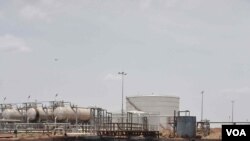
South Sudan’s Ministry of Finance says the country has enough money to keep the government running for the next few months. The country’s economy saw a serious meltdown after the shutdown of the oil sector and there have been widespread fears that the country could soon run out of funds.
The Ministry of Finance has not paid July salaries to the nation’s civil servants. The Deputy Minister of Finance, Dr. Marial Awou Yol, said the delay was nothing more than a technical glitch.
"We had to implement certain regulations passed by the parliament accompanying the budget including making arrangements for the paysheets and that is why payment for the salaries was delayed. We are going to pay them,” Awou said.
After the shutdown of oil production in Janurary, South Sudan’s parliament passed an austerity budget that included severe spending cuts, such as slicing allowances for home rentals in half. Despite no more oil production, which made up 98 percent of the country’s revenue, Awou said the government has the funds it needs to pay civil servants' salaries.
“We have enough reserves to pay salaries for the foreseeable future. To supplement our reserves, we have secured a large loan from the bank of South Sudan that will allow us to pay salaries for the rest of the year,” he said.
Awou also said South Sudan may take out a foreign loan. He did not elaborate, but said China has declined to make a sizable loan that was discussed earlier.
Awou also said South Sudan has been able to rely on other, non-oil related revenue and a decline in spending to help pay for civil servants' salaries.
“In June last year, we recorded 11.9 million [South Sudanese] pounds in non-oil revenue. In June of this year, we recorded 66.6 million pounds. This is almost a six-fold increase in just one year,” Awou said.
Despite lower spending and higher revenue in non-oil sectors, the deputy minister of finance is calling on South Sudanese to “tighten their belts” until oil production resumes.
Sudan and South Sudan delegations at the talks in Ethiopia recently signed a deal on oil transportation fees but until a comprehensive peace deal is reached on all the outstanding issues such as the border, security and the disputed region of Abyei, the resumption of oil production may still be in question.
The Ministry of Finance has not paid July salaries to the nation’s civil servants. The Deputy Minister of Finance, Dr. Marial Awou Yol, said the delay was nothing more than a technical glitch.
"We had to implement certain regulations passed by the parliament accompanying the budget including making arrangements for the paysheets and that is why payment for the salaries was delayed. We are going to pay them,” Awou said.
After the shutdown of oil production in Janurary, South Sudan’s parliament passed an austerity budget that included severe spending cuts, such as slicing allowances for home rentals in half. Despite no more oil production, which made up 98 percent of the country’s revenue, Awou said the government has the funds it needs to pay civil servants' salaries.
“We have enough reserves to pay salaries for the foreseeable future. To supplement our reserves, we have secured a large loan from the bank of South Sudan that will allow us to pay salaries for the rest of the year,” he said.
Awou also said South Sudan may take out a foreign loan. He did not elaborate, but said China has declined to make a sizable loan that was discussed earlier.
Awou also said South Sudan has been able to rely on other, non-oil related revenue and a decline in spending to help pay for civil servants' salaries.
“In June last year, we recorded 11.9 million [South Sudanese] pounds in non-oil revenue. In June of this year, we recorded 66.6 million pounds. This is almost a six-fold increase in just one year,” Awou said.
Despite lower spending and higher revenue in non-oil sectors, the deputy minister of finance is calling on South Sudanese to “tighten their belts” until oil production resumes.
Sudan and South Sudan delegations at the talks in Ethiopia recently signed a deal on oil transportation fees but until a comprehensive peace deal is reached on all the outstanding issues such as the border, security and the disputed region of Abyei, the resumption of oil production may still be in question.
