


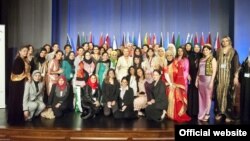
Jackcilia Ebere is Western Equatoria's minister for labor, public service, and human resource development. She traces her passion for public service back to the Catholic schools for girls she attended while growing up. Speaking at the Institue for Women in Public Service, which was created by U.S. Secretary of State Hillary Clinton, she says an early emphasis on education helped her succeed and will do the same thing for other girls and women in South Sudan.
“Because you know, knowledge is power,” Ebere says. “It’s a powerful weapon. When a woman is educated, she can do anything, and when a woman knows her rights she will stand for it.”
In her own career, Ebere has earned a law degree and worked with the U.N. on human rights — especially rights for women and children. She says now, as a state minister, she is working to increase the number of women in public service.
But that, she says, cannot come without education. “One mandate of public service is to ensure education of employees. So I am pushing so much [for] issues of resources so women can go for more training.”
Ebere says it is important to include women in decisions not just about domestic matters — like health and children — but about foreign policy. Foreign policy is particularly salient now in South Sudan, which is hammering out such complicated issues as borders and oil rights with Sudan.
Ebere adds, “If women are given the chance, they can make the best of peace negotiations, because they will always go for peace and not opt for war.”
But Ebere is quick to point out that in South Sudan, women are often ignored or pushed aside. She says illiteracy, poverty, and in some cases religion keep women from fully participating in politics or public life.
She says that perception of marginalization is shared by many of the other particpants attending the Institute for Women in Public Service this month. Most are from countries writing constitutions or undergoing major change.
“We have found out that there is this issue of men dominating women, and really not wanting to believe that women have the same rights as men do,” Ebere says. “And cultural issues always wanting to push women into the back yard.”
Ebere says while politicians like her can work to change the system, individual women can transcend cultural barriers in their own lives. She says it is all about personal motivation and having the courage to stand up, speak up, and encourage other women to do the same.
“Because you know, knowledge is power,” Ebere says. “It’s a powerful weapon. When a woman is educated, she can do anything, and when a woman knows her rights she will stand for it.”
In her own career, Ebere has earned a law degree and worked with the U.N. on human rights — especially rights for women and children. She says now, as a state minister, she is working to increase the number of women in public service.
But that, she says, cannot come without education. “One mandate of public service is to ensure education of employees. So I am pushing so much [for] issues of resources so women can go for more training.”
Ebere says it is important to include women in decisions not just about domestic matters — like health and children — but about foreign policy. Foreign policy is particularly salient now in South Sudan, which is hammering out such complicated issues as borders and oil rights with Sudan.
Ebere adds, “If women are given the chance, they can make the best of peace negotiations, because they will always go for peace and not opt for war.”
But Ebere is quick to point out that in South Sudan, women are often ignored or pushed aside. She says illiteracy, poverty, and in some cases religion keep women from fully participating in politics or public life.
She says that perception of marginalization is shared by many of the other particpants attending the Institute for Women in Public Service this month. Most are from countries writing constitutions or undergoing major change.
“We have found out that there is this issue of men dominating women, and really not wanting to believe that women have the same rights as men do,” Ebere says. “And cultural issues always wanting to push women into the back yard.”
Ebere says while politicians like her can work to change the system, individual women can transcend cultural barriers in their own lives. She says it is all about personal motivation and having the courage to stand up, speak up, and encourage other women to do the same.
