



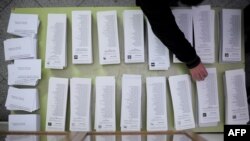
Official results from local parliamentary elections in Spain's northeastern region of Catalonia show the majority of seats will go to nationalist parties that favor independence from Spain.
Returns from Sunday's vote show the national alliance of incumbent regional president and pro-independence candidate Artur Mas fell short of a majority, taking just 50 seats in the 135-seat parliament, down from 62. The separatist Republican Left (ERC) more than doubled its share of seats, taking 21.
The Socialist party (PSC), which does not favor independence, lost eight seats in the vote, bringing it from 28 to 20 seats.
In a televised appearance from Barcelona after the vote, Mas thanked his alliance for its support, but acknowledging that it now must share responsibility for governing.
The Mas government called early elections as part of a power struggle with the central government run by Prime Minister Mariano Rajoy.
Catalonia, which is home to factories, banks and other industries, is responsible for around one-fifth of Spain's economic output.
Many Catalans believe the central government gives back too little, considering the region's contributions.
Returns from Sunday's vote show the national alliance of incumbent regional president and pro-independence candidate Artur Mas fell short of a majority, taking just 50 seats in the 135-seat parliament, down from 62. The separatist Republican Left (ERC) more than doubled its share of seats, taking 21.
The Socialist party (PSC), which does not favor independence, lost eight seats in the vote, bringing it from 28 to 20 seats.
In a televised appearance from Barcelona after the vote, Mas thanked his alliance for its support, but acknowledging that it now must share responsibility for governing.
The Mas government called early elections as part of a power struggle with the central government run by Prime Minister Mariano Rajoy.
Catalonia, which is home to factories, banks and other industries, is responsible for around one-fifth of Spain's economic output.
Many Catalans believe the central government gives back too little, considering the region's contributions.