



The U.S. State Department on Tuesday issued its annual report on religious freedom.
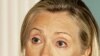
Secretary of State Hillary Clinton said that violations of religious freedom embolden extremists, and said that Iran is among the worst offenders.
An example of the abuses can be see in the case of Mahtab Farid, whose father was arrested after he tried to circumvent a ban on university education for the Baha'i minority.
"This is the picture of my Dad. This is from two years ago when he was visiting the United States," Mahtab Farid said. She explains her father Kamran was arrested in Iran on May 22, the day she graduated from college here in the United States.
The crime, according to his his daughter: administering a university for young Baha'is who are not allowed to study in Iranian universities.
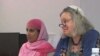
Farid took part in a discussion in Washington on the plight of Baha'is in Iran.
She says she doubts her father will get a fair trial. "We're all really, really, really worried and devastated. I mean all we can really do is pray, she said. "And really try to hold on to our faith."
People of the Baha'i faith live freely in United States and elsewhere. But the State Department's Report on Religious Freedom cites instances of imprisonment, harassment, intimidation and discrimination under Iran's Shi'ite Muslim theocracy.
Secretary of State Hillary Clinton says Baha'is are among a number of persecuted minorities there. "In Iran, authorities continue to repress Sufi Muslims, evangelical Christians, Jews, Bahais, Sunnis, Ahmadis, and others who do not share the government’s religious views," Clinton stated.
But can the State Department's report help Farid's father?
Yes, says Sue Gunawardena-Vaughn of Freedom House, a democracy advocacy organization.
"These things carry a lot of weight in terms of having solidarity, creating solidarity, and for people who really don't know what's going on in other places they really look to the United States to give voice to these voiceless people," she stated.
Farid says that whatever happens she knows her father is courageous.