


A prominent member of Sudan’s ruling National Congress Party (NCP) says foreign interference in the country’s internal affairs has led to the split of Sudan into two countries.
Rabie Abdelati Obeid said the NCP regrets signing the 2005 Comprehensive Peace Agreement (CPA). But he added that the northern government will foster good relations with the newly independent Republic of South Sudan despite the split.

‘We regret signing the CPA because there was a clear clause that the SPLM and the NCP should work together to achieve unity,” said. “But unfortunately, the SPLM was under the influence of the west and instead confused the southern people to opt for secession.”
Obeid insisted the northern party has kept its part of the agreement it signed with the Sudan People’s Liberation Movement (SPLM).
But, opponents say the NCP provoked conflict with policies that marginalized non-Arabs and mostly blacks in Sudan. They cite the ongoing crisis in Darfur as well as the independence of South Sudan as examples of the NCP’s policies.
“This is not a legitimate accusation,” responded Obeid, “because the problem of the south did not start when President Bashir came to power. This problem started after the independence of Sudan. A lot of national governments failed to resolve this problem and the war continued for more than 20 years.”
With the signing of the CPA in 2005, the north and south ended two-decades of war. Analysts estimate that more than two million people died and four million others were displaced during the conflict.
Among the requirements of the CPA were a settlement of boundary issues between the two regions, and a referendum to determine the future of the oil-rich enclave of Abyei.
“Instead of blaming President Omar al-Bashir for splitting Sudan,” he continued, “they should look into the fulfillment and the sincerity of the CPA because other people are not ready to implement [their] part.”
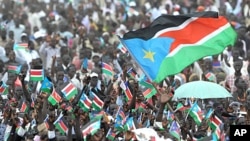
He said the northern government deserves “praise” for accepting the results of the referendum and recognizing the new nation, which he said forms part of the 2005 peace accord.
“Before the referendum [earlier this year on the south’s independence], President Omar Hassan al-Bashir said that we will be the first country to recognize the new independent country. And that is why I think Saturday will be a normal day,” said Obeid. “We have already seen to the implementation of the fulfillment of the NCP when it signed the CPA, [and] when it accepted the results of the referendum.”