


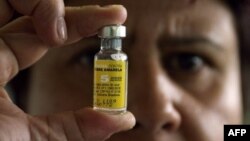
The World Health Organization says it is working to contain a deadly outbreak of yellow fever in Sudan's Darfur region.
The WHO said Tuesday it is cooperating with the Sudanese government to mobilize 2.4 million doses of yellow fever vaccine for Darfur residents. It says the vaccines will be provided by the International Coordinating Group on Vaccine, a U.N. partnership with vaccine manufacturers.
Since the Darfur outbreak began in late September, the U.N. health agency has recorded 358 suspected cases of yellow fever and 107 deaths. Darfur's Central region has been the worst affected.
WHO Sudan representative Anshu Banerjee said he expects the Darfur vaccination program to begin in three weeks and continue for around two weeks. He said the vaccine doses will arrive in Sudan early next week and have to be transported to Darfur's remote and dispersed communities via dirt tracks due to the lack of paved roads.
"Luckily, we have a lot of support," Banerjee said. "A month ago, we initially did a campaign for meningitis, so there's some quite recent experience in conducting a vaccination campaign in Darfur itself. We have a lot of support also from NGOs working in Darfur together with the [Sudanese] state ministry of health in trying to make a success out of this campaign," Banerjee said.
Yellow fever is spread by mosquitoes. Its most common symptoms are fever, bleeding and vomiting.
The WHO says U.N. and Sudanese government experts have trained about 250 medical personnel in Darfur to deal with yellow fever surveillance, case management, outbreak investigation and infection prevention.
The agency says there is no specific treatment for yellow fever other than supportive care to reduce fever and blood transfusions when needed. It says vaccination is the most important means of prevention.
The WHO said Tuesday it is cooperating with the Sudanese government to mobilize 2.4 million doses of yellow fever vaccine for Darfur residents. It says the vaccines will be provided by the International Coordinating Group on Vaccine, a U.N. partnership with vaccine manufacturers.
Since the Darfur outbreak began in late September, the U.N. health agency has recorded 358 suspected cases of yellow fever and 107 deaths. Darfur's Central region has been the worst affected.
WHO Sudan representative Anshu Banerjee said he expects the Darfur vaccination program to begin in three weeks and continue for around two weeks. He said the vaccine doses will arrive in Sudan early next week and have to be transported to Darfur's remote and dispersed communities via dirt tracks due to the lack of paved roads.
"Luckily, we have a lot of support," Banerjee said. "A month ago, we initially did a campaign for meningitis, so there's some quite recent experience in conducting a vaccination campaign in Darfur itself. We have a lot of support also from NGOs working in Darfur together with the [Sudanese] state ministry of health in trying to make a success out of this campaign," Banerjee said.
Yellow fever is spread by mosquitoes. Its most common symptoms are fever, bleeding and vomiting.
The WHO says U.N. and Sudanese government experts have trained about 250 medical personnel in Darfur to deal with yellow fever surveillance, case management, outbreak investigation and infection prevention.
The agency says there is no specific treatment for yellow fever other than supportive care to reduce fever and blood transfusions when needed. It says vaccination is the most important means of prevention.