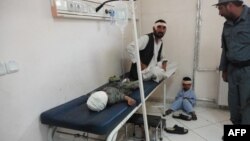
An Afghan policeman looks at a wounded man and children sitting in the main hospital in Khost city on October 1, 2012.
A suicide bomber has attacked a joint Afghan-NATO patrol in eastern Afghanistan, killing at least 20 people.
NATO says the deaths Monday include three coalition service members and their interpreter. U.S. officials identified the three NATO soldiers as American. Afghan officials say the blast also killed six Afghan police officers, including members of a quick reaction force.
The Taliban claimed responsibility for the attack.
Local officials say the bomber attacked the coalition and Afghan patrol as troops walked near a market in the city of Khost.
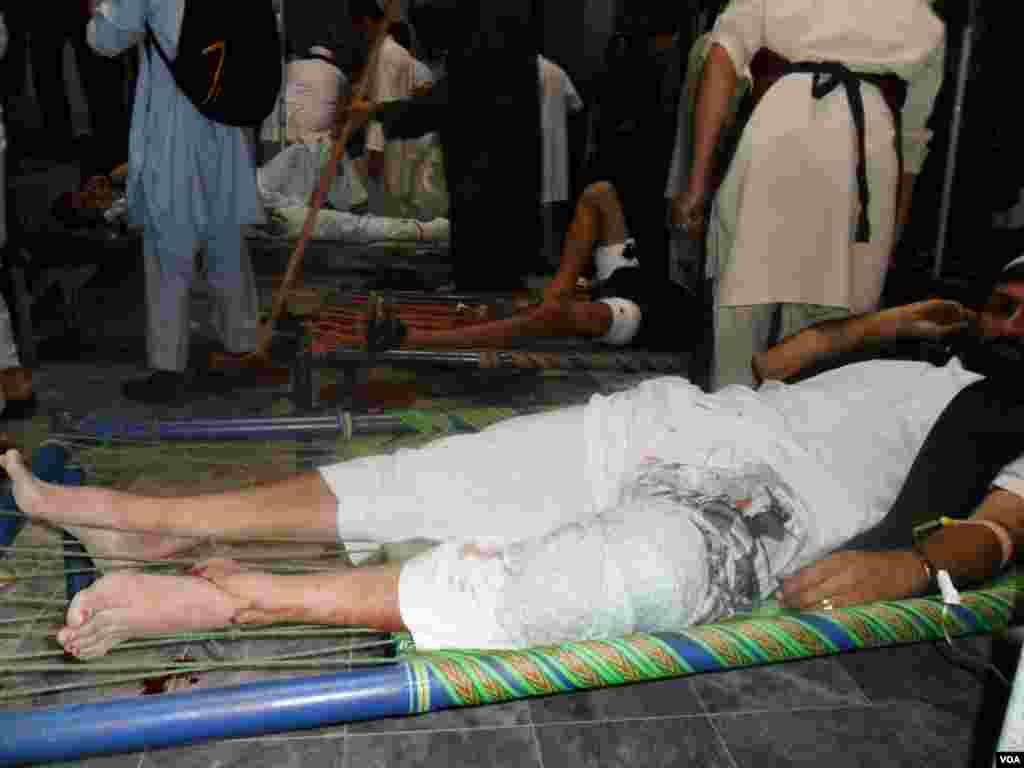
Afghan authorities say the attack wounded more than 60 people.
NATO strongly condemned the attack and offered condolences to victims' families.
Meanwhile, coalition and Afghan officials are investigating a gunbattle Saturday that killed two Americans and three Afghan soldiers. The two sides have given conflicting accounts of that incident, which came days after U.S.-led coalition forces eased restrictions on joint operations with their Afghan allies.
NATO initially described the gunbattle as a suspected "insider attack," in which Afghan security forces or insurgents disguised in Afghan or coalition uniforms open fire on NATO personnel. But NATO coalition deputy commander Lieutenant General Adrian Bradshaw later said insurgent fire may have played a role in the fighting.
NATO also said the gunbattle began after a "short conversation" between Afghan security forces and coalition troops who were manning a temporary checkpoint nearby.
The Afghan Defense Ministry said the exchange of fire was the result of a "misunderstanding" between the two sides, an account that left open the possibility of an insider attack. Such attacks have escalated this year, killing at least 52 coalition personnel.
Suicide Bomber Kills 14 in Afghanistan
1/5South Sudanese refugees line up for food at the Tzaipi refugee camp in Adjumani, 471 km (293 miles) north of Uganda's capital Kampala.
Show moreShow less
2/5Afghan security forces inspect the scene of a suicide bomb attack in Khost, Afghanistan, October 1, 2012.
Show moreShow less
3/5An Afghan boy receives treatment at a hospital after a suicide bomb attack in Khost, Afghanistan, October 1, 2012.
Show moreShow less
4/5Men wounded in a suicide blast wait for treatment, Khost, Afghanistan, October 1, 2012. (I. Rahimi/VOA)
Show moreShow less
5/5A man who was wounded in the suicide blast in Khost, Afghanistan, October 1, 2012. (I. Rahimi/VOA)
The Voice of America provides news and information in more than 40 languages to an estimated weekly audience of over 326 million people. Stories with the VOA News byline are the work of multiple VOA journalists and may contain information from wire service reports.