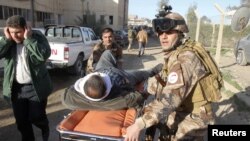
A wounded man is transported on a stretcher to receive treatment after a suicide bomb blast attack in Kirkuk, 250 km (155 miles) north of Baghdad, January 16, 2013.
A wave of attacks in Baghdad and northern Iraq killed at least 29 people Wednesday, the deadliest violence to take place this year in a country increasingly divided along sectarian lines.
A suicide bomber killed at least 15 people and wounded more than 100 by detonating a vehicle packed with explosives outside the offices of the Kurdistan Democratic Party in Kirkuk. A separate bomb exploded nearby.
Wave of Attacks Hits Iraq
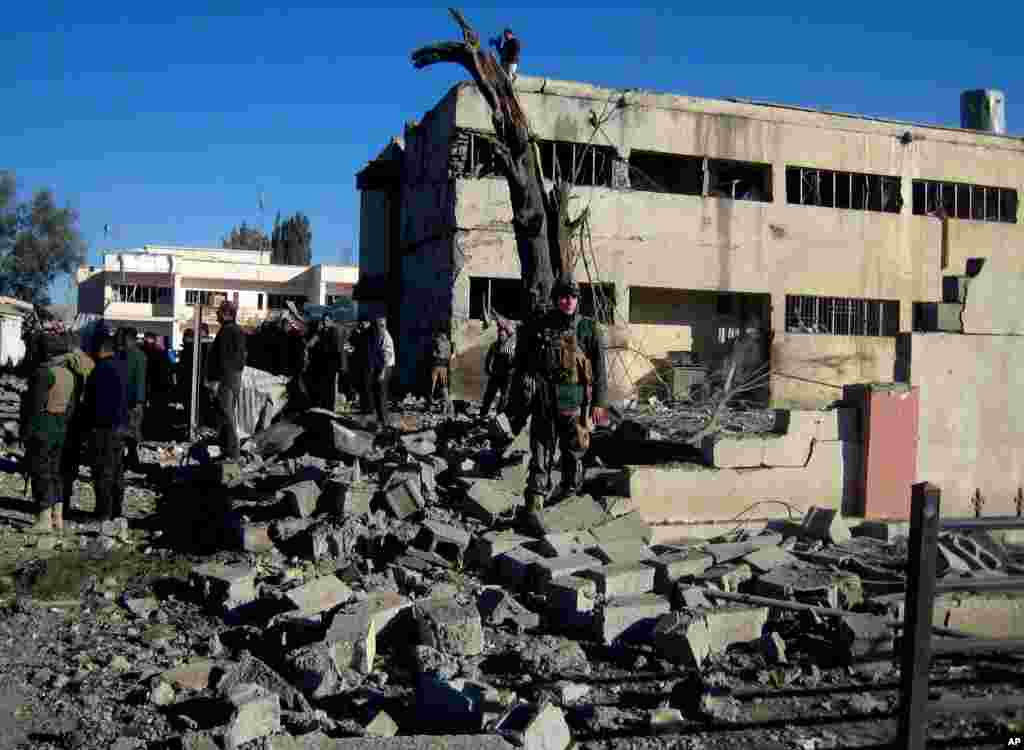
1/4Security forces inspect the local headquarters of the Kurdistan Democratic Party after a bomb attack in Kirkuk, Iraq, January 16, 2013.
Attacks in Baghdad and northern Iraq killed at least 29 people Wednesday, the deadliest violence to take place this year in a country increasingly divided along sectarian lines.
Show moreShow less
2/4Firefighters look for survivors at the local headquarters of the Kurdistan Democratic Party after a bomb attack in Kirkuk, Iraq, January 16, 2013.
Attacks in Baghdad and northern Iraq killed at least 29 people Wednesday, the deadliest violence to take place this year in a country increasingly divided along sectarian lines.
Show moreShow less
3/4Iraqi civil defense personnel inspect a damaged building after a suicide attack in Kirkuk, Iraq, January 16, 2013.
Attacks in Baghdad and northern Iraq killed at least 29 people Wednesday, the deadliest violence to take place this year in a country increasingly divided along sectarian lines.
Show moreShow less
4/4Українська армія біля Слов'янська.
Attacks in Baghdad and northern Iraq killed at least 29 people Wednesday, the deadliest violence to take place this year in a country increasingly divided along sectarian lines.
Show moreShow less
Previous slide
Next slide
The northern city is at the center of a territorial dispute between Baghdad and the country's autonomous Kurdistan regional government. Another three people died in a separate bombing outside a rival Kurdish political party office in the town of Tuz Khurmato.
In Baghdad, at least three separate attacks left six people dead, while bombings in Baiji, Hawija and Tikrit killed three more and wounded seven others.
There was no immediate claim of responsibility for the bombings, which took place as hundreds of mourners gathered in the western city of Fallajah for the funeral of Sunni lawmaker Ifan Saadoun al-Essawi, who was killed Tuesday by a suicide bombing.
Al-Essawi, a member of the Sunni-backed Iraqiya bloc, was a key founder of a group of Sunni tribal militias who joined forces with the U.S. military to fight al-Qaida in 2006.
Some information for this report provided by AP, AFP and Reuters.
The Voice of America provides news and information in more than 40 languages to an estimated weekly audience of over 326 million people. Stories with the VOA News byline are the work of multiple VOA journalists and may contain information from wire service reports.