


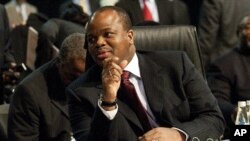
An official of Swaziland’s United Democratic Front (SUDF), a coalition of pro-democracy and civil society groups, said the organization will soon petition the government to introduce economic and democratic reforms.
Wandile Dludlu, the national coordinator of the SUDF, said members of the group will also launch nationwide demonstrations to press home their demands for reducing the economic hardships faced by ordinary people.
“They want to own [and] run the economy to the benefit of all as opposed to the current situation, where it is only in the hands of the monarchy and few of his [allies] cronies,” Dludlu said.
“[They] primarily want to have a multiparty government through which a people government can run and own their country fully and put it firmly in a developmental path for the future,” he added.
Dludlu’s comment came after the SUDC recently held a summit to find solutions to citizen’s concerns over the economy and the lack of democracy in the southern African country.
Participants at the summit, Dludlu said, included, women’s group, civil and religious groups trade union organizations, and the banned opposition group, PUDEMO.
He said participants demanded an improvement in health and education. Dludlu also said the people of Swaziland also want to own land and property without any government interference.
“They are fundamentally and profoundly demanding that land must go back to the full ownership of the people [as] opposed to the current arrangement, where the land is owned by the king in holding it in trust of the Swazi nation,” he said.
Dludlu said Swazis are tired of what he said is the lack of political will to address their concerns.
At a recent meeting with advisers, the king was quoted by Reuters as saying “some from the Western world have been waiting patiently and nursing hopes that the people of Swaziland will revolt and bring about regime change… Swazis are known the world over for being peace-loving and I would like to urge you to remain like that.”
Some analysts say King Mswati III’s concentration of power is so great - despite the 2006 reintroduction of a constitution - that the country can be considered an absolute monarchy.
Wandile Dludlu, the national coordinator of the SUDF, said members of the group will also launch nationwide demonstrations to press home their demands for reducing the economic hardships faced by ordinary people.
“They want to own [and] run the economy to the benefit of all as opposed to the current situation, where it is only in the hands of the monarchy and few of his [allies] cronies,” Dludlu said.
“[They] primarily want to have a multiparty government through which a people government can run and own their country fully and put it firmly in a developmental path for the future,” he added.
Dludlu’s comment came after the SUDC recently held a summit to find solutions to citizen’s concerns over the economy and the lack of democracy in the southern African country.
Participants at the summit, Dludlu said, included, women’s group, civil and religious groups trade union organizations, and the banned opposition group, PUDEMO.
He said participants demanded an improvement in health and education. Dludlu also said the people of Swaziland also want to own land and property without any government interference.
“They are fundamentally and profoundly demanding that land must go back to the full ownership of the people [as] opposed to the current arrangement, where the land is owned by the king in holding it in trust of the Swazi nation,” he said.
Dludlu said Swazis are tired of what he said is the lack of political will to address their concerns.
At a recent meeting with advisers, the king was quoted by Reuters as saying “some from the Western world have been waiting patiently and nursing hopes that the people of Swaziland will revolt and bring about regime change… Swazis are known the world over for being peace-loving and I would like to urge you to remain like that.”
Some analysts say King Mswati III’s concentration of power is so great - despite the 2006 reintroduction of a constitution - that the country can be considered an absolute monarchy.
