


NATO preparations to defend Turkey from potential Syrian attacks may find new urgency as Damascus begins to use missiles against Syrian rebels across the Turkish border.
U.S. officials on Wednesday said Syrian troops fired Scud missiles at opposition forces for the first time in recent days, marking an escalation of longtime President Bashar al-Assad's fight against a 21-month rebellion.
Turkey has long feared that an increasingly desperate Assad government may resort to striking Turkish targets with its Russian-designed missiles and warplanes, in retaliation for Ankara's hosting and support of Syrian rebels and refugees.
IHS Jane's analyst Ben Goodlad says Syria has about 550 Scud missiles with a range of up to 800 kilometers.
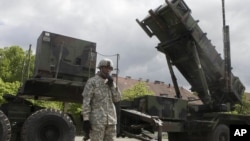
Last week, Turkey won approval from other members of the NATO alliance for the deployment of U.S.-made Patriot missiles to defend its southeastern region against the perceived Syrian threat.
The Patriot is a ground-based defense system that fires missiles to intercept airborne threats, including aircraft and ballistic missiles.
NATO preparations
Alliance members Germany and the Netherlands have agreed to send two Patriot batteries to Turkey, while the size of the U.S. contribution is still being worked out.
A U.S. Defense Department official told VOA the Obama administration is determining the best way to respond to Turkey's request and likely will announce details of the Patriot deployment within days.
Speaking by phone from Brussels, a NATO official said the alliance expects the three nations to start shipping the large and heavy batteries to Turkey in the coming weeks.
He said the costs of transporting and operating the Patriot system will be borne by the contributing governments, a typical practice in NATO missions. The Dutch government has estimated the cost of its two-battery mission in Turkey at $55 million for one year.
The NATO official said Turkey will cover 'host nation' expenses such as electricity, accommodation and food for the hundreds of foreign troops needed to run the batteries.
Turkish and NATO officials have been in talks to finalize the locations of the Patriot units. A NATO survey team visited southeastern Turkey late last month and early this month to scout possible sites, including key population centers and civilian and military installations.
Strategic positions
The NATO team visited Adana's Sakirpasa civilian airport and Incirlik NATO air force base, Iskenderun's commercial port, naval and army bases, a radar site at Kisecik village near Antakya, and air bases in Malatya and Diyarbakir.
Ben Goodlad said he expects at least one Patriot unit to be deployed around Diyarbakir, a major regional city around 100 kilometers from the Syrian border.
Patriot interceptors can hit incoming missiles up to 20 kilometers from a launching station. Goodlad said that means the launchers need to be relatively close to population centers to protect them from missile attacks.
He said the interceptors also can target hostile aircraft as far as 160 kilometers away, enabling a Diyarbakir-based battery to shield much of Turkey's border region from possible Syrian air strikes.
Border sensitivities
For those reasons, Goodlad said there is little need to deploy Patriot units right along Turkey's more sparsely populated border with Syria. Russia, a longtime Assad ally, has expressed concern that positioning the interceptors on the border could threaten Syria and exacerbate the situation.
"NATO is keen not to position its batteries on the border itself in order to maintain a defensive posture, rather than being viewed as an aggressive move toward Syria," Goodlad said.
The NATO official said the alliance expects that any intercepts of Syrian ballistic missiles would occur over Turkish territory.
"But the precise intercept location depends on many factors, including when the attacking missile is detected, and where the closest Patriot battery is," he said.
U.S. officials on Wednesday said Syrian troops fired Scud missiles at opposition forces for the first time in recent days, marking an escalation of longtime President Bashar al-Assad's fight against a 21-month rebellion.
Turkey has long feared that an increasingly desperate Assad government may resort to striking Turkish targets with its Russian-designed missiles and warplanes, in retaliation for Ankara's hosting and support of Syrian rebels and refugees.
IHS Jane's analyst Ben Goodlad says Syria has about 550 Scud missiles with a range of up to 800 kilometers.
Last week, Turkey won approval from other members of the NATO alliance for the deployment of U.S.-made Patriot missiles to defend its southeastern region against the perceived Syrian threat.
The Patriot is a ground-based defense system that fires missiles to intercept airborne threats, including aircraft and ballistic missiles.
NATO preparations
Alliance members Germany and the Netherlands have agreed to send two Patriot batteries to Turkey, while the size of the U.S. contribution is still being worked out.
A U.S. Defense Department official told VOA the Obama administration is determining the best way to respond to Turkey's request and likely will announce details of the Patriot deployment within days.
Speaking by phone from Brussels, a NATO official said the alliance expects the three nations to start shipping the large and heavy batteries to Turkey in the coming weeks.
He said the costs of transporting and operating the Patriot system will be borne by the contributing governments, a typical practice in NATO missions. The Dutch government has estimated the cost of its two-battery mission in Turkey at $55 million for one year.
The NATO official said Turkey will cover 'host nation' expenses such as electricity, accommodation and food for the hundreds of foreign troops needed to run the batteries.
Turkish and NATO officials have been in talks to finalize the locations of the Patriot units. A NATO survey team visited southeastern Turkey late last month and early this month to scout possible sites, including key population centers and civilian and military installations.
Strategic positions
The NATO team visited Adana's Sakirpasa civilian airport and Incirlik NATO air force base, Iskenderun's commercial port, naval and army bases, a radar site at Kisecik village near Antakya, and air bases in Malatya and Diyarbakir.
Ben Goodlad said he expects at least one Patriot unit to be deployed around Diyarbakir, a major regional city around 100 kilometers from the Syrian border.
Patriot interceptors can hit incoming missiles up to 20 kilometers from a launching station. Goodlad said that means the launchers need to be relatively close to population centers to protect them from missile attacks.
He said the interceptors also can target hostile aircraft as far as 160 kilometers away, enabling a Diyarbakir-based battery to shield much of Turkey's border region from possible Syrian air strikes.
Border sensitivities
For those reasons, Goodlad said there is little need to deploy Patriot units right along Turkey's more sparsely populated border with Syria. Russia, a longtime Assad ally, has expressed concern that positioning the interceptors on the border could threaten Syria and exacerbate the situation.
"NATO is keen not to position its batteries on the border itself in order to maintain a defensive posture, rather than being viewed as an aggressive move toward Syria," Goodlad said.
The NATO official said the alliance expects that any intercepts of Syrian ballistic missiles would occur over Turkish territory.
"But the precise intercept location depends on many factors, including when the attacking missile is detected, and where the closest Patriot battery is," he said.