



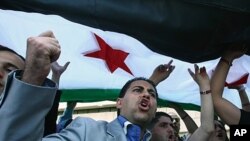
Syrian opposition groups ended a two-day meeting in Turkey on Thursday with the demand that President Bashar al-Assad step down. Opposition activists are also calling for protests nationwide Friday, despite the ongoing military crackdown.
Syrian opposition leaders are demanding that President Assad resign immediately and transfer power to his vice president, pending formation of a transition council to move towards democracy.
A communiqué by the 300 opposition delegates to a conference in Turkey proclaimed that they “have committed to the demands of the Syrian people to bring down the regime.”
Milhem Droubi of the Muslim Brotherhood insisted that the initial demands of reform by the opposition are no longer enough and that now its leaders are calling for the regime to be replaced.
He says that today’s demands are different from those of yesterday, because blood has been spilled. President Assad, he argues, must apologize after hundreds of men, women and children were killed, and the opposition will not excuse these acts committed against the people. The opposition, he insists, agrees with the people that the regime must be toppled.
Droubi added that the Syrian government must also pay compensation to families of victims, free all political prisoners, send its soldiers back to barracks, authorize peaceful demonstrations and set up an election process.
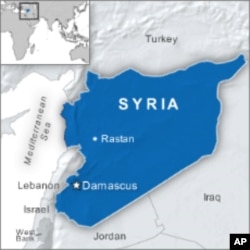
Meanwhile, government troops continued to pound the town of Rastan with field artillery and tank shells Thursday, leaving the town without electricity, water and phones for a sixth straight day. Opposition activists said at least 15 people were killed in the last 24 hours.
Despite the crackdown, the Syrian government announced Wednesday that it was setting up a National Dialogue Committee to allow Syrians to debate their political future. An amnesty was also announced for hundreds of political prisoners, including those of the Muslim Brotherhood.
Ahmed Haj Ali, a pro-government analyst in Damascus, told the U.S.-funded al-Hurra TV that it is not clear which activists will represent the opposition, and who would participate in the debate.
He says there are many questions about who represents the authentic opposition and they must be examined in the coming days. He notes that the presidential pardon just issued allows opponents to return home and become part of the political process if they chose to do so.
Elsewhere, in Libya, NATO warplanes hit a series of targets in the capital Tripoli overnight. NATO indicated that munitions depots, military vehicles, a missile launcher and a radar unit were hit.

Libyan government TV also reported that an explosion took place in front of the courthouse in the rebel stronghold of Benghazi Thursday. An explosion Wednesday in front of Benghazi’s Tibesti Hotel resulted in minor damage. A rebel spokesman accused Gadhafi “agents” of sabotage.
The head of the rebel Transitional National Council, Mustafa Abdul Jalil, insisted that Gadhafi's loyalists must stop collaborating with him, or face the consequences.
He warns that those who work for Mr. Gadhafi's regime are being given the chance to change sides, but that if they chose not to do so, they will be legitimate targets for retribution.
Off the Tunisian coast, several hundred people are missing after a boat carrying nearly 800 refugees from Libya to Europe sank off of Tunisia's Kerkennah island this week.
Witnesses say the boat foundered in heavy seas as passengers stampeded to board inflatable life rafts. The survivors, mostly migrants from sub-Saharan Africa, were taken to a camp along the border with Libya.