BEIRUT, LEBANON —
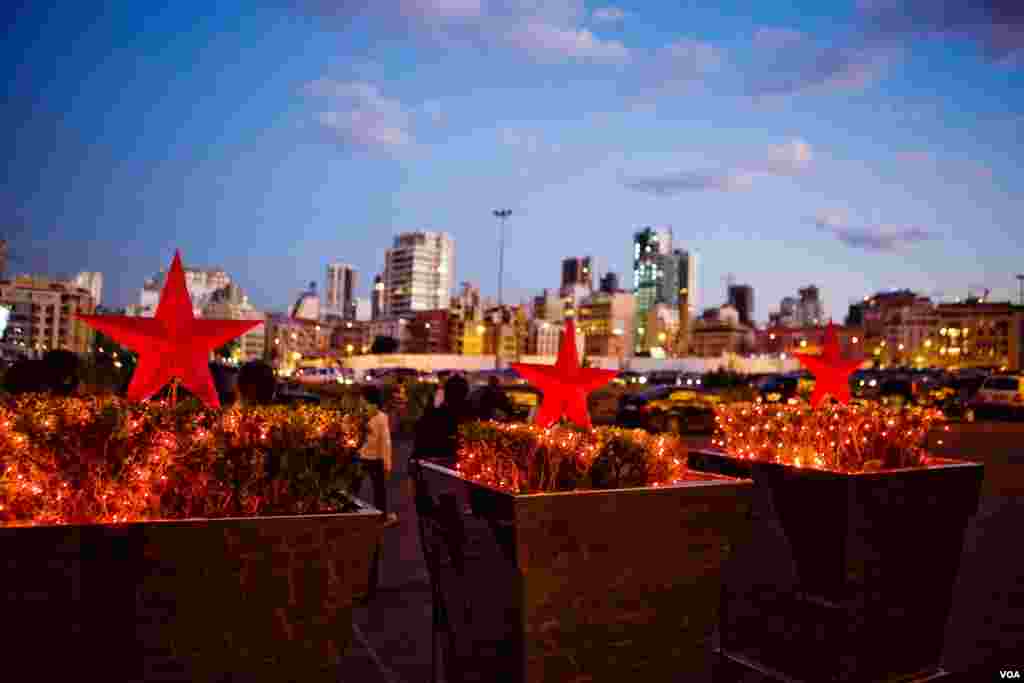
Christmas trees and lights decorate this city on the eastern edge of the Mediterranean. As Christmas approaches, however, Syria's 2 million Christians are not celebrating. They are worrying. If an Islamist government replaces the secular government of Bashar al-Assad, they wonder what the future will be for Syria's religious minorities.
Daniel, an Armenian Orthodox, escaped from Syria three months ago with his wife and five children.
"I had to come here. Because we as a Christian sect are targeted. Salafis and Muslim Brotherhood, and al-Qaida people, came and displaced us," he said.
Christmas Decorations in Beirut
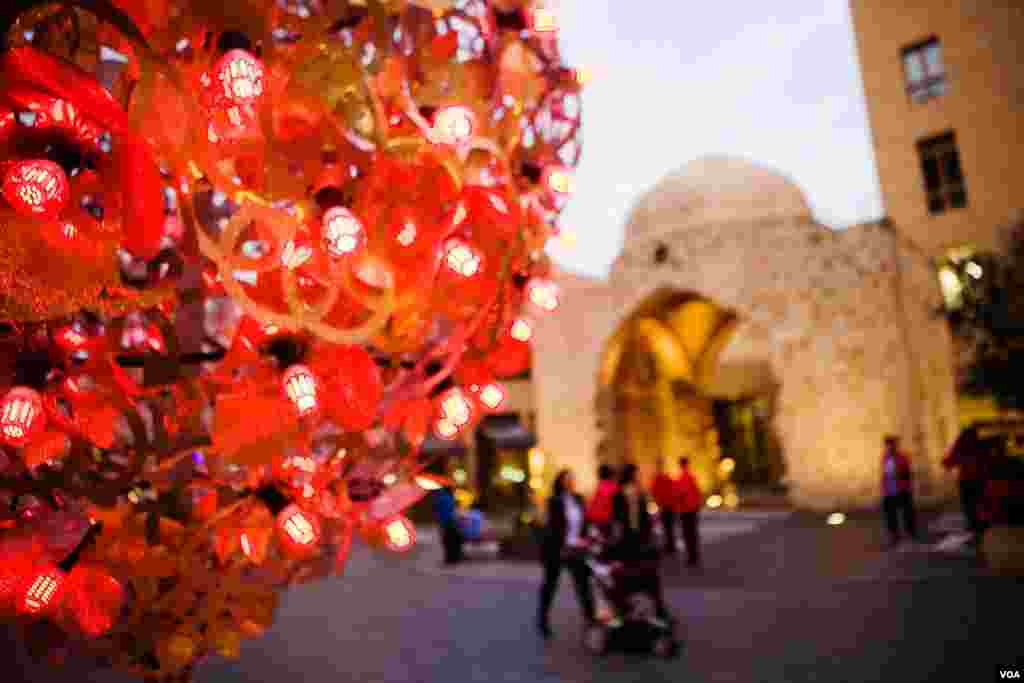
1/10Christmas decorations outside the ancient tomb of a sheik in old Beirut. Lebanon, December 2012. (VOA/V.Undritz)
Christmas trees, lights and other decorations are up across Beirut, Lebanon.
Show moreShow less
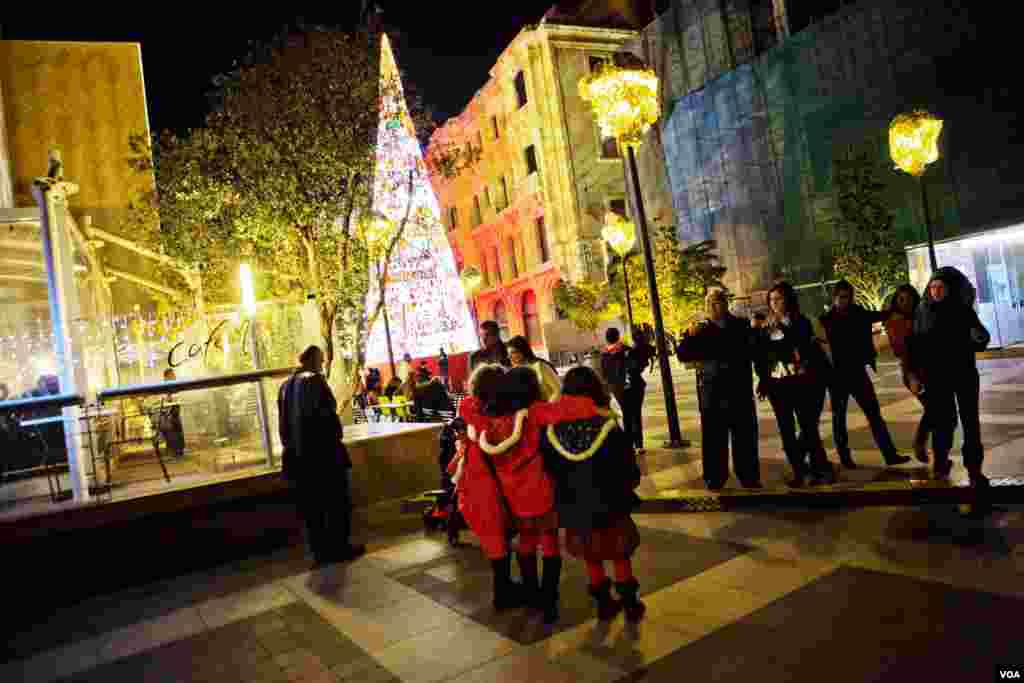
2/10Beirut families take photos in front of Christmas trees and decorations in the new Souk shopping district, Lebanon, December 2012. (VOA/V. Undritz)
Christmas trees, lights and other decorations are up across Beirut, Lebanon.
Show moreShow less
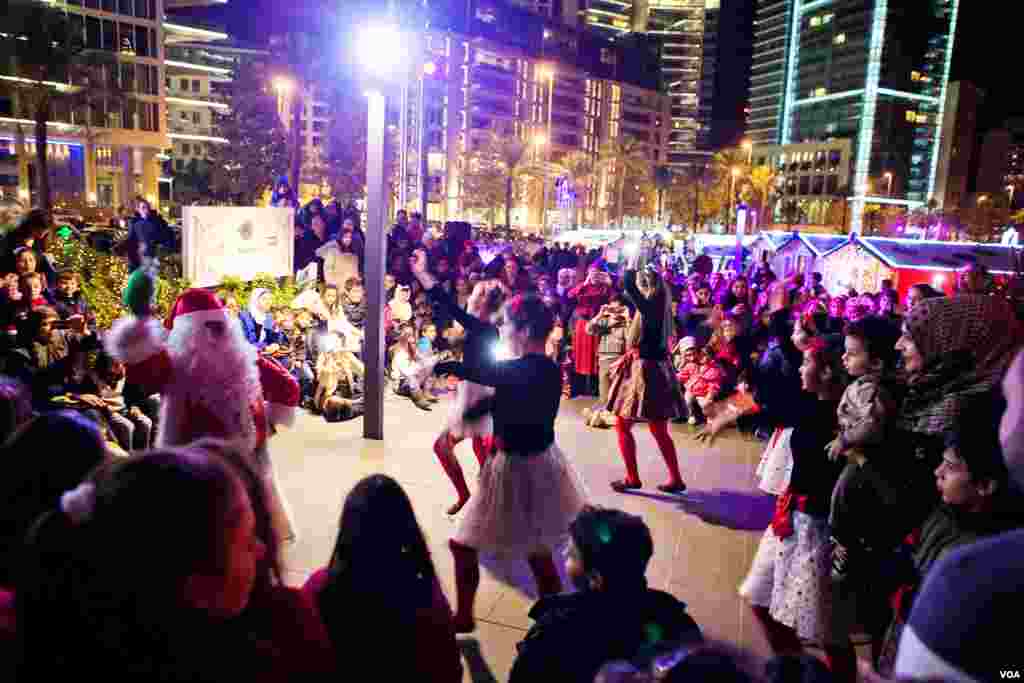
3/10Santa and his red and white uniformed helpers charm Christians and Muslim children alike at the Christmas Bazaar, Beirut, Lebanon, December 2012. (VOA/V. Undritz)
Christmas trees, lights and other decorations are up across Beirut, Lebanon.
Show moreShow less
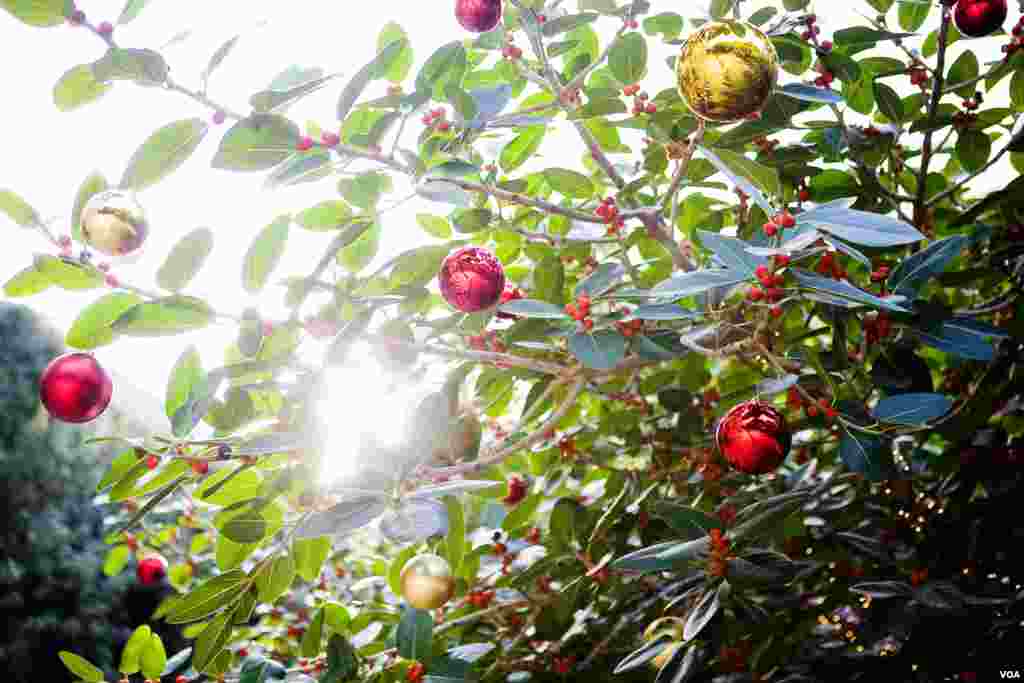
4/10On the campus of the American University of Beirut, golden balls and green leaves make for a Mediterranean Christmas scene, Lebanon, December 2012. (VOA/V.Undritz)
Christmas trees, lights and other decorations are up across Beirut, Lebanon.
Show moreShow less
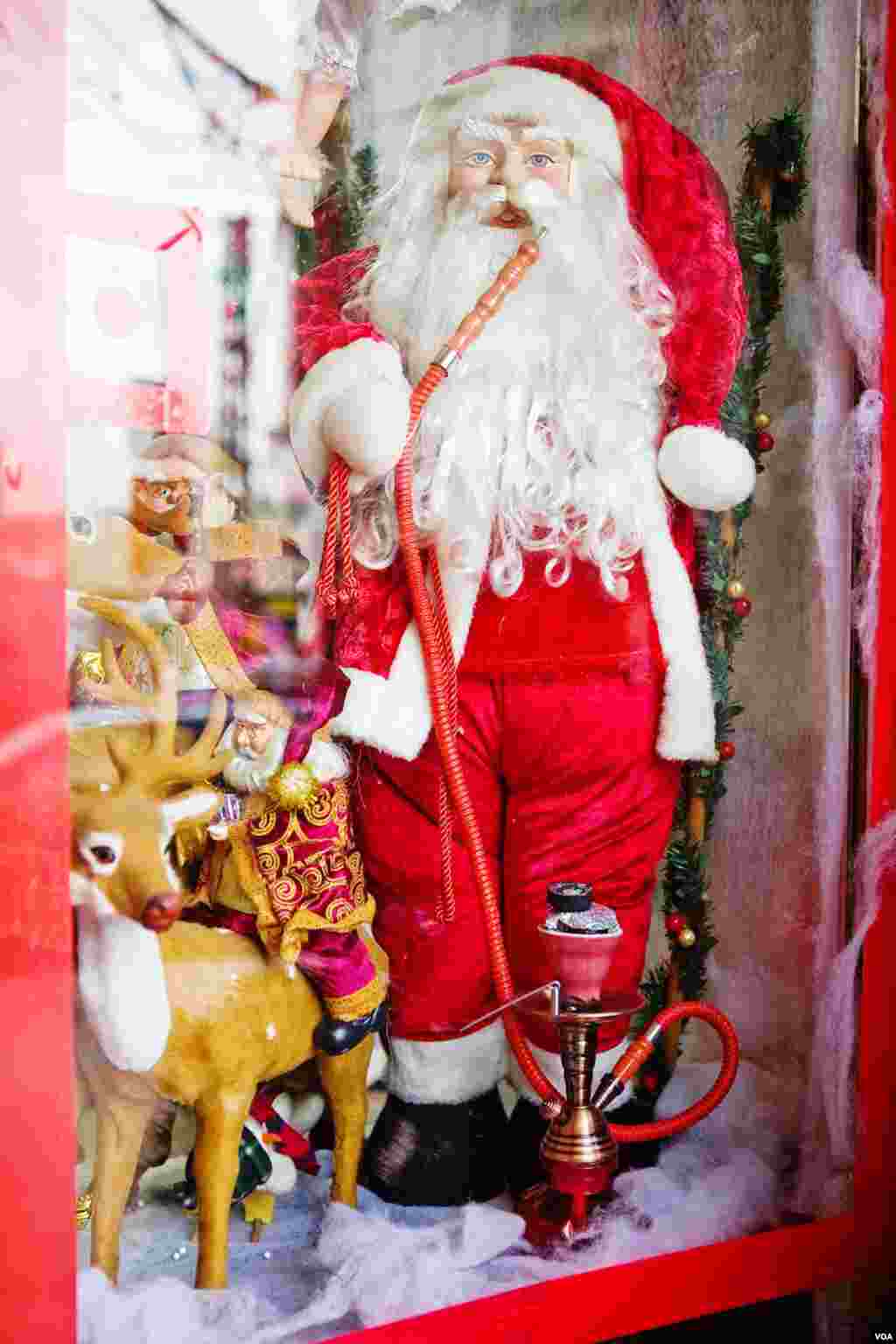
5/10In Beirut's Armenian district, a window display features a Santa smoking tobacco in a Middle Eastern water pipe, Lebanon, December 2012. (VOA/V.Undritz)
Christmas trees, lights and other decorations are up across Beirut, Lebanon.
Show moreShow less
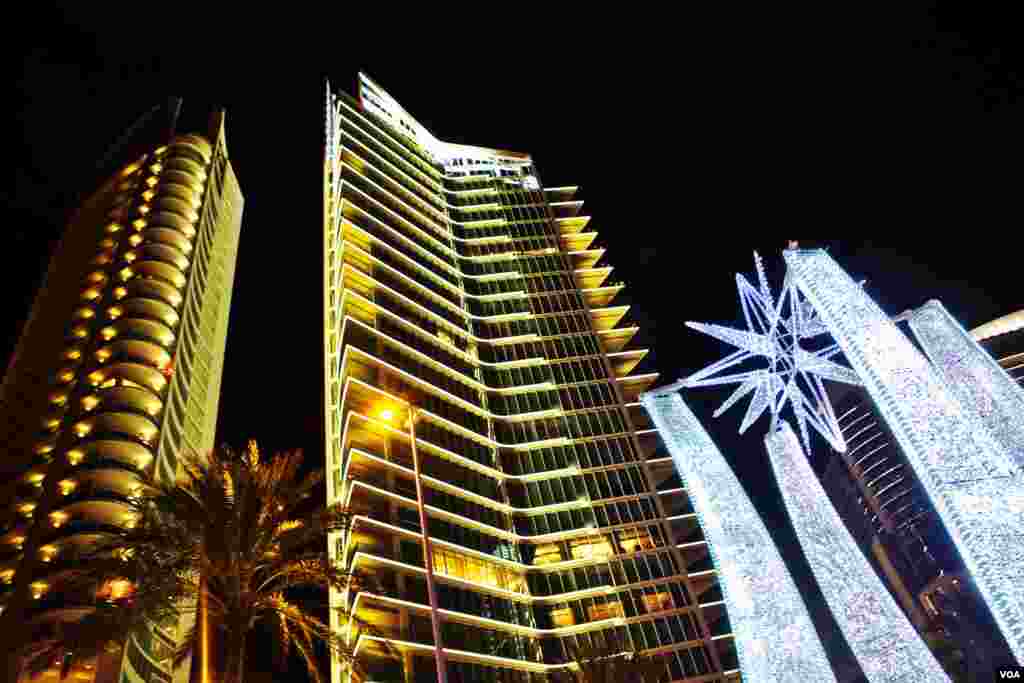
6/10Backed by new apartment highrises, Christmas stars signal start of Christmas Bazaar on the Marina waterfront of Beirut's St. George's Bay, Lebanon, December 2012. (VOA/V. Undritz)
Christmas trees, lights and other decorations are up across Beirut, Lebanon.
Show moreShow less
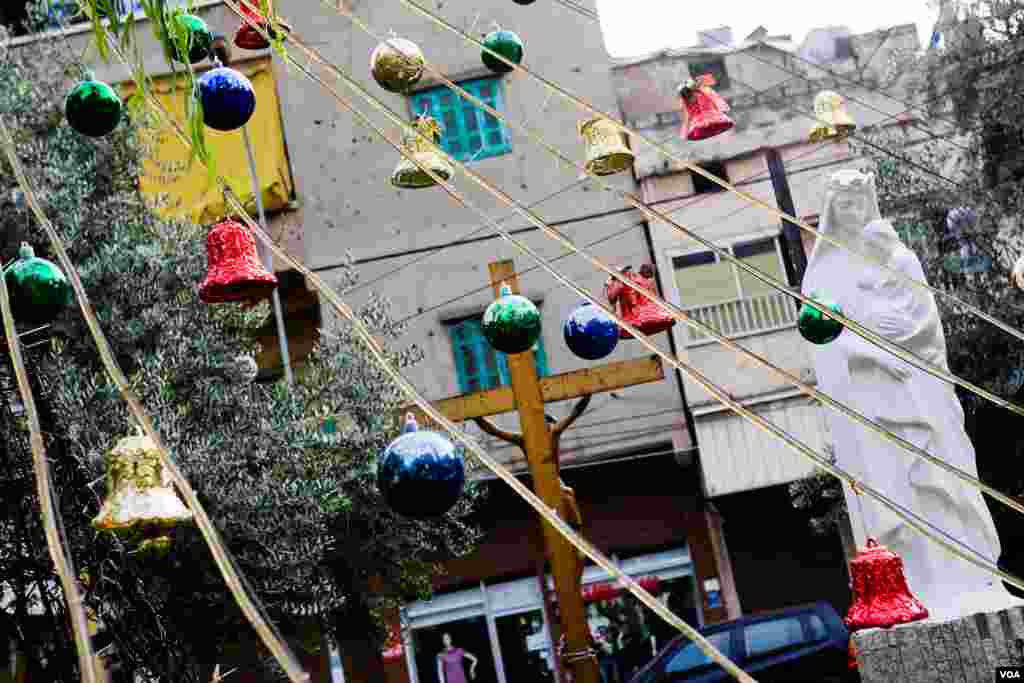
7/10In Beirut's Armenian quarter, Christmas balls and bells near a statue of the Virgin Mary and Baby Jesus, Lebanon, December 2012. (VOA/V.Undritz)
Christmas trees, lights and other decorations are up across Beirut, Lebanon.
Show moreShow less
8/10Gea Ibrahim blows a kiss after attending a Christmas party for Crowne Plaza Beirut employees and family members, Beirut, Lebanon, December 2012. (VOA/V.Undritz)
Christmas trees, lights and other decorations are up across Beirut, Lebanon.
Show moreShow less
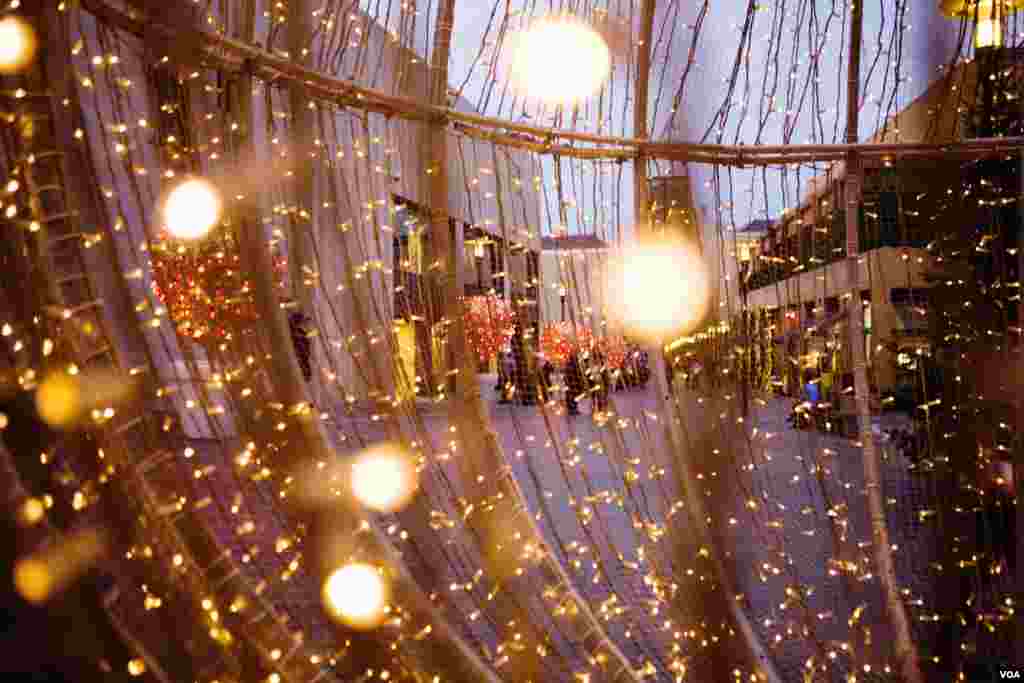
9/10Christmas lights shine in pedestrian mall in Beirut, Lebanon, December 2012. (VOA/V.Undritz)
Christmas trees, lights and other decorations are up across Beirut, Lebanon.
Show moreShow less
10/10Red Stars top bank building in Beirut's new downtown financial center, Lebanon, December 2012. (VOA/V. Undritz)
Christmas trees, lights and other decorations are up across Beirut, Lebanon.
Show moreShow less
Previous slide
Next slide
Tolerance fades
Before the civil war, he said, Syria was a secular nation of religious tolerance.
“At the garage where I worked, there were Armenians, Christians, Muslims,” Daniel, a 48-year-old car mechanic, said. “We ate together, I would go eat at their place. We would not ask if someone was Muslim or Christian.”
After Egypt, Syria has the second largest population of Christians in the Arab world - about 2 million people.
Christians dwindle
Kamal Sioufi, president of Caritas Lebanon, a Christian charity, worries about the future of Christianity in the region.
"The problem is in all the countries of the Middle East: the number of Muslim is increasing, the number of Christians is decreasing, and the power is for the Muslim, it is not for Christians," said Sioufi.
The losers in Syria's civil war could be the Christians, about 10 percent of the population.
"The problem is the minority because they haven't any power is Syria, so they have… they will be people of a second category," said Sioufi.
Christian refugees are hard to track in Lebanon. They often disappear into relatives' houses and keep hidden.
Embracing life
Daniel has two sisters in Beirut. To boost his spirits, Lidia sings "Silent Night" in Armenian. She described the Christmas feast, starting with a turkey stuffed with chestnuts.
"We make rice and sprinkle nuts on it. And our mother has taught us a Syrian recipe, ham stuffed with garlic, carrots and the like. Kebbe we stuff with meat. And we do chicken breast with sesame seed paste," she said.
But with half of his extended family trapped in Syria, Daniel is concerned about the future.
He recalled that his family survived only because his grandparents left Turkey ahead of the mass killings of Armenians in 1915.
"In 1915 my grandparents were very wealthy. They left everything and moved. Because of them we are alive today. And I left everything because of my children. We don't have Christmas."
This Christmas, Daniel’s gift to his children may be life.