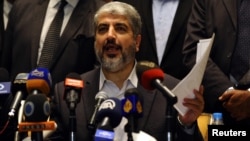
Hamas' leader in exile Khaled Meshaal speaks during a news conference about a cease-fire agreement between Israel and Gaza in Cairo November 21, 2012.
A cease-fire between Israel and Palestinian militant group Hamas appeared to be holding Thursday, a day after the Egyptian-brokered agreement came into force, ending an eight-day Israeli offensive against Gaza-based militants.
A text of the agreement was released Wednesday by the Egyptian presidency. The agreement calls on Israel to stop all attacks on Gaza, including targeting of individuals by air, sea and land. It also requires "all Palestinian factions" to stop all hostilities toward Israel from Gaza, including rocket fire and attacks along the Gaza-Israel border.
Another clause of the agreement calls on parties in the region to open Gaza's border crossings, "facilitate" movements of people and goods and "refrain" from targeting residents in border areas. The text does not specify who should open the border crossings and what types of movements will be permitted.
Follow-through
The Israeli-Palestinian Cease-fire Deal
The Israeli-Palestinian Cease-fire Deal
Israeli and Palestinian militants agree to end all hostilities.
For Israel that includes attacks by land, sea, and air, and operations targeting individuals.
For Palestinian factions in Gaza that includes rocket and border attacks.
After 24 hours, crossings into Gaza are to be opened and the movement of people and goods is to be allowed.
The document said the parties would discuss procedures for implementing the cease-fire 24 hours after it takes effect, at 9:00 p.m. Thursday local time [1600 UTC].
Egypt declared itself the sponsor of the deal and called on Israel and Hamas to uphold their commitments. It said both sides must inform the Egyptian government of any "observations" about the truce to allow Cairo to "follow up."
Israel has not confirmed any of the cease-fire terms. Israeli Prime Minister Benjamin Netanyahu said Wednesday, though, that he secured a commitment from U.S. President Barack Obama to cooperate in fighting the smuggling of Iranian weapons to Gaza militants. Israel has said many of those weapons are smuggled through Egypt's Sinai Peninsula before reaching Gaza by underground tunnels.
Egypt has not said whether it will take any action against weapons smuggling to Gaza. The issue was not mentioned in the Egyptian cease-fire document.
Gaza and Israel Calm as Cease-fire Holds
1/8Senior Hamas leader Ismail Haniyeh waves to people as they celebrate what they say is a victory over Israel after an eight-day conflict, Gaza City, November 22, 2012.
Calm is returning to Gaza after a cease-fire ended more than one week of violence. The truce brokered by Egypt took effect Wednesday.
Show moreShow less
2/8Hamas militants carry the bodies of their comrades, who medics said were killed in Israeli air strikes on Wednesday, during their funeral in the central Gaza Strip, November 22, 2012.
Calm is returning to Gaza after a cease-fire ended more than one week of violence. The truce brokered by Egypt took effect Wednesday.
Show moreShow less
3/8Hassidic Jewish men from the Breslov sect dance near Kibbutz Yad Mordechai outside the northern Gaza Strip, November 22, 2012.
Calm is returning to Gaza after a cease-fire ended more than one week of violence. The truce brokered by Egypt took effect Wednesday.
Show moreShow less
4/8Israeli soldiers, atop a tank, prepare to leave their Gaza border position at sun rise, November 22, 2012.
Calm is returning to Gaza after a cease-fire ended more than one week of violence. The truce brokered by Egypt took effect Wednesday.
Show moreShow less
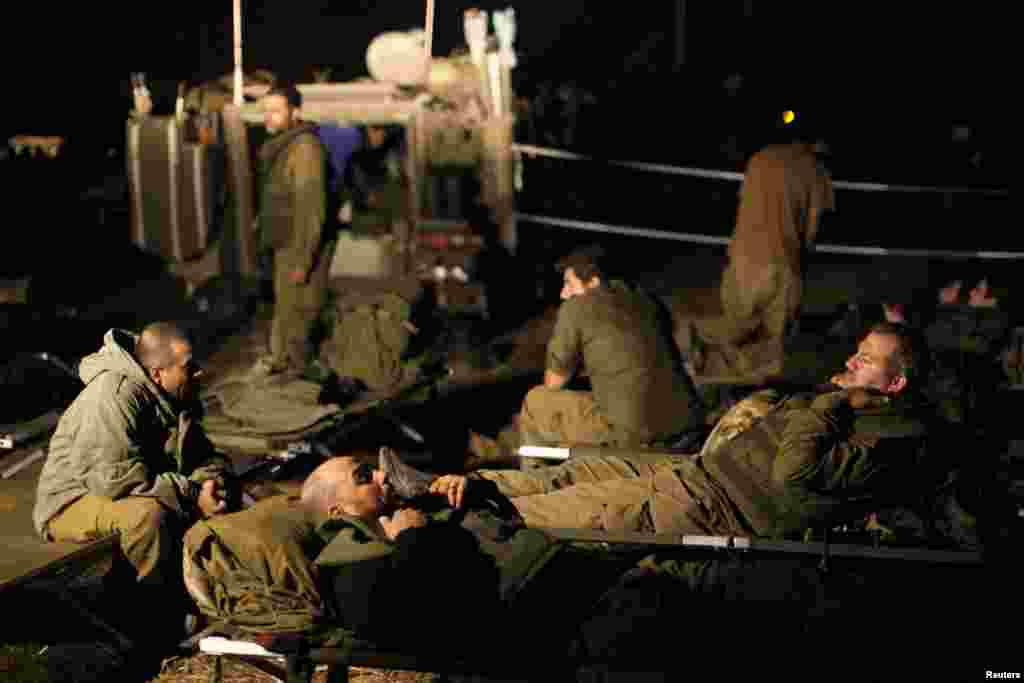
5/8Israeli soldiers rest at a staging area outside the northern Gaza Strip, Nov. 21, 2012.
Calm is returning to Gaza after a cease-fire ended more than one week of violence. The truce brokered by Egypt took effect Wednesday.
Show moreShow less
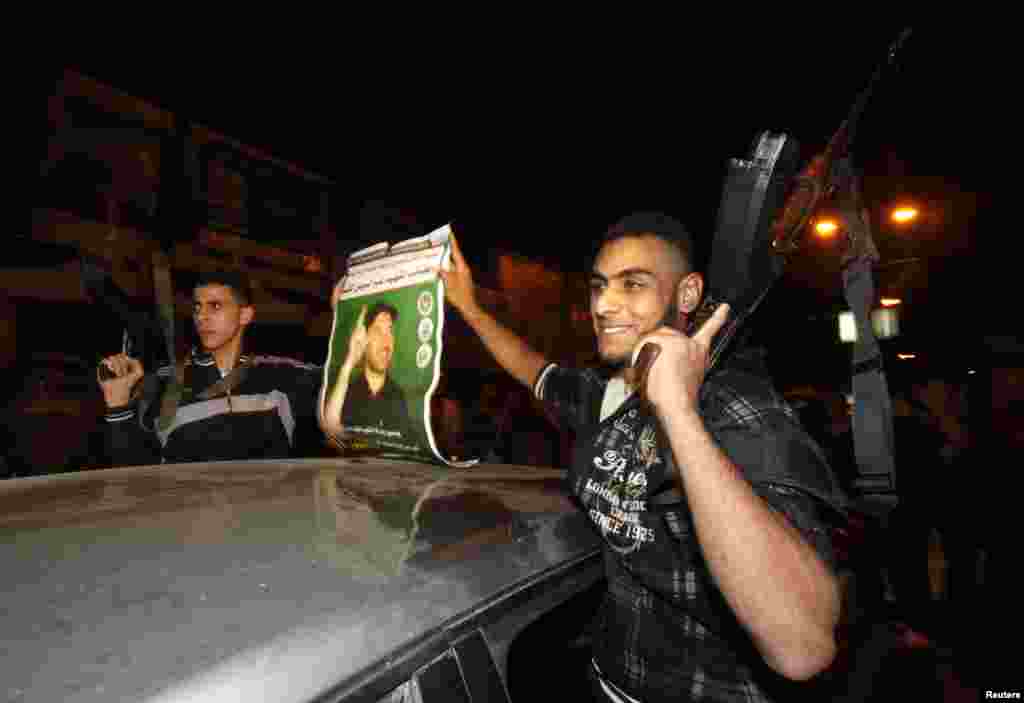
6/8After eight days of conflict Palestinian gunmen hold aloft an image of Hamas military chief Ahmed Jaabari, who was killed by an Israeli air strike, Gaza City, Nov. 21, 2012.
Calm is returning to Gaza after a cease-fire ended more than one week of violence. The truce brokered by Egypt took effect Wednesday.
Show moreShow less
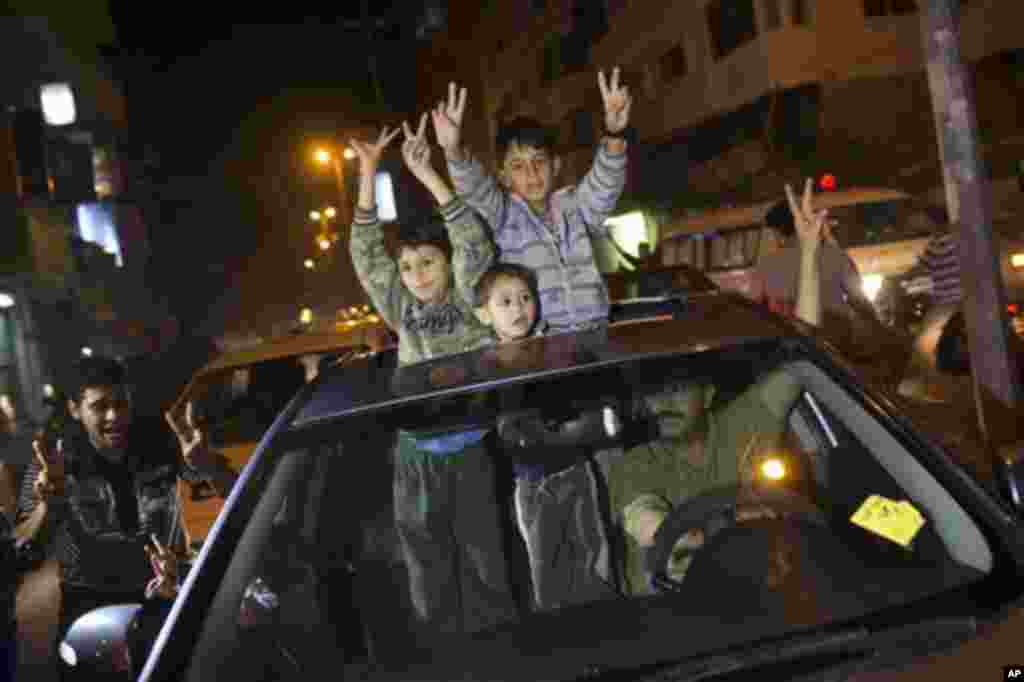
7/8Palestinians celebrate the cease-fire between Israel and Hamas, Gaza City, Nov. 21, 2012.
Calm is returning to Gaza after a cease-fire ended more than one week of violence. The truce brokered by Egypt took effect Wednesday.
Show moreShow less
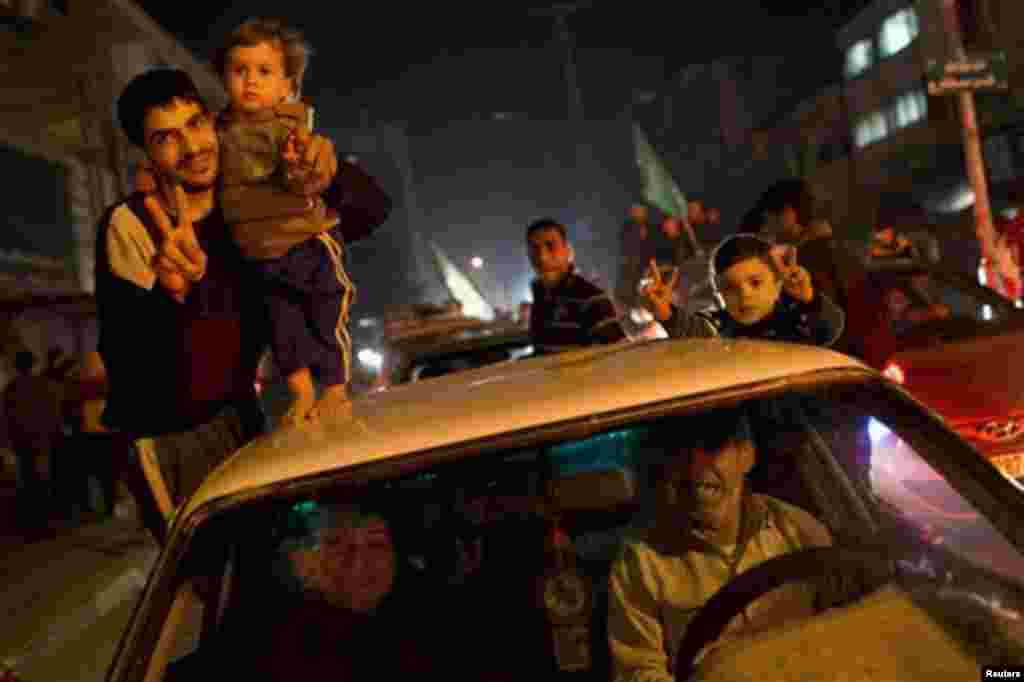
8/8After eight days of conflict, Palestinians celebrate Israel-Hamas cease-fire, Gaza City, Nov. 21, 2012.
Calm is returning to Gaza after a cease-fire ended more than one week of violence. The truce brokered by Egypt took effect Wednesday.
Show moreShow less
Previous slide
Next slide
Negotiating terms
Both Israel and Hamas have said they will stick to the truce provided the other side does the same. Each side also has warned, however, that it is ready to resume fighting if the other violates the truce.
Hamas has long demanded that Israel remove all restrictions on the passage of people and goods into Gaza, and end a naval blockade of the territory, saying such Israeli measures constitute a siege and violation of Palestinian rights. Gaza also shares a border with Egypt, which allows limited movements of people and goods across the boundary.
Israeli authorities have expanded the variety of goods permitted to enter Gaza via land in recent years, but they have maintained restrictions on items they say could be used by militants to make weapons for attacking Israel. Israel also has said the naval blockade is needed to prevent weapons from being shipped to Gaza.