



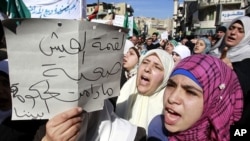
Thousands of demonstrators have taken to the streets again in Jordan. They are protesting inflation, unemployment, and corruption, and demanding sweeping electoral reforms.
The new wave of demonstrations broke out after Friday Muslim prayers in Amman and several other cities across the kingdom. Protesters chanted slogans, including some calling for corrupt officials to be put on trial.
Friday's protests were the latest in a series of demonstrations that began two weeks ago in the wake of steep increases in food and fuel prices.
The demonstrations have put pressure on King Abdullah, as the demonstrators call for sweeping political reforms that would result in his relinquishing the power to appoint top government officials.
The protests have not directly targeted the monarch, but rather Samir Rifai, the man the king appointed as prime minister in 2009.
The protests are led largely by left-wing groups who call attention to the disparity between the rich and poor in Jordan. Hashem Abu Hassan is part of a coalition of labor groups and was among those organizing demonstrations in Amman on Friday.
"We are coming to help the poor people, to help our people against this corruption and the bad policies, socio-economic policies of consecutive governments in Jordan in the past 10 years, all the policies. We need real change," he said.
Abu Hassan tells VOA he wants the government to bring down high taxes that he says are squeezing the poor. "What we want is that the income tax should be raised on the rich people and also to lower the value-added tax, especially on the daily materials and daily food and drink for the people. They take about 40 percent for the gasoline, 40-percent tax. This is unbelievable. They can't tolerate this situation," he said.
Jordan's Islamists have also joined the demonstrations, calling for a democratic reforms that will lead to what they describe as a gradual transformation of the country.
At some of the demonstrations on Friday, some protesters shouted slogans saying the Quran is their constitution and calling for a holy war.
The protests in Amman on Friday were peaceful and witnesses said security forces did not intervene.
The government has rolled out new subsidies to bring down the prices of basic goods and announced increases in retirement pensions and pay for public servants.
Many of the protesters said they are watching events in Egypt closely and have been inspired by the recent popular uprising in Tunisia. They say they will keep up the demonstrations in the coming days, including a sit-in outside the prime minister's office on Saturday.