


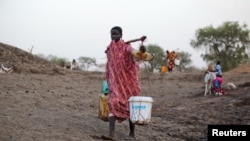
GENEVA - The U.N. refugee agency has moved thousands of Sudanese refugees from crowded transit sites in northern South Sudan to newer camps away from border areas. The refugees were relocated to their new homes following several deaths.
The U.N. refugee agency says the weekend emergency relocation began after food and other relief items had been distributed to all 32,000 Sudanese refugees sheltering in the border transit site of Hofra. It says the refugees are currently in another transit site called Kilo 18 and will remain there until they can be relocated permanently in a new camp in Upper Nile state.
South Sudan is hosting more than 150,000 refugees who have fled fighting and severe food shortages in Sudan's South Kordofan and Blue Nile States, where rebels are fighting Sudanese government forces.
UNHCR spokesman Adrian Edwards said more than 112,000 of these are in Upper Nile state and more than 50,000 others are in settlements further west in Unity state.
"The accounts we are hearing from refugees speak of large groups of people being close to the border area and potentially about to move across into Upper Nile State," he said. "We are obviously concerned both about the situation of safety that those refugees are in, but also about the additional strains this is putting on a relatively unsupported and extremely difficult environment to work in."
The UNHCR reports up to 15,000 new refugees could enter Upper Nile state shortly. Last week, the private aid agency Doctors Without Borders reported seven deaths among recent arrivals at Hofra, which is about 25 kilometers from the border with Sudan.
The refugees had been walking for weeks from Blue Nile state with little to eat or drink. Aid workers believe the deaths of the seven Sudanese refugees may be related to their weakened condition after they arrived.
Adrian Edwards described the environment as inhospitable, saying aid agencies are faced with two main difficulties in efforts to assist the growing number of refugees.
"Water is the overwhelming concern for us," said Edwards. "We simply, at the moment, cannot drill fast enough to get water for the people there. That is a super-urgent need and finding answers to that is a daily struggle for us at the moment. The other difficulty is physically moving people. Rains have just started there. That makes roads difficult to cross. So, you have the factors of difficult to move people, not enough water, there are too many people there to be able to support. And you can see why we are concerned about the situation."
Edwards says the UNHCR is working with South Sudanese authorities and local communities to identify additional refugee sites where water could be drawn from the Nile.
The U.N. refugee agency says the weekend emergency relocation began after food and other relief items had been distributed to all 32,000 Sudanese refugees sheltering in the border transit site of Hofra. It says the refugees are currently in another transit site called Kilo 18 and will remain there until they can be relocated permanently in a new camp in Upper Nile state.
South Sudan is hosting more than 150,000 refugees who have fled fighting and severe food shortages in Sudan's South Kordofan and Blue Nile States, where rebels are fighting Sudanese government forces.
UNHCR spokesman Adrian Edwards said more than 112,000 of these are in Upper Nile state and more than 50,000 others are in settlements further west in Unity state.
"The accounts we are hearing from refugees speak of large groups of people being close to the border area and potentially about to move across into Upper Nile State," he said. "We are obviously concerned both about the situation of safety that those refugees are in, but also about the additional strains this is putting on a relatively unsupported and extremely difficult environment to work in."
The UNHCR reports up to 15,000 new refugees could enter Upper Nile state shortly. Last week, the private aid agency Doctors Without Borders reported seven deaths among recent arrivals at Hofra, which is about 25 kilometers from the border with Sudan.
The refugees had been walking for weeks from Blue Nile state with little to eat or drink. Aid workers believe the deaths of the seven Sudanese refugees may be related to their weakened condition after they arrived.
Adrian Edwards described the environment as inhospitable, saying aid agencies are faced with two main difficulties in efforts to assist the growing number of refugees.
"Water is the overwhelming concern for us," said Edwards. "We simply, at the moment, cannot drill fast enough to get water for the people there. That is a super-urgent need and finding answers to that is a daily struggle for us at the moment. The other difficulty is physically moving people. Rains have just started there. That makes roads difficult to cross. So, you have the factors of difficult to move people, not enough water, there are too many people there to be able to support. And you can see why we are concerned about the situation."
Edwards says the UNHCR is working with South Sudanese authorities and local communities to identify additional refugee sites where water could be drawn from the Nile.