Tens of Thousands Protest Against Nuclear Power in Japan
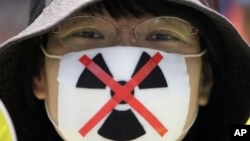
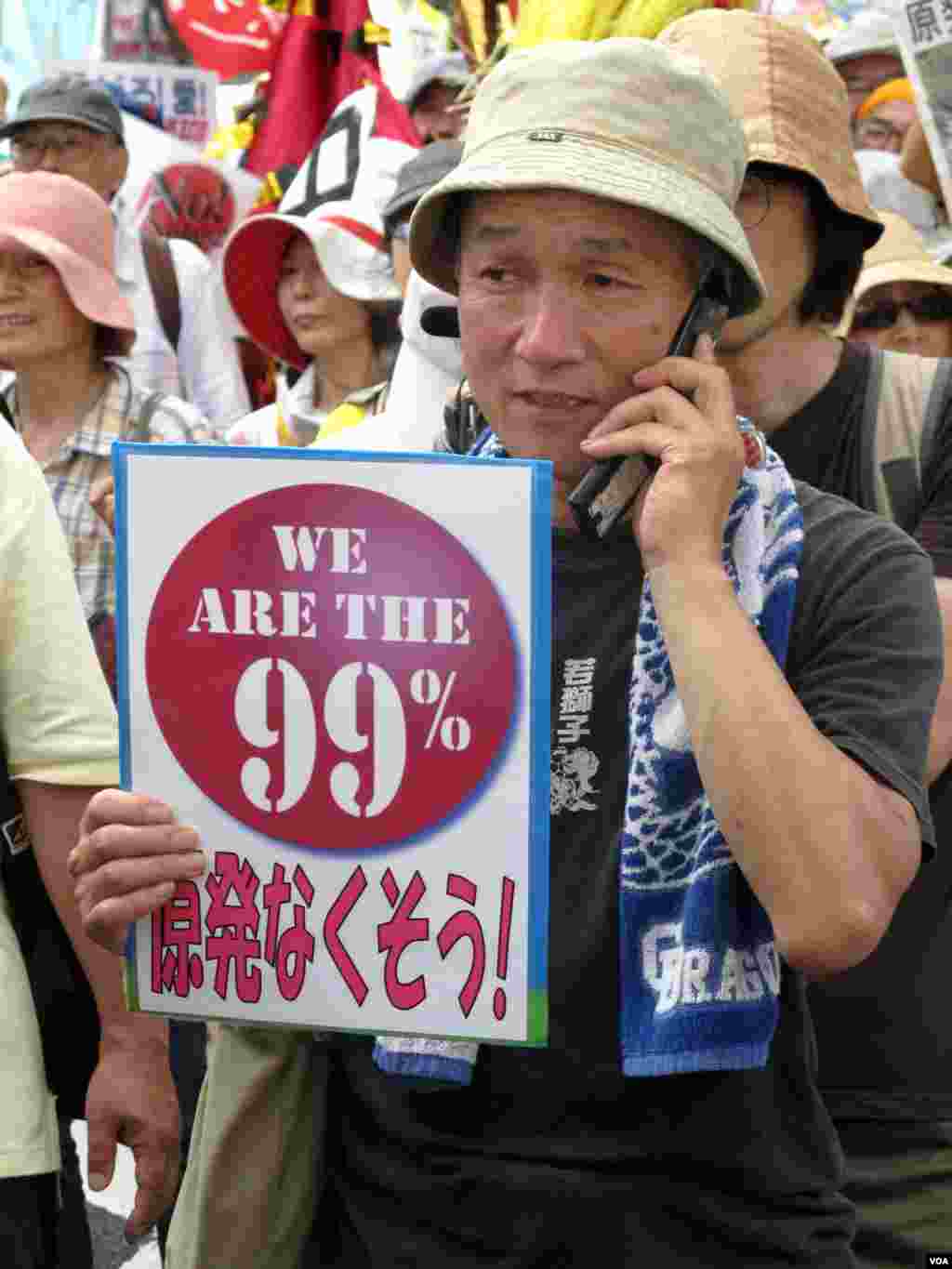
An anti-nuclear protester waits to begin a march through downtown Tokyo, Japan, July 16, 2012.
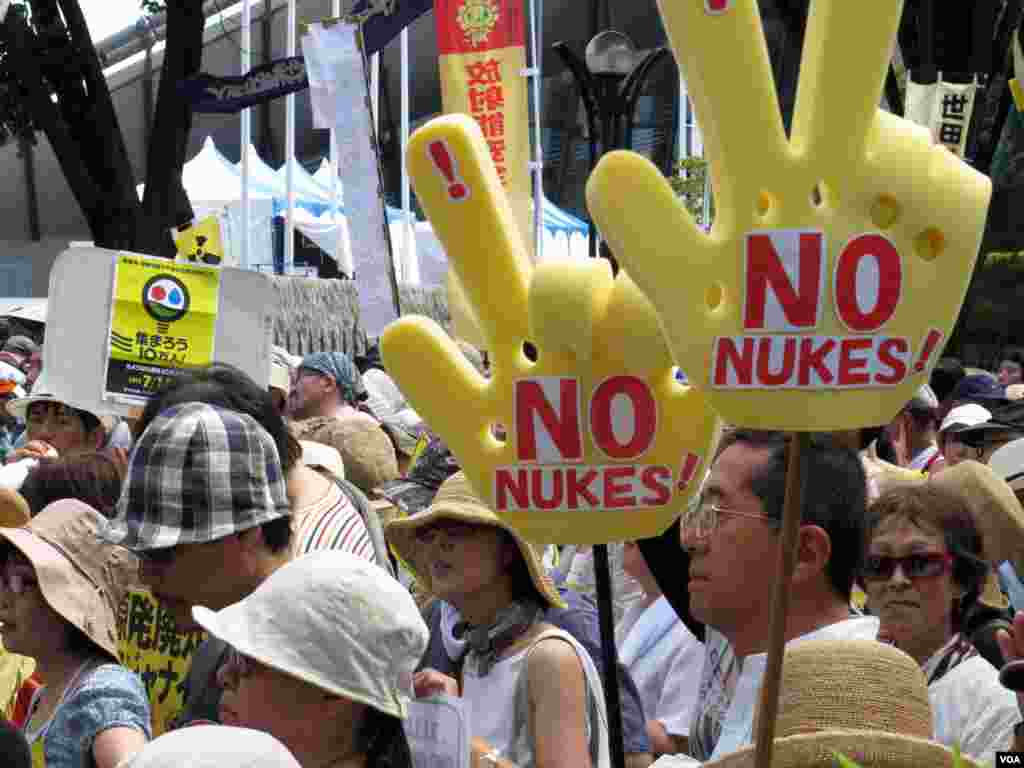
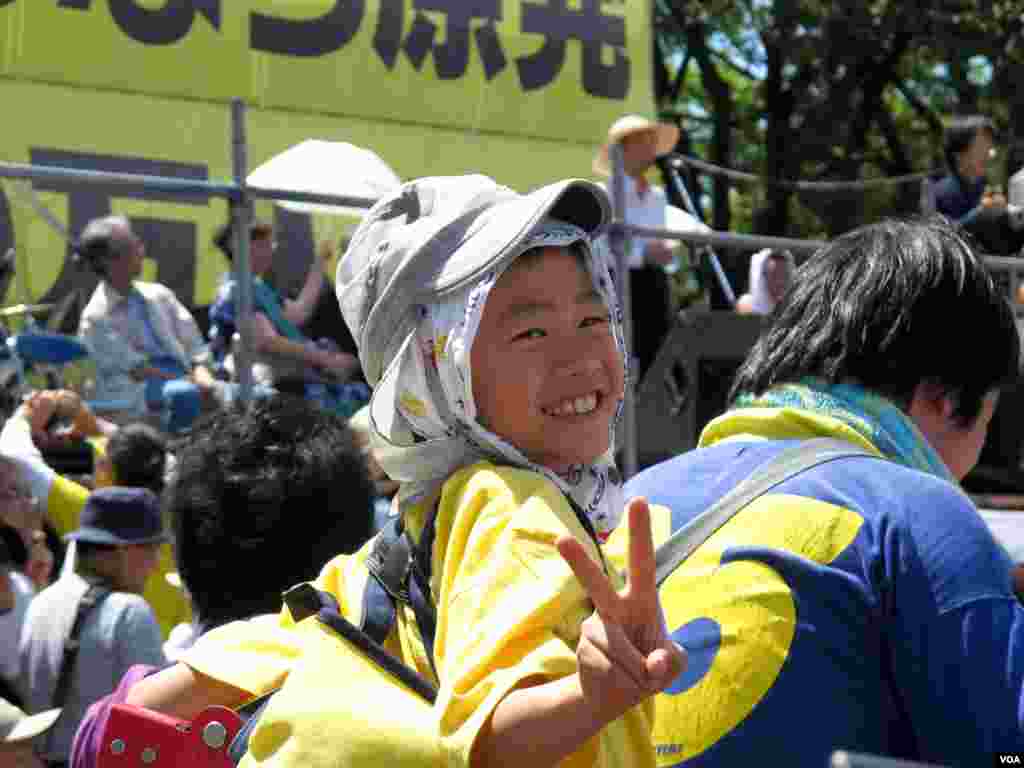
TOKYO — Tens of thousands of people demonstrated in Tokyo Monday to protest against nuclear power and the government’s recent decision to restart two reactors in central Japan.
The rally brought together participants from across the country under the banner of "Sayonara Gempatsu" - or "goodbye nuclear plants."
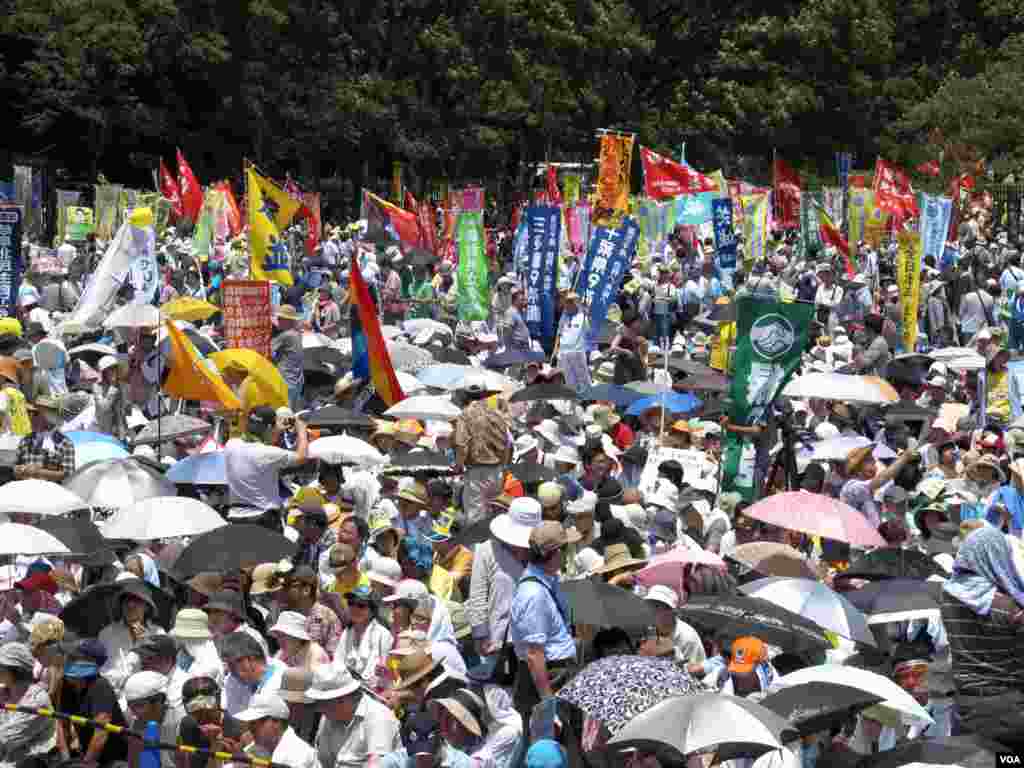
Police estimated the crowd at 75,000, but organizers claimed 170,000. The turnout made it one of the largest demonstrations against nuclear power in the Japanese capital.
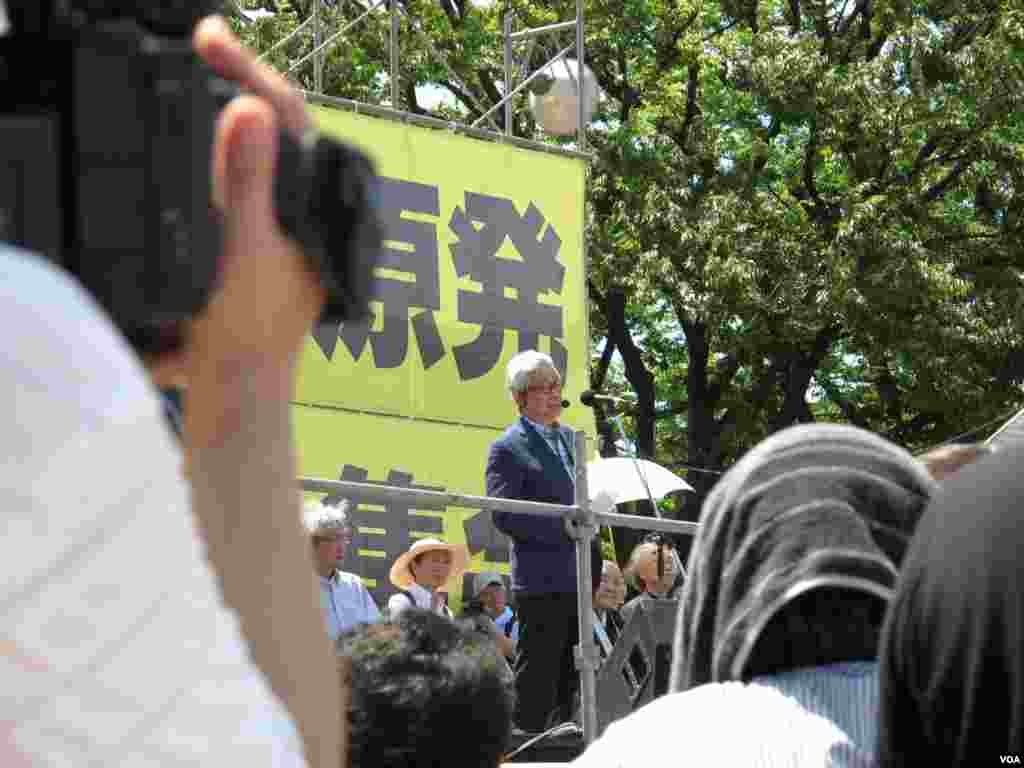
The rally began with a series of speeches by prominent figures, including Nobel-prize laureate for literature Oe Kenzaburo and composer Ryuichi Sakamoto. They called on the government to abandon nuclear power, and questioned its decision to restart two reactors at the Ohi plant earlier this month.
Buddhist priest Takao Takeda interrupted his annual pilgrimage on foot from Tokyo to Hiroshima to attend the rally.
"Human life comes first. Electricity, the economy, are a secondary concern," said Takeda. "Radioactivity is a threat, so if we want to protect life, then we need to oppose nuclear plants."
Osamu Utsunomiya came with a group of 30 citizens from Ehime Prefecture. Their region hosts the Ikata nuclear plant, where a reactor is high on the government’s list for future restarts.
"We’re here to call for the decommissioning of all nuclear reactors in Japan," he says. "The nuclear plant in our prefecture is extremely dangerous, and we’re opposed to its restart."
Many participants said they had never joined a rally before, but felt compelled to express their concerns. Kae Shiraishi, a resident of the capital, hopes the politicians will listen.
"Despite the Fukushima accident and all the trouble we caused to the rest of the world," she says. "Our government still intends to continue with nuclear plants. If we don’t change this situation now, I don’t know when it will be possible."
The administration of Prime Minister Yoshihiko Noda launched a nationwide consultation this month to redefine Japan’s energy policy.
It proposes to bring the proportion of nuclear power in the country's energy mix to 0, 15 or 25 percent by 2030.
The organizers of Monday's rally hope the massive turnout will be enough to tip the balance.
Thousands Protest Nuclear Power in Japan
1/5Some of the crowd that demonstrated in Tokyo against nuclear power, Japan, July 16, 2012 (Miguel Quintana/VOA)
Tens of thousands of people demonstrated in Tokyo against nuclear power and the government’s recent decision to restart two reactors.
Show moreShow less
2/5Tens of thousands of people demonstrated against nuclear power in Tokyo. (Miguel Quintana/VOA)
Tens of thousands of people demonstrated in Tokyo against nuclear power and the government’s recent decision to restart two reactors.
Show moreShow less
3/5Nobel literature prize laureate Kenzaburo Oe address the crowd at the anti-nuclear rally. (Miguel Quintana/VOA)
Tens of thousands of people demonstrated in Tokyo against nuclear power and the government’s recent decision to restart two reactors.
Show moreShow less
4/5A demonstrator protesting nuclear power in Tokyo (Miguel Quintana/VOA)
Tens of thousands of people demonstrated in Tokyo against nuclear power and the government’s recent decision to restart two reactors.
Show moreShow less
5/5A child at the demonstration against nuclear power (Miguel Quintana/VOA)
Tens of thousands of people demonstrated in Tokyo against nuclear power and the government’s recent decision to restart two reactors.