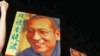



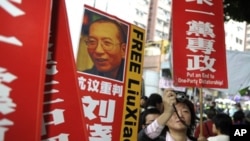
The decision to award China's most famous dissident Liu Xiaobo the Nobel Peace Prize has immediately drawn attention to the Beijing government's tolerance for human rights and freedom of expression.
VOA spoke to Amnesty International's Corinna-Barbara Francis, who says the rights group believes he's a very deserving individual:
"We are hopeful that this will have an impact in China. That this will bring about change and progress in the way that the Chinese government treats individuals who are simply speaking out, expressing their views, urging democratization, urging the respect for human rights."
Amnesty has stated that this is now going to throw a major spotlight on what you call the human rights abuses in China, how so?
"As we're doing right now, there'll be increased attention paid not only to Liu Xiaobo, but also many of the dozens of other activists who have spoken out, worked really tirelessly, been jailed for promoting freedom of expression, for promoting respect for human rights. The international community will hopefully pay greater attention to the fact that Liu Xiaobo is not alone, in fact, in the activities that he's been conducting."
Liu Xiaobo wrote his now-famous pro-democracy manifesto in 2008. In it, he called for peaceful but substantial political reforms. The government felt it was an inflammatory challenge. Why?
"Well, it should not have been an inflammatory ingredient in his relationship because it's a core document which asks for extremely reasonable reforms to China's political systems. It's asking for democratization, for respect of human rights, for things that are very basic and which China itself recognizes. And China has signed many international treaties at the United Nations, which respect freedom of expression and freedom of religion, various other freedoms. These are things that China itself has committed to respecting. So there's nothing in the charter that is anything that is beyond what China itself is committed to adhering to. So there is really no reason for that charter to have been inflammatory. It's the Chinese government's choice to react in that way. It's a very basic document which calls for things that I think people all around the world would recognize as fundamental rights."
If you look at human rights human rights as a fundamental right, why are the Chinese so upset? Do they see this new Nobel Peace Prize winner as a trouble maker?
"He has been charged with inciting subversion of state power. This leads us to understand that an individual who simply speaks out in a peaceful way in an effort to promote democracy, in an effort to promote human rights, in an effort to promote people's basic rights, is seen as something dangerous for the Chinese government's, for the state's power. And that's very problematic."