


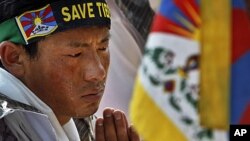
Tibetans are refraining from annual celebrations to mark their traditional new year holiday, and instead are seeking to draw attention to what they describe as oppressive Chinese policies against them.
India's Tibetans protest China's human rights violations
Tibetan protesters hurled accusations at China's president Wednesday, chanting “Hu Jintao is a murderer” at a protest here in the Indian capital.
Tibetans accuse Chinese security forces of gunning down at least six peaceful protesters in recent months.
The New Delhi rally of about 50 Tibetan exiles and supporters was held not far from China's Embassy. Further north, in the Indian city of Dharamsala, members of the elected administration that say it speaks for all Tibetans held a one-day hunger strike.
New Year, no celebrations
Wednesday marks the start of Tibetan Losar, the arrival of a new year on the Tibetan calendar. Under calmer circumstances, it would be a joyous occasion, but Tibetan exile parliament member Yeshi Phuntsok says this year, things are very different.
“Normally we have a three-day celebration, big celebration. First day, we do in the home prayer, and then we have many rituals and activities from morning to evening. Right now, inside Tibet is tense because they are not able to celebrate [the] new year because of the Chinese problem. So we are also not celebrating [outside Tibetan people] to support them. It is very tense inside Tibet," Phuntsok said.
Related Gallery - Social Injustice Fuels Self-Immolation Protests
Tibetan exiles say 23 Tibetans, many of them monks or nuns, have lit themselves on fire in the past year to protest Chinese policies. Tibetans say China is systematically extinguishing their traditional Buddhist culture - from prohibiting images of exiled spiritual leader the Dalai Lama to enforcing nationalistic “re-education” programs in monasteries.
Tibetans also accuse Beijing of deliberately overwhelming Tibetan areas with Chinese migrants who tend to discriminate against Tibetans.
Speaking to the Reuters news agency, a monk in Chinese-controlled Tibet says Tibetan areas are under complete lockdown.
The monk, who is not named for his protection, says they have no freedom - no religious freedom and no freedom of speech. He says the pressure is great. People have no choice, he says, so they protest - and get fired on. He says there is nothing else the people can do.
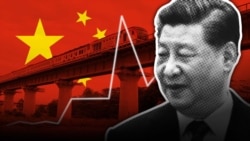
China says recent months of protests have been carefully organized by "trained separatists," and refer to demonstrators as “mobs” that have frequently turned to violence. Beijing describes the self-immolations as a form of terrorism encouraged by outside agitators.
Liu Weimin, a spokesman for China's Foreign Ministry, says security measures have been tightened to “counter disruptive activities” and ensure social stability - something he describes as being consistent with the aspirations of people of different ethnicities.
Lobsang Sangay, Tibet's elected prime minister in exile, has called on the United Nations to send a fact-finding team to Chinese-controlled Tibet, and on Beijing to lift its ban on international media access to the region.