BANGKOK - Vijay Nambiar, U.N. Secretary General Ban Ki-moon's special envoy to Burma, traveled Wednesday to Rakhine state, where ethnic and sectarian clashes erupted earlier this month. He was accompanied by Burma's Border Affairs Minister Thein Htay and 10 Muslim leaders from Rangoon. While in the state capital, Sittwe, Nambiar met with state officials to discuss the volatile situation.
His visit comes after Bangladesh denied the United Nations High Commissioner for Refugees' request that it open its borders to Rohingya people fleeing the ethnic and sectarian violence that broke out last week.
Dhaka-based Professor Amena Mohsin says the Rohingya have existed between Bangladesh and Burma for centuries, but neither country will grant them citizenship.
"Myanmar [Burmese] government is taking its hands off. Its position is that these are Bengali Muslims who have infiltrated into Myanmar from Bangladesh," Mohsin said. "And, Bangladesh's position is that these are the citizens from Myanmar. If you look at the diplomatic ramifications, unfortunately, it has come at a time when Bangladesh was trying to warm up with Myanmar."
Troops Patrol Western Burma as Sectarian Strife Continues
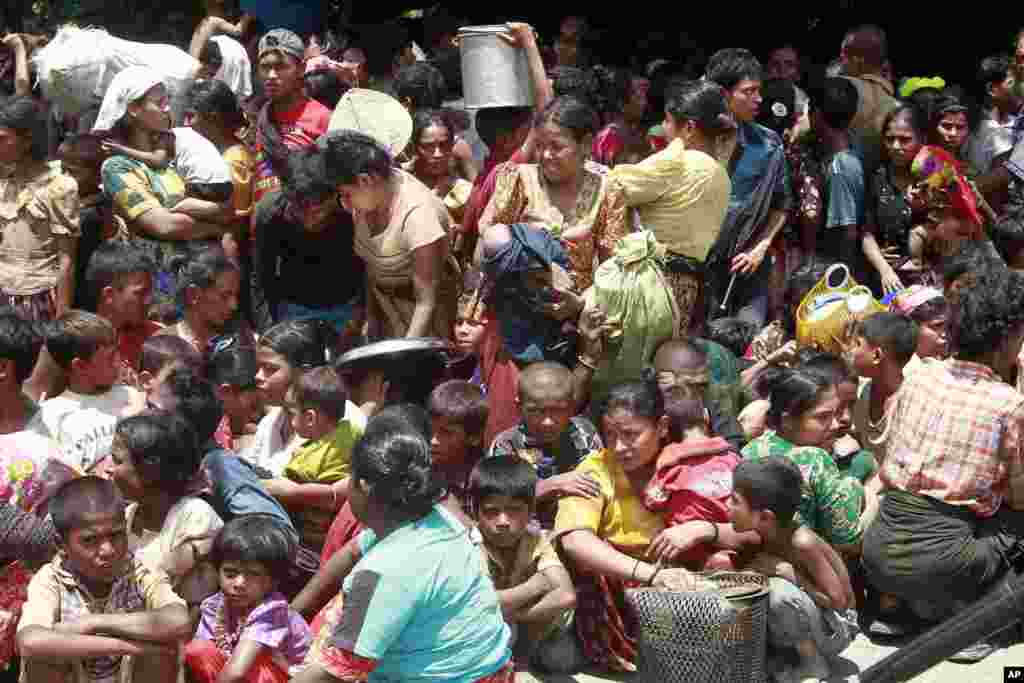
1/13Muslims women and children from villages gather before being relocated to secure areas in Sittwe, capital of Rakhine state in western Burma, where sectarian violence is ongoing, June 12, 2012.
Armed security forces preside over an uneasy calm in western Burma, as international pressure mounts for an end to a week of deadly violence between Muslims and Buddhists.
Show moreShow less
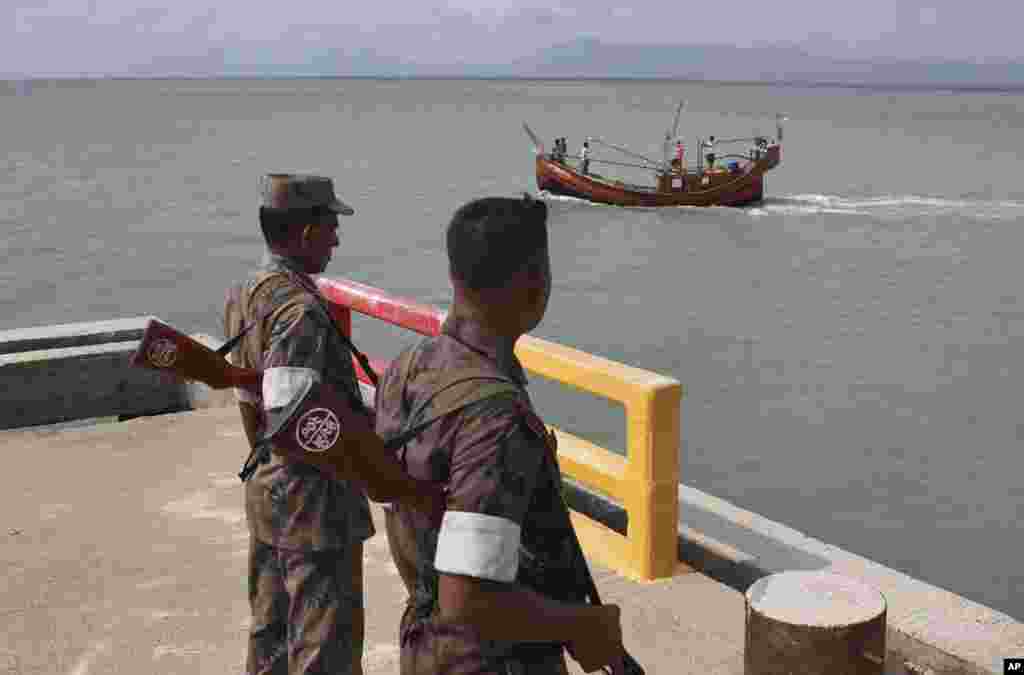
2/13Bangladeshi Border Guard soldiers keep watch at a wharf in Taknaf, Bangladesh, June 12, 2012.
Armed security forces preside over an uneasy calm in western Burma, as international pressure mounts for an end to a week of deadly violence between Muslims and Buddhists.
Show moreShow less
3/132013年4月3日韓國的車輛被拒絕進入朝鮮開城工業區之後,掉頭回去。
Armed security forces preside over an uneasy calm in western Burma, as international pressure mounts for an end to a week of deadly violence between Muslims and Buddhists.
Armed security forces preside over an uneasy calm in western Burma, as international pressure mounts for an end to a week of deadly violence between Muslims and Buddhists.
Show moreShow less
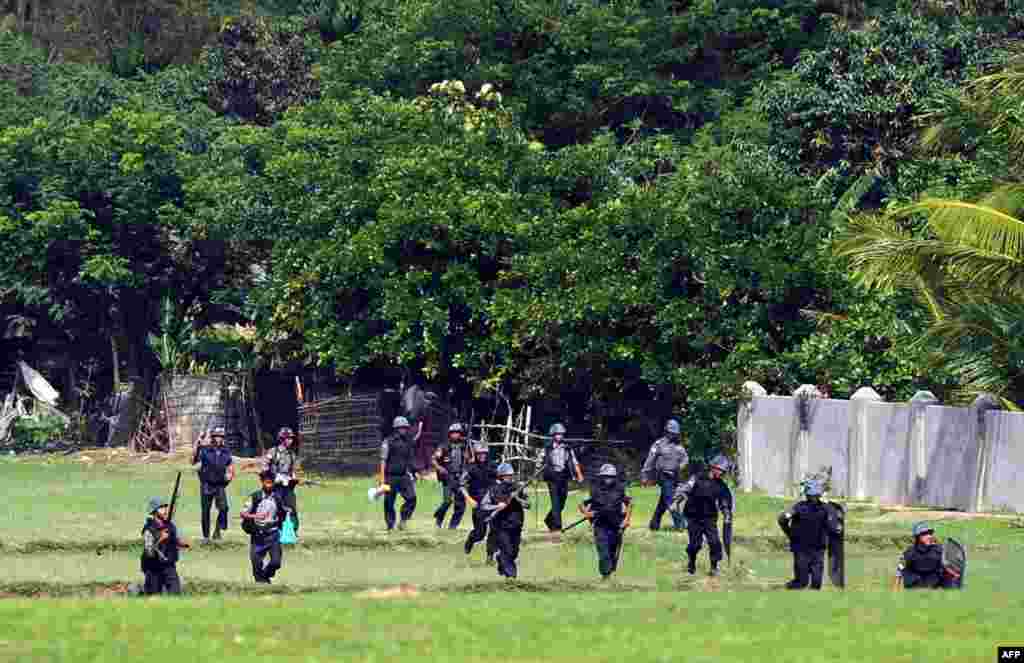
5/13Security forces try to restore order in Rakhine state, Burma, after a wave of deadly religious violence, as the United Nations evacuated foreign workers, June 11, 2012.
Armed security forces preside over an uneasy calm in western Burma, as international pressure mounts for an end to a week of deadly violence between Muslims and Buddhists.
Show moreShow less
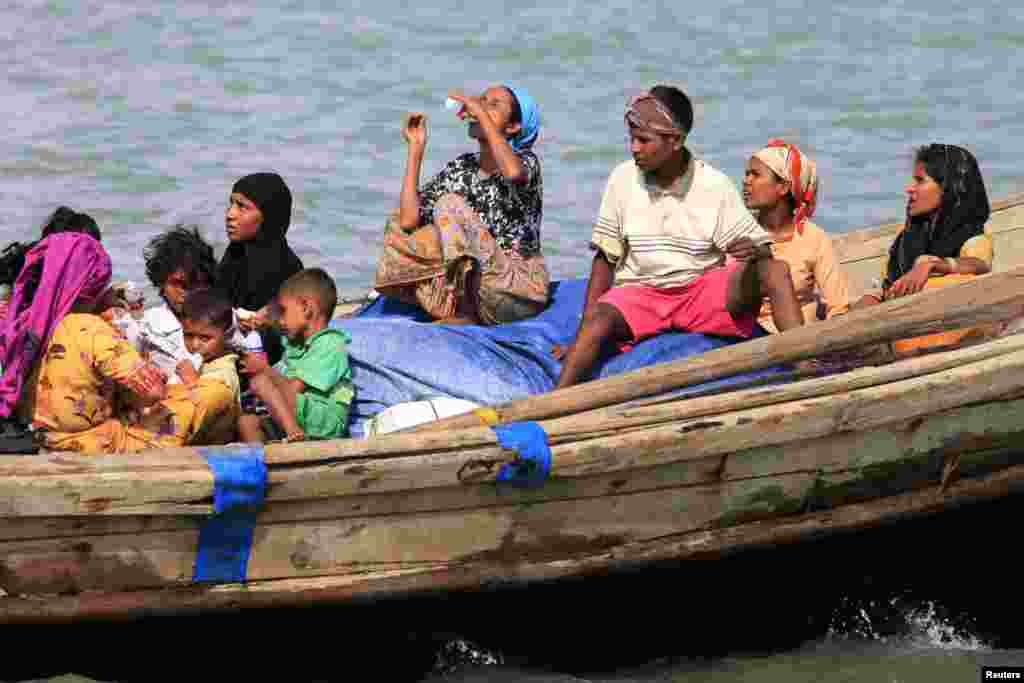
6/13Muslim Rohingya people on a boat cross the river Naf, from Burma into Teknaf, Bangladesh, June 11, 2012.
Armed security forces preside over an uneasy calm in western Burma, as international pressure mounts for an end to a week of deadly violence between Muslims and Buddhists.
Show moreShow less
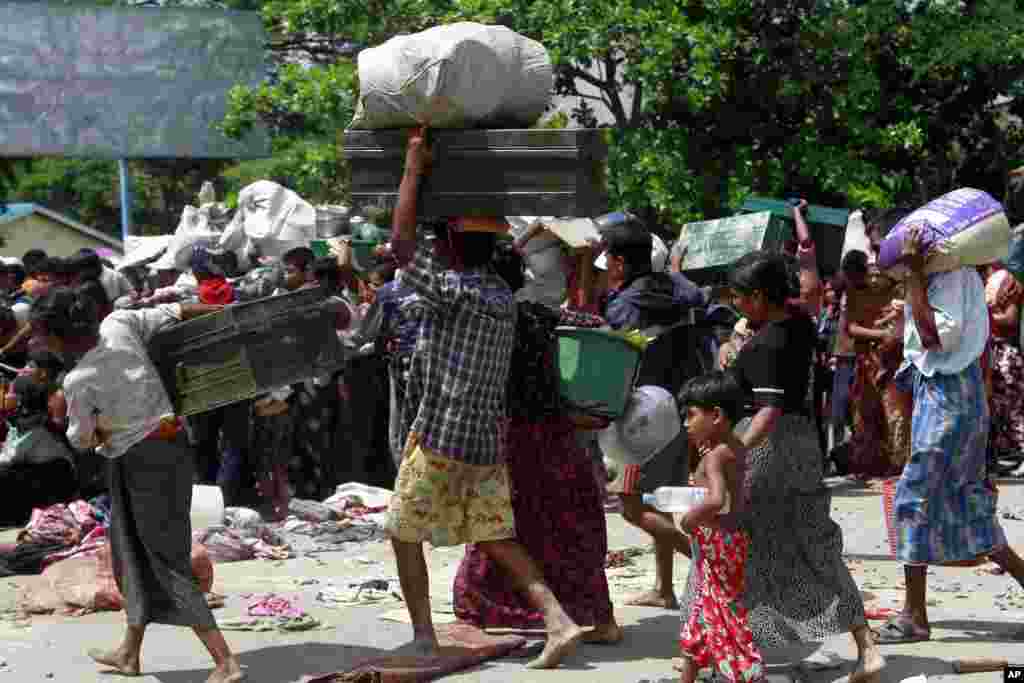
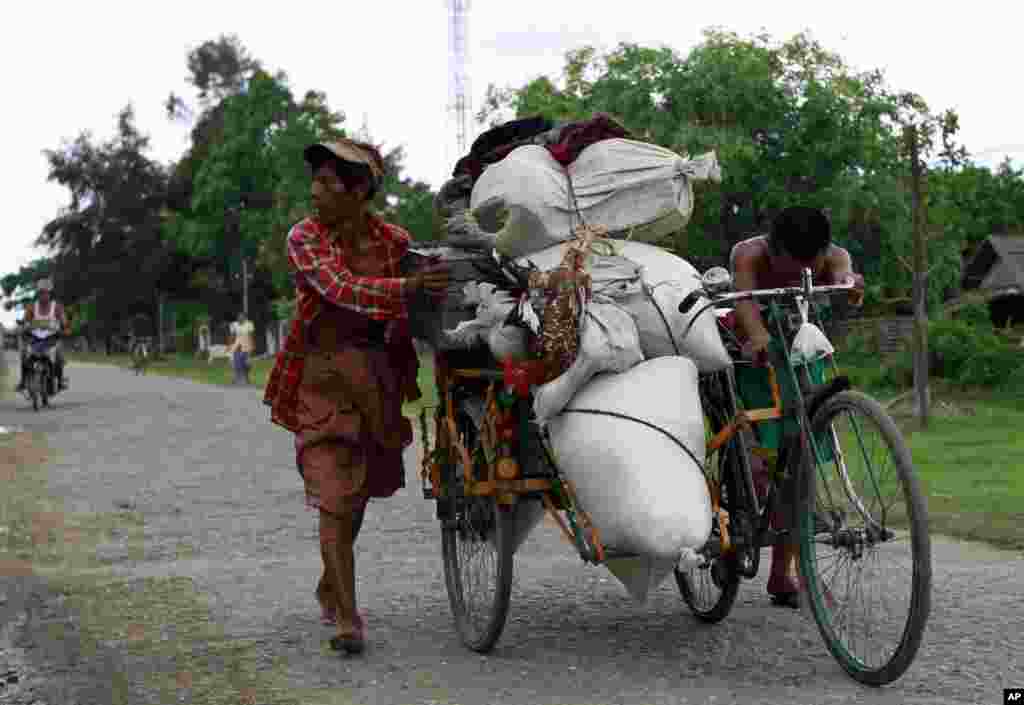
7/13Local residents push a trishaw vehicle carrying their belongings in a village in Sittwe, where sectarian violence is impacting on the local population, June 11, 2012.
Armed security forces preside over an uneasy calm in western Burma, as international pressure mounts for an end to a week of deadly violence between Muslims and Buddhists.
Show moreShow less
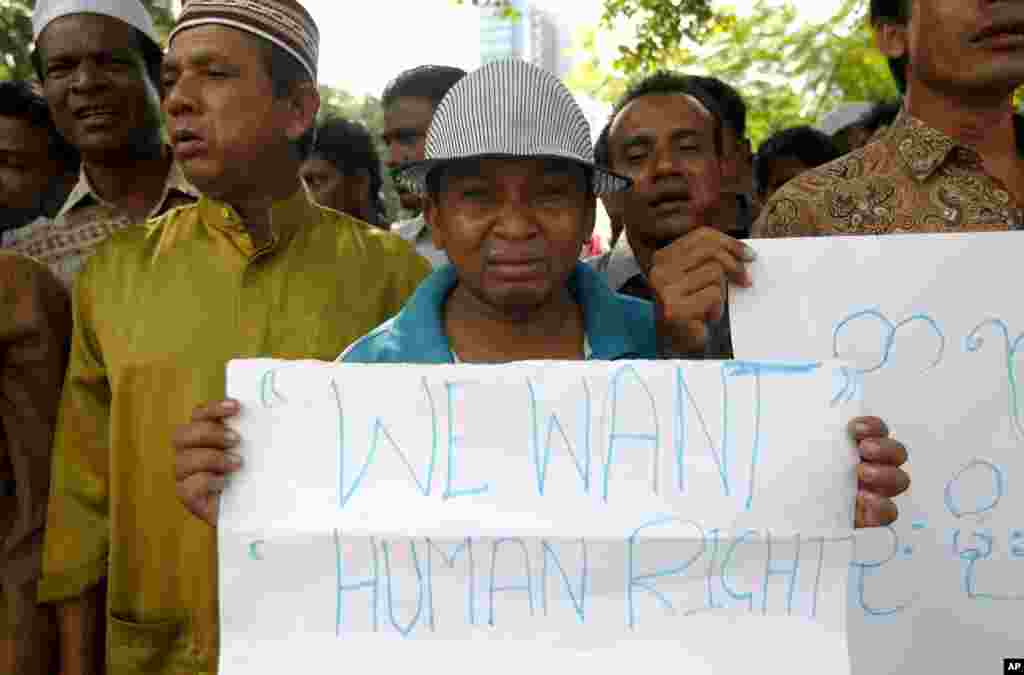
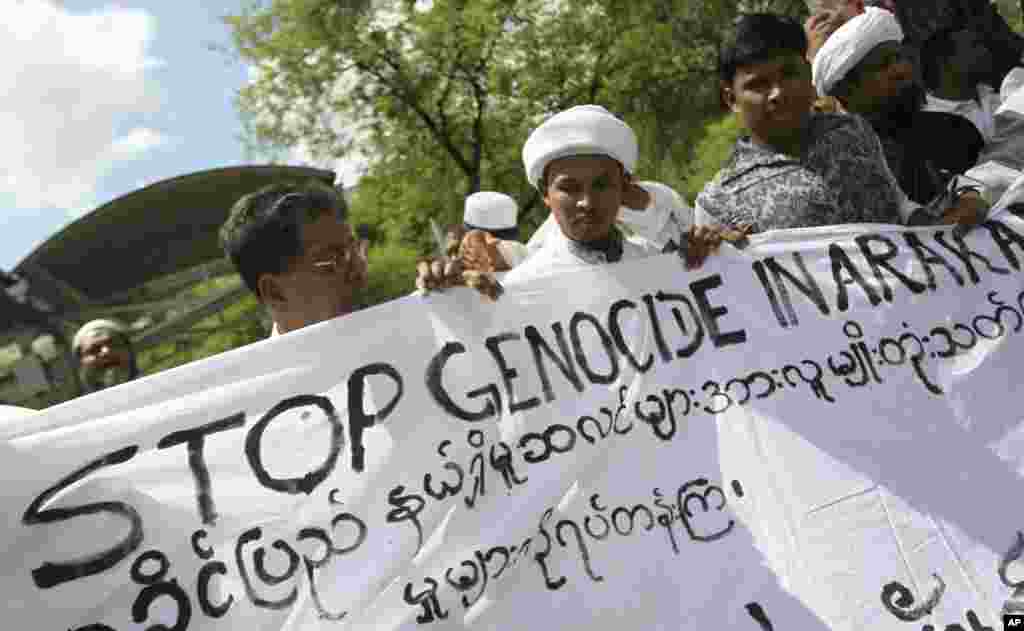
8/13Rohingya protesters gather in front of a U.N. regional office in Bangkok, Thailand, to call for an end to the ongoing unrest and violence in Burma’s Rakhine State, June 11, 2012.
Armed security forces preside over an uneasy calm in western Burma, as international pressure mounts for an end to a week of deadly violence between Muslims and Buddhists.
Show moreShow less
9/13Men carry sacks filled with shellfish on a beach at Diani Beach on the Indian Ocean coast of Kenya, some 30 km (19 miles) south of Mombasa.
Armed security forces preside over an uneasy calm in western Burma, as international pressure mounts for an end to a week of deadly violence between Muslims and Buddhists.
Show moreShow less
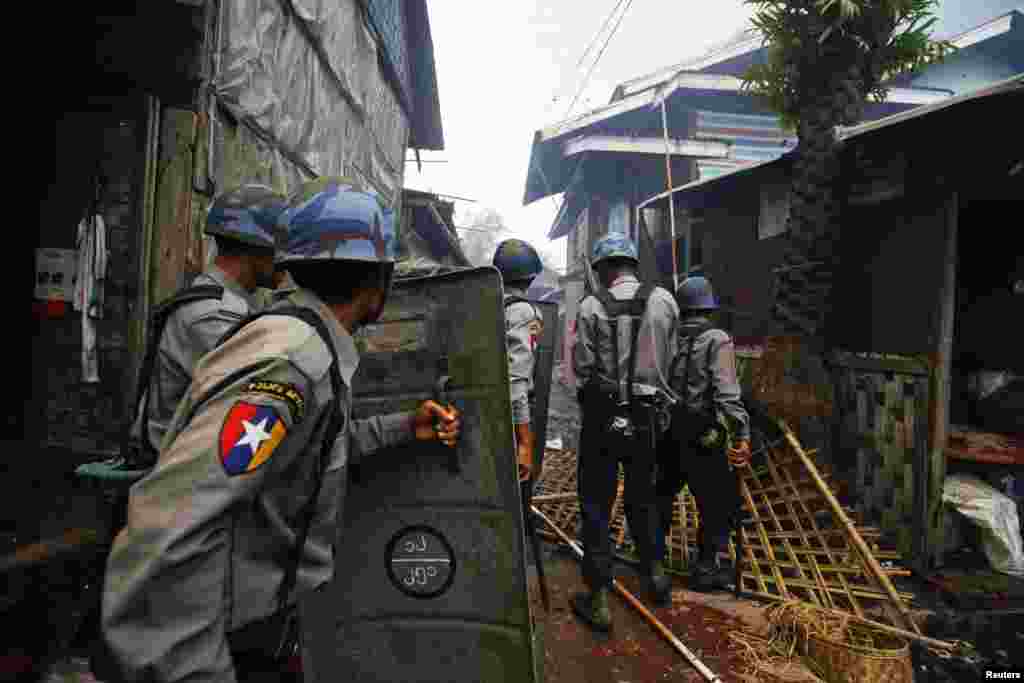
10/13Policemen move towards burning houses during fighting between Buddhist Rakhine and Muslim Rohingya communities in Sittwe, June 10, 2012.
Armed security forces preside over an uneasy calm in western Burma, as international pressure mounts for an end to a week of deadly violence between Muslims and Buddhists.
Show moreShow less
11/13Սերժ Սարգսյանի երդմնակալության օրը, Երևան, 2013թ. ապրիլի 9
Armed security forces preside over an uneasy calm in western Burma, as international pressure mounts for an end to a week of deadly violence between Muslims and Buddhists.
Show moreShow less
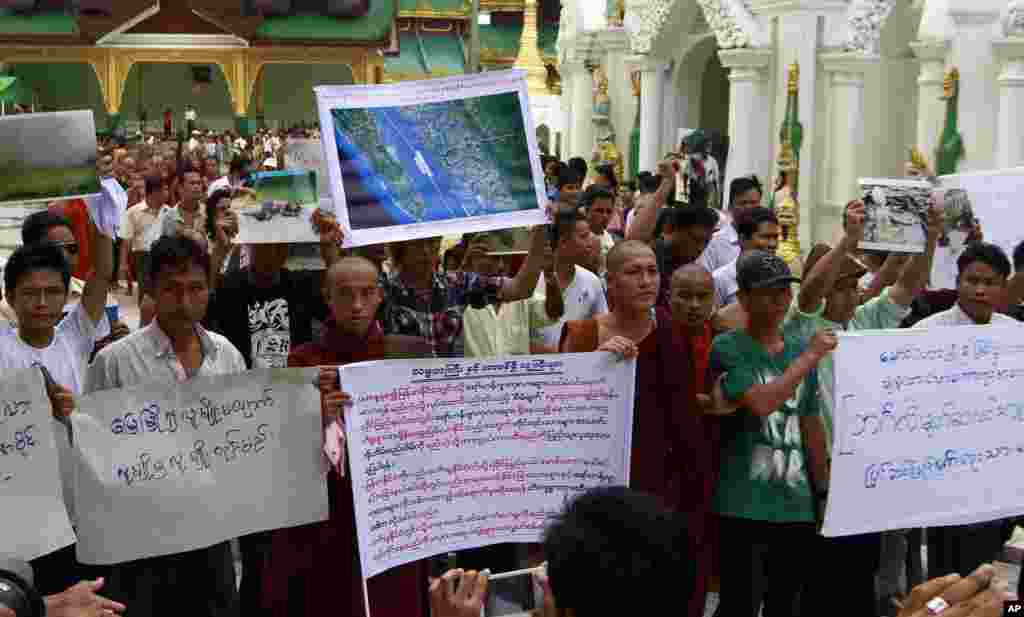
12/13Buddhist monks and ethnic Rakhine people hold placards at Shwedagon pagoda in Rangoon, Burma, June 10, 2012.
Armed security forces preside over an uneasy calm in western Burma, as international pressure mounts for an end to a week of deadly violence between Muslims and Buddhists.
Show moreShow less
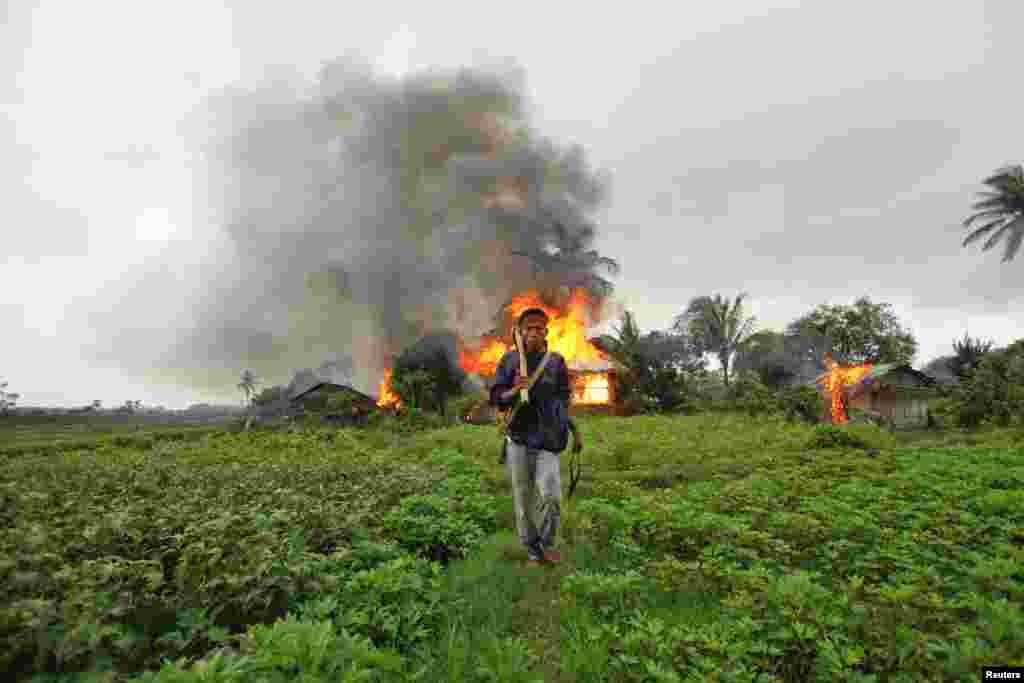
13/13An ethnic Rakhine man holds homemade weapons as he walks in front of houses that were burnt during fighting between Buddhist Rakhine and Muslim Rohingya communities in Sittwe, June 10, 2012.
Armed security forces preside over an uneasy calm in western Burma, as international pressure mounts for an end to a week of deadly violence between Muslims and Buddhists.
Show moreShow less
Previous slide
Next slide
U.N. refugee officials say boats arriving in Bangladesh's Teknaf with women and children fleeing the violence in Rakhine state have been denied entry. Human Rights Watch expressed concern that the military and police could use excessive force when trying to bring the violence under control.
As the unrest continues, some worry it could damage key government-backed development projects, including a joint venture oil and gas pipeline with China. The Shwe gas and oil pipelines will carry oil and gas to China’s Yunnan province.
In Beijing Wednesday, foreign ministry spokesman Liu Weimin, said China supports the Burmese government’s efforts to bring the riots under control. Liu said Beijing is behind Burma's efforts to safeguard national stability and ethnic harmony.
Wong Aung, a Rakhine activist in northern Thailand, says ethnic unrest surrounds Burma’s resource-rich borderlands, such as pipeline and hydropower projects in the north. He says, in those places, ethnic minorities suffer at the hands of the government, when it sends in the military to ensure security.
"Since fighting has been brought out between the ethnic armed groups in northern Shan state and Kachin state they [the conflicts] are directly related to the exploitation of natural resources," said Aung. "The government is trying to secure the pipeline from Arakan [Rakhine] state through central Burma until the China border."
Human Rights Watch says the fighting in the Rakhine state has led local companies to suspend operations, adding pressure to government efforts to resolve the situation.