




Annie Leonard has dedicated herself to changing America's throw-away culture.
The Berkeley, California resident has been obsessed with stuff for more than 20 years - both good stuff that is thrown out and toxic stuff that poisons the planet and its people.
Early awareness
Leonard grew up in Seattle, Washington, spending her summers in the forests of the Cascade Mountains. With her school promoting environmental issues, she grew concerned about the increasing numbers of clear cuts - areas where all the trees have been cut down. So it's no wonder she wanted to be a public lands and forest activist. The interest in stuff came later.
"It wasn't until I went to college in New York City that I became obsessed with garbage," she says.

Walking to class at Barnard College, it was hard not to notice the shoulder-high piles of garbage bags stacked along the city streets. Wondering what was inside, Leonard started what was to become a lifelong habit. She opened a garbage bag.
Nearly half the trash inside was paper. Her mind made the immediate connection to the clear cut areas of her beloved Northwest forests where the trees had been cut down for lumber and pulp. Her next stop was New York City's 890-hectare landfill, to see what else was being thrown away. She found mounds of appliances, shoes, clothing, electronics, books and food packaging as far as she could see.
"I was really struck by both the scale of it - how could we have created a society that is based on and dependent on so much destruction of resources, but also the secrecy of it," says Leonard. "How could I have gone all the way until I was nearly 20 before I'd ever been to a dump?"

Life-changing visit
That visit to the dump changed Leonard's life. For her senior undergraduate project, she wrote a paper on why New York City should not burn garbage in municipal incinerators and suggested alternatives for disposal. At Cornell University graduate school, she studied city and regional planning with a focus on garbage.
Leonard spent the next 10 years with various environmental groups in Washington, lobbying for recycling programs and tougher regulations on trash disposal. But her success in Congress had an unexpected negative result in corporate boardrooms.
To avoid the new laws, Leonard says, many companies started to ship their regular and hazardous waste overseas. So she moved to Geneva, Switzerland, to work on a global campaign to stop the export of waste from the richest countries to the poorest. Her job was to track the waste from the United States to where it ended up in Africa, Latin America, and East and South Asia.
Trash Investigator
"I went to Bangladesh, for example, to interview farmers who had taken fertilizer that was contaminated with our hazardous waste and spread it on their farms," she says. "I went to South Africa under apartheid where United States companies were sending very toxic mercury waste that was dumped in a black township there where the people were not able to leave and had to use the water that had become contaminated for drinking and bathing and some cooking."
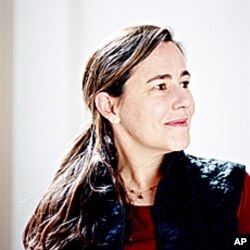
Leonard's 10 years as an investigator took her to dumps, mines, factories and sweatshops in 40 countries. She learned about the life cycle of every manufactured product she could - from cell phones to toothbrushes - and concluded that the world needed to know that cycle, too.
Considering how much of the world's trash comes from the United States, Leonard decided that the fight for a solution had to be centered there. So she settled in Berkeley, California, and started an educational campaign. She produced a 20-minute video for YouTube called "The Story of Stuff." She figured if she got 50,000 views, it would be a success.
"To my complete shock, I got 50,000 views in a day. We are now at over 10 million views from people in over 223 countries and territories, according to Google Analytics."
'The Story of Stuff'
Leonard also received more than 100,000 emails asking for more specific information. That's when she decided to put it all in a book, also called "The Story of Stuff." In it, she outlines where stuff comes from and where is goes. Looking at the five different stages, she followed products from extraction all the way to disposal.
Leonard has been accused of being anti-capitalist and anti-stuff, but insists that, actually, she is pro-stuff, although, she admits, most of her possessions are second-hand.
"I want us to appreciate and value and have reverence for our stuff more. I want us to look at something, whether it's an electronic gadget or a piece of furniture or a piece of clothing, and think about the effort and the energy and the material and the work that went into making that thing."
As she travels around the country, speaking at colleges, conferences and houses of worship, the 45-year old activist is often asked how she can maintain a hopeful outlook. She says it's because she is convinced that the toxic trash situation doesn't have to be as dire as it is now.
She points to emerging science fields such as biomimicry, where industries imitate nature to design more sustainable and healthier products. She also touts the burgeoning green chemistry movement, which tries to minimize the generation and use of toxic materials. But mostly, she says, she's hopeful that growing public awareness and desire for a new approach will bring about the changes she'd like to see.